 Save to Pinterest
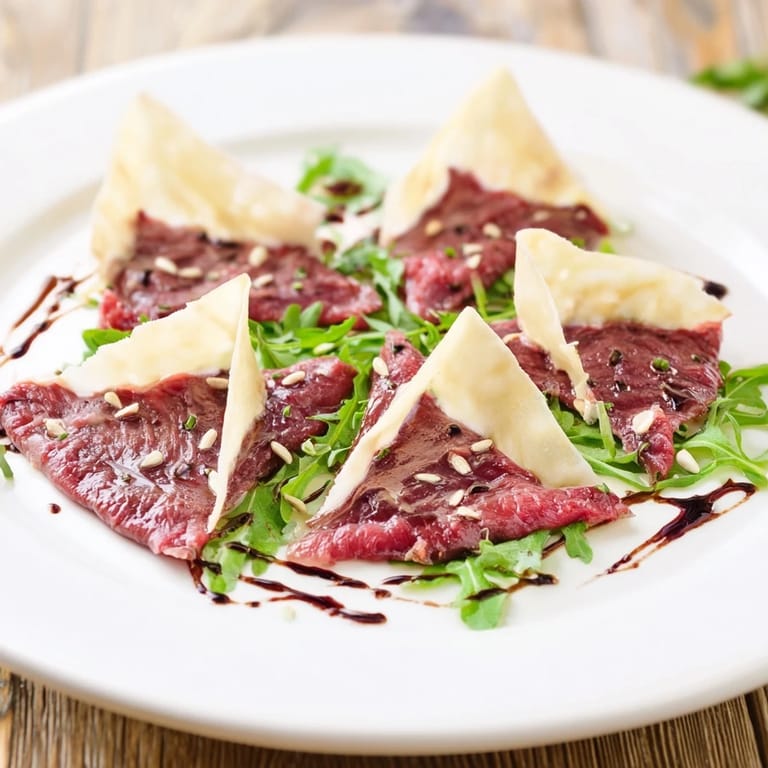
 I discovered the magic of this dish at a friend's dinner party when the host emerged from the kitchen with a platter so visually arresting that everyone paused mid-conversation. The folded beef slices caught the light like tiny origami sculptures, and when I bit into one, the savory marinade and delicate texture made me realize that presentation and flavor could be inseparable. Since that night, I've made it for gatherings where I want to impress without spending hours at the stove. It became my go-to when I needed something that looked restaurant-quality but came together in just twenty-five minutes.
I remember being nervous the first time I plated this for my boss and colleagues at a casual lunch. My hands were shaking as I arranged the folded pieces, worried the geometry would look amateur or the beef would unfold. Then someone leaned over and said, "This is art," and suddenly I understood that imperfection could read as intentional, that handmade always beats sterile. Now I actually love the slight variations in each fold, the way no two pieces are identical.
Ingredients
- Beef: Start with carpaccio from a good butcher or use high-quality roast beef sliced paper-thin on a meat slicer. The thinner the slice, the more sculptural your folds will be, and the marinade will penetrate faster.
- Extra Virgin Olive Oil: This is your base, so don't skip quality here. It carries the marinade into the beef and adds a subtle richness that cheap oil can't match.
- Soy Sauce: Use gluten-free if that matters to you, and taste it first because brands vary wildly in saltiness and depth.
- Lemon Juice: Fresh squeezed tastes noticeably brighter than bottled, and it balances the umami of the soy without making the dish feel acidic.
- Dijon Mustard: Just a teaspoon adds complexity and a gentle tang that most people can't quite identify but absolutely taste.
- Black Pepper & Sea Salt: Freshly ground pepper matters more here than you'd think because you're tasting it in every bite, not hidden in a sauce.
- Baby Arugula: Peppery, tender, and it creates a bed that lets the beef shine without competing.
- Toasted Sesame Seeds: Toast them yourself if you can, even just in a dry pan for two minutes, because the aroma and deeper flavor justify the tiny effort.
- Chives: Finely chopped, they add a whisper of onion flavor and work double duty as gentle ties for any folds that need securing.
- Shaved Parmesan: Use a vegetable peeler to create thin curls that melt on your tongue rather than heavy grated piles.
Tired of Takeout? 🥡
Get 10 meals you can make faster than delivery arrives. Seriously.
One email. No spam. Unsubscribe anytime.
Instructions
- Make Your Marinade Magic:
- Whisk the olive oil, soy sauce, lemon juice, mustard, pepper, and salt together in a small bowl until the mustard dissolves and the mixture turns slightly emulsified. Taste it straight and adjust before you use it because this is your only chance to balance the flavors.
- Prepare Your Canvas:
- Lay each slice of beef flat on a clean, dry surface and brush it lightly with marinade using a pastry brush. Don't oversaturate or the beef becomes floppy and hard to fold. You're looking for a thin, even coating that glistens.
- Fold With Intention:
- This is where patience matters more than perfection. Gently fold each slice into triangles, squares, or fan shapes, working slowly so the beef doesn't tear. If a fold feels fragile, use a chive stem or a cocktail pick to anchor it discreetly.
- Build Your Foundation:
- Arrange your baby arugula on the serving platter first, creating a cushion that keeps the folded beef elevated and lets air circulate so nothing gets soggy.
- Layer the Finishing Touches:
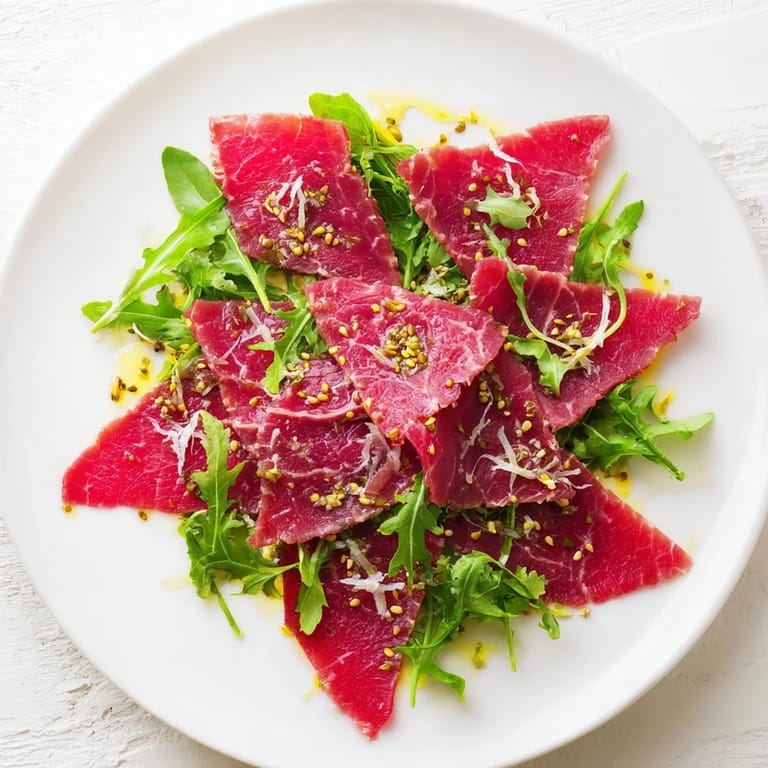
- Place each folded beef piece on the arugula bed, then sprinkle with toasted sesame seeds, chopped chives, and shaved Parmesan. Do this gently so the seeds and cheese land where you want them, creating visual balance across the platter.
- Final Drizzle:
- Just before serving, drizzle the remaining marinade around and over the pieces. This last-minute addition keeps flavors bright and adds shine.
 Save to Pinterest
 There was a moment when a guest asked if I'd taken a plating class because the arrangement looked so considered. I hadn't, but that question made me realize that caring about how food looks is its own form of respect for the people eating it. Now I fold each piece with the same attention I'd give to a tiny sculpture, knowing that presentation is flavor's quiet partner.
The Art of the Fold
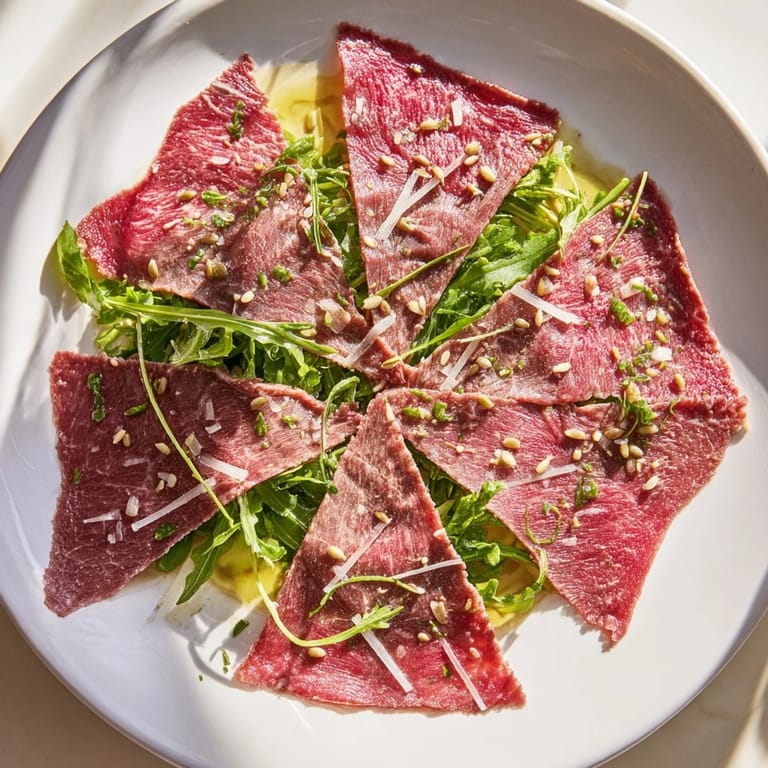
Folding beef by hand feels meditative once you get the hang of it. I've found that working slowly, almost as if I'm handling something precious, produces the cleanest shapes. The beef wants to cooperate if you let it, and rushing creates wrinkles and tears that undermine the whole visual effect. Over time, I've discovered that my hands are actually quite good at this when I quiet the rushing part of my mind.
Timing and Temperature Matters
Because this is a no-cook appetizer, everything should be as cold as possible when served. I chill my platter in the freezer for ten minutes before arranging, and I keep the beef folded pieces in the refrigerator until the absolute last moment. The cold emphasizes the delicate texture of the beef and keeps the Parmesan from softening too quickly. A warm platter would undo all of that in minutes.
Beyond the Basics
Once you master the basic fold, you can experiment with variations that make each presentation feel personal. I've added a drop of truffle oil to the marinade on special occasions, and the earthiness shifts the entire mood of the dish. I've also swapped out beef for seared tuna or paper-thin salmon when I want a pescatarian version, adjusting the cooking method accordingly. The structure stays the same even as the ingredients flex.
- A tiny dab of wasabi on each fold adds heat and surprises people expecting only savory elegance.
- Microgreens scattered across the platter make it look even more refined without requiring any extra technique.
- Serving with thin baguette slices or rice crackers gives guests an optional vessel, though the beef alone is absolutely complete.
 Save to Pinterest
 This appetizer taught me that sometimes the most impressive things are the simplest ones executed with care. It's become my secret weapon for moments when I want to show up fully without exhausting myself in the kitchen.
Recipe FAQs
- → What cut of beef is best for folding?
Very thin slices like carpaccio or roast beef work best to achieve delicate folds without tearing.
- → How can I keep the folded shapes intact?
Use gentle pressure when folding and secure shapes with chive stems or cocktail picks if needed.
- → Can I prepare the marinade in advance?
Yes, mixing the marinade a few hours ahead helps deepen the flavors on the beef slices.
- → Are there alternatives to beef for this dish?
Thinly sliced tuna or salmon can be substituted for a pescatarian variation while maintaining the folding technique.
- → What sides pair well with the folded beef appetizer?
Light accompaniments like thinly sliced baguette or rice crackers complement the delicate flavors.
- → What beverages complement this dish?
Crisp white wines such as Sauvignon Blanc or dry rosé enhance the savory and fresh notes.