 Save to Pinterest
 My sister called me three weeks before her daughter's First Communion, voice tight with that mix of excitement and slight panic only a mother planning a milestone knows. She asked if I could make the cake, and suddenly I was standing in my kitchen on a quiet Tuesday morning, thinking about how fondant—that smooth, pearl-like sugar paste—could transform a simple sheet cake into something that felt ceremonial. The idea of covering it in pearl dust and tiny edible pearls kept me awake that night, sketching out how the light would catch it just right.
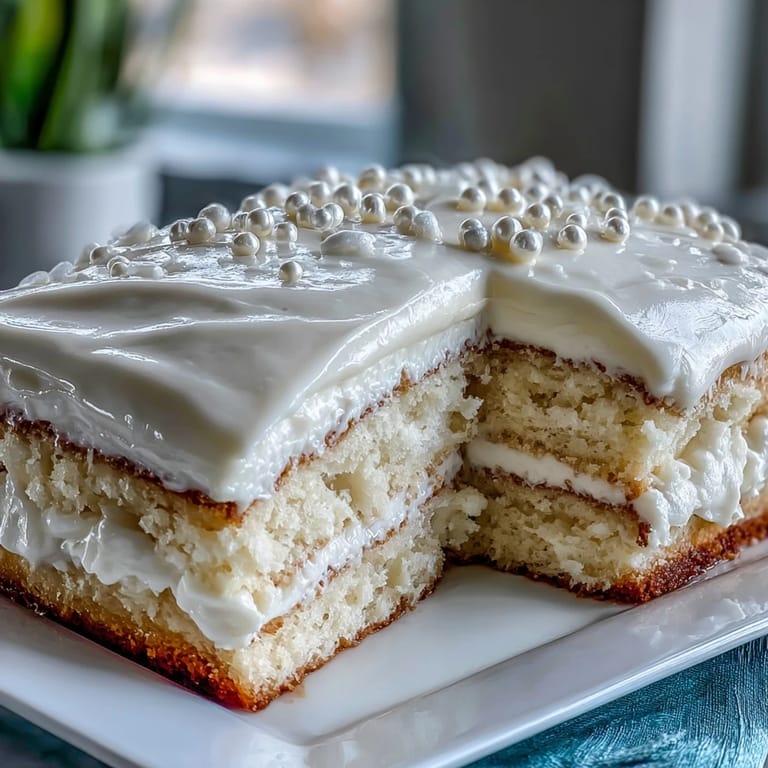
I'll never forget spreading that buttercream at 10 p.m. the night before the party, my hands steady but my mind spinning with small details. When I draped the fondant over the cake the next morning and it settled without a single tear, I felt something shift—like I'd just given my niece's big day a physical manifestation of care. Watching her face light up when she saw it sitting on the decorated table, pale and luminous under the church hall lights, made every careful minute worth it.
Ingredients
- All-purpose flour: The foundation of your tender crumb; measure by spooning and leveling rather than scooping straight from the bag, or you'll end up with a dense, sad cake.
- Baking powder: This is what gives the cake its gentle rise and feathery texture—don't skip the sifting step with the flour.
- Salt: A pinch does something subtle but essential, deepening the vanilla and sweetness without making the cake taste salty.
- Granulated sugar: Creaming this with butter incorporates tiny air pockets that keep the cake light and cloud-like.
- Unsalted butter: Room temperature is non-negotiable here; cold butter won't cream properly, and you'll lose that fluffy texture before you even bake.
- Eggs: Also at room temperature—they blend into the batter more smoothly and create a more tender crumb structure.
- Pure vanilla extract: The backbone of the flavor; don't use imitation unless you're in a true pinch.
- Whole milk: This keeps the cake tender and gives it a slight richness that all-purpose flour alone can't achieve.
- Powdered sugar for buttercream: Sift it before you start mixing, or you'll have lumps that no amount of beating will smooth out.
- White ready-to-roll fondant: Buy quality fondant—cheap versions are grainy and crack easily when you try to smooth them.
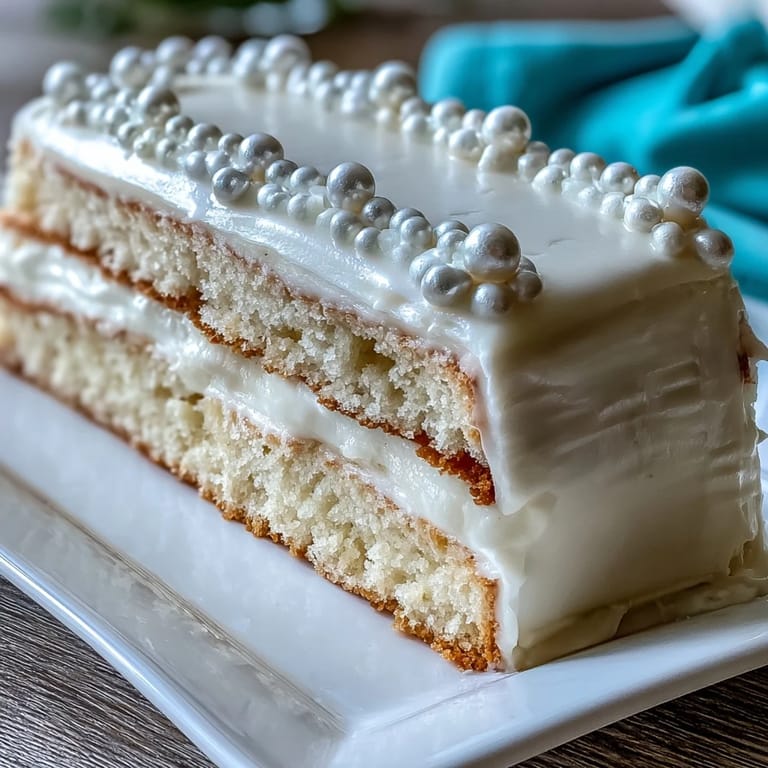
- Pearl luster dust: This is where the magic lives; it catches light like actual pearls and transforms a plain white covering into something that feels ceremonial.
- Edible pearls: Optional, but they give you small focal points to arrange in meaningful patterns—a cross, a border, whatever speaks to your celebration.
Tired of Takeout? 🥡
Get 10 meals you can make faster than delivery arrives. Seriously.
One email. No spam. Unsubscribe anytime.
Instructions
- Set up your stage:
- Preheat your oven to 350°F and grease that sheet pan like you mean it—use butter or cooking spray, then line the bottom and sides with parchment paper. This step feels tedious until you're sliding a perfectly intact cake onto a cooling rack.
- Combine your dry players:
- Whisk flour, baking powder, and salt together in a medium bowl; sifting them wouldn't hurt if you have the patience. Set it aside and take a breath—the hardest part is next.
- Cream magic into being:
- In your mixer bowl, beat softened butter and sugar together for about three minutes, until the mixture looks pale, fluffy, and almost clouds-like. Stop when it gets there; over-mixing turns it grainy.
- Marry in the eggs:
- Add eggs one at a time, beating well after each addition so each one fully incorporates before the next arrives. This takes patience, but it matters for texture.
- Weave in vanilla and the dry mixture:
- Mix in vanilla, then alternate adding the flour mixture and milk—flour, milk, flour, milk, flour—starting and ending with flour. The moment everything comes together, stop mixing; over-mixing develops gluten and tightens the crumb.
- Bake with intention:
- Pour the batter into your prepared pan and smooth the top with a spatula. Bake for 30-35 minutes until a toothpick inserted in the center comes out clean or with just a few moist crumbs clinging to it.
- Let it breathe:
- Cool the cake in the pan for 10 minutes so it sets slightly, then turn it out onto a wire rack and let it cool completely. Do not skip this step or your fondant will slide around like it's on an ice rink.
- Build the buttercream anchor:
- Beat softened butter until creamy, then gradually add sifted powdered sugar, milk, vanilla, and a pinch of salt. Beat until the mixture is smooth, fluffy, and spreadable—this layer is what the fondant clings to.
- Coat the cake:
- Once the cake is completely cool, spread a thin, even layer of buttercream over the entire surface and sides. This doesn't need to be perfect; it's just an adhesive layer.
- Roll and drape the fondant:
- Dust your work surface lightly with powdered sugar and roll out the fondant to about 1/8-inch thickness. Lift it carefully and drape it over the cake, working gently with your hands or a fondant smoother to smooth out wrinkles and air bubbles as you go.
- Trim and embellish:
- Trim away excess fondant from the bottom with a sharp knife. Brush the surface lightly with water where you want edible pearls or decorations to stick, then dust the whole thing with pearl luster dust using a dry brush for that luminous shimmer.
- Finish with shine:
- If you want extra shimmer, lightly brush a mixture of corn syrup and water across the top. Arrange edible pearls in a pattern—a cross, a chalice border, scattered like stars, whatever feels right for your celebration.
- Let it set:
- Give the cake 30 minutes to set before serving so the fondant firms up and the decorations stay put.
 Save to Pinterest
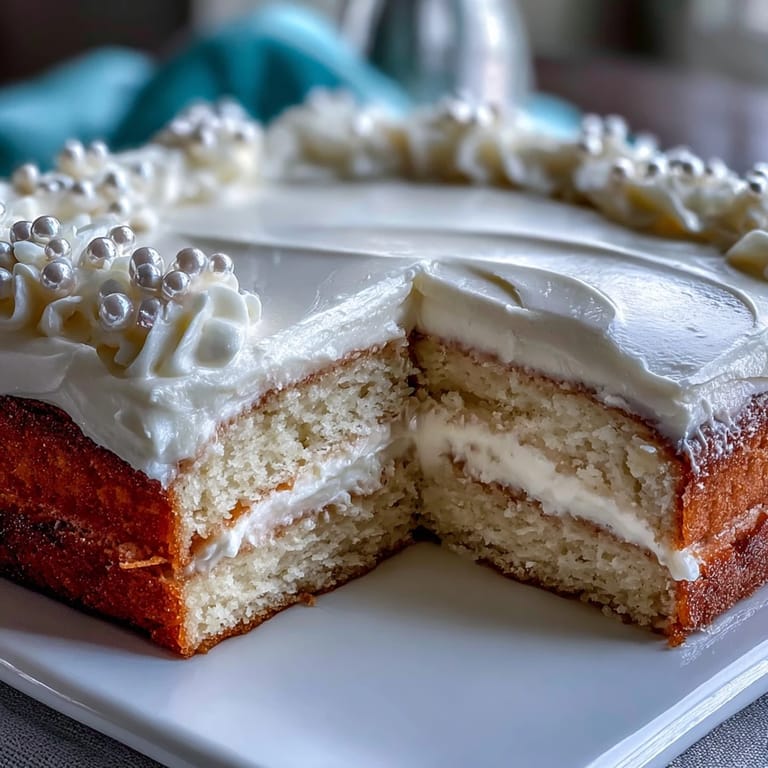
 What struck me most wasn't just how beautiful the cake looked, but how it bridged something—the effort and care made visible in a way that felt appropriate for a religious celebration. My niece cut into it surrounded by family, and when people tasted how soft and tender it was beneath that pearl-dusted exterior, I realized the decorative part was only half the story.
The Science of Tender Cake
The key to this cake's moisture is the ratio of butter to flour and the creaming method, which incorporates air without developing too much gluten. I learned this the hard way by making a version with oil instead of butter once—it was fine, but it lacked the subtle richness and tender crumb that comes from real butter beaten with sugar. The milk also plays a role by adding moisture and slight acidity, which keeps the crumb fine and velvety rather than cakey or tough.
Working with Fondant: The Reality
Fondant can feel intimidating, but it's really just sugar paste that becomes forgiving once you understand its quirks. The biggest thing I discovered is that you don't need to be precious about smoothing it—minor wrinkles and subtle texture actually look more intentional and less plastic-y. If you make a mistake, you can always patch it with a fondant smoother or cover imperfections with your pearl decorations strategically.
Making It Your Own Celebration
What makes this cake shine is how flexible it is for personalization without losing its elegance. You can change the pearl dust color, arrange your edible pearls in meaningful patterns, or even add subtle fondant accents in metallic gold if that fits your vision. Every celebration is different, and this cake is sturdy enough to support whatever meaningful details matter to your moment.
- If your celebration theme leans toward simplicity, keep the pearls minimal and let the pale fondant speak for itself.
- You can bake this cake the day before and decorate it the morning of, which spreads the work and quiets the pre-party anxiety.
- This recipe serves 20, but it scales beautifully—you can make two smaller cakes instead if you prefer more intimate presentations.
 Save to Pinterest
 This cake isn't just dessert—it's a moment made edible, a way of saying this celebration matters enough to deserve something that tastes as good as it looks. Bake it with intention, decorate it with whatever details feel meaningful, and let the people you love taste the care in every bite.
Recipe FAQs
- → How do I achieve a moist texture in the sheet cake?
Using room temperature butter and eggs, creaming butter and sugar well, and alternating dry and wet ingredients helps keep the cake moist and tender.
- → What is the best way to apply and smooth pearl fondant?
Roll out the fondant to about 1/8 inch thickness on powdered sugar, then gently drape it over the cooled, buttercream-coated cake. Smooth by hand or with a fondant smoother to avoid air bubbles.
- → Can I prepare the cake ahead of time?
Yes, the cake can be baked one day in advance and tightly wrapped before decorating the next day for ease and enhanced flavor.
- → How can I decorate the fondant with edible pearls effectively?
Brush small areas with water to adhere the edible pearls, then arrange them as desired, such as borders or motifs, for a delicate and festive look.
- → What are some tips for ensuring the cake doesn’t dry out after baking?
Cool the cake completely on a wire rack, cover with buttercream promptly, and wrap tightly if storing overnight to lock in moisture.