 Save to Pinterest
 The first time I tried to recreate Chipotle at home, I stood in my kitchen on a random Tuesday feeling oddly determined—not because I needed to save money, but because I wanted to understand how they made those carnitas taste so impossibly good. Two hours later, when the pork came out of the oven shredded and glistening, I realized this wasn't about copying a restaurant. It was about discovering that with the right balance of citrus, spice, and patience, you could build something that tasted like a favorite meal but felt entirely your own.
I made this for a group of friends who had been joking that my cooking was 'fine, but nothing special.' Watching their faces when they took that first bite—the way they went quiet for a second, then immediately reached for seconds—told me everything. One friend asked if I'd bought it from somewhere. When I said no, she demanded the recipe with the kind of urgency usually reserved for emergencies.
Ingredients
- Pork shoulder: The fattier cuts work best here because they stay juicy and shred beautifully after slow cooking—don't be tempted by lean cuts.
- Orange and lime juice: This combination is what makes carnitas sing; the acid tenderizes the meat while the citrus brings brightness that cuts through richness.
- Cilantro and lime: These are the backbone of the whole bowl, so use fresh herbs—dried cilantro is just sad.
- Monterey Jack and cheddar: The combination gives you a queso that stays smooth and creamy without breaking, unlike all-cheddar attempts.
- Ripe avocados: Feel for a gentle give when you squeeze—rock-hard ones ruin guacamole, but overripe ones feel mushy and brown inside.
Tired of Takeout? 🥡
Get 10 meals you can make faster than delivery arrives. Seriously.
One email. No spam. Unsubscribe anytime.
Instructions
- Brown your pork deeply:
- Don't rush this step. Let the meat develop a golden crust on all sides—that caramelization is where the flavor lives. You'll hear it sizzle, and that sound means you're doing it right.
- Build the braising liquid:
- As the aromatics hit the hot pan, you'll smell cumin and oregano releasing their oils, mingling with citrus. That smell is what slow cooking promises to deliver.
- Let it simmer low and slow:
- Two hours might feel long, but this is when the pork transforms—the connective tissue breaks down and the meat becomes tender enough to pull apart with a fork. Resist peeking constantly.
- Shred and reduce:
- Pull the pork apart right in the pot, then let it simmer uncovered for those final 10 minutes. The liquid will reduce and coat each piece with glossy, savory goodness.
- Toast your rice before cooking:
- Let it sit in the pan with oil for a minute or two until it smells nutty, not raw. This small step changes everything about the rice's texture and depth.
- Finish the rice with lime and cilantro:
- Stir these in while the rice is still steaming—you want the heat to release the cilantro's fresh aroma and the lime to meld through rather than sitting on top.
- Build the queso base properly:
- The cornstarch and butter roux prevents the cheese from becoming grainy or breaking. Whisk the milk in slowly so you don't get lumps.
- Make your salsa fresh:
- Don't let it sit more than an hour before serving, or the tomatoes start weeping and everything gets watery. The best salsa is made right before you eat it.
- Mash your guacamole gently:
- Leave some texture—chunks of avocado feel more authentic than baby food. The lime juice prevents browning and adds tang.
- Layer with intention:
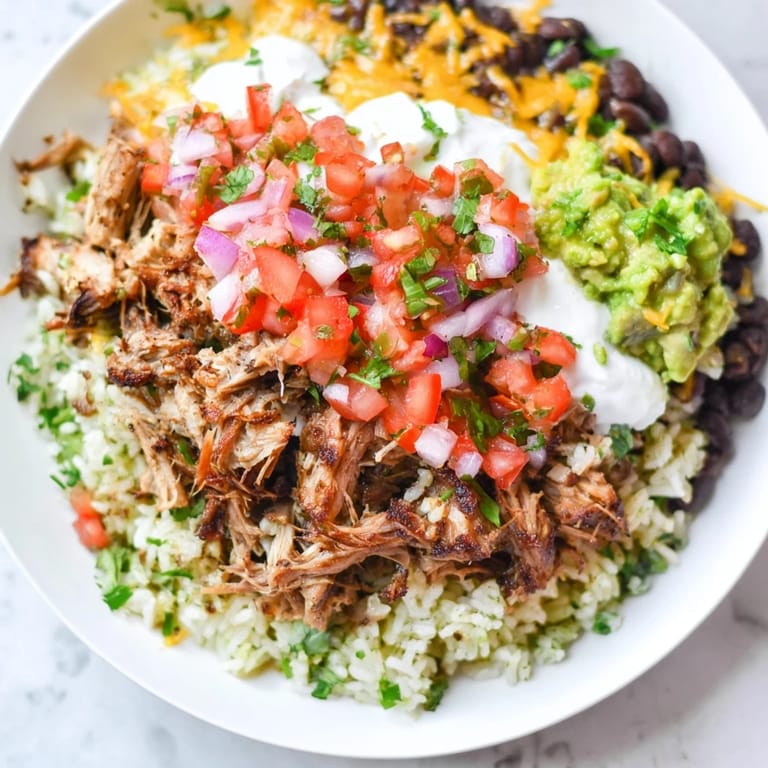
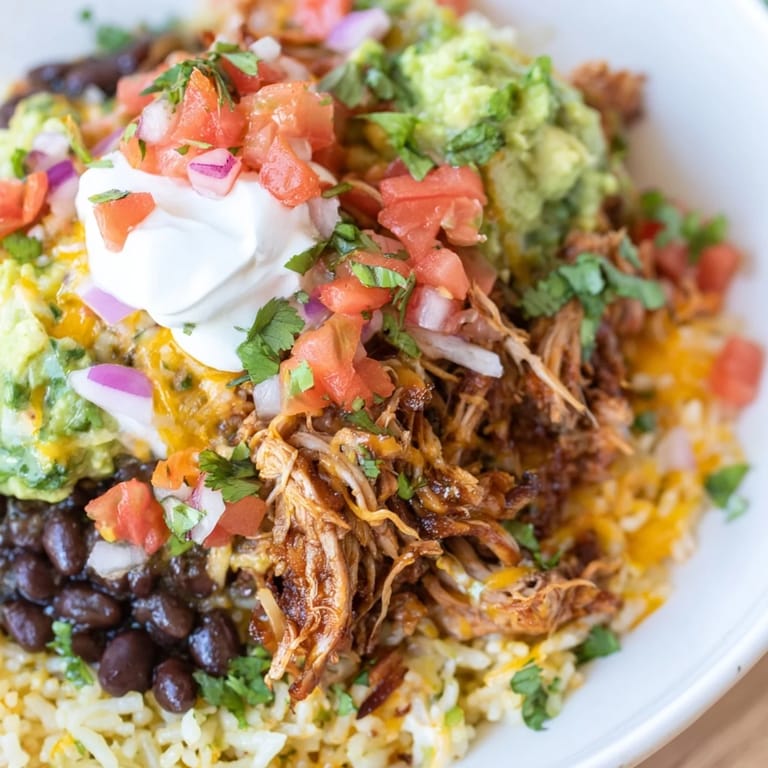
- Start with warm rice as your base so the sour cream and queso don't make everything soggy. The order matters more than you'd think.
 Save to Pinterest
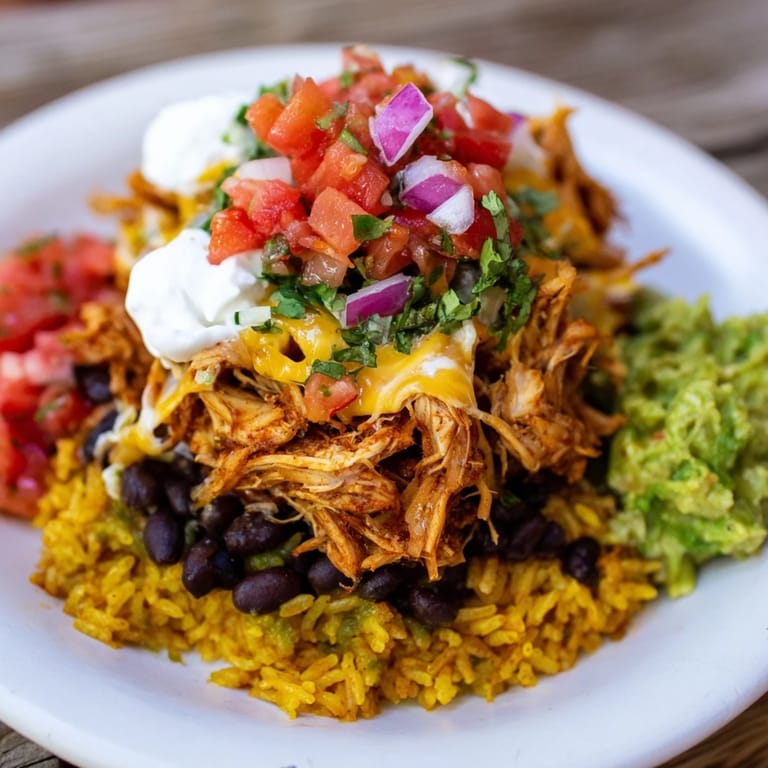
 There's something special about a meal where everyone gets exactly what they want. My partner loaded his bowl with extra queso and salsa, my sister skipped the carnitas but piled on vegetables, and my nephew ate three bowls and asked if it was okay to ask for a fourth. That's when I knew this recipe wasn't just good—it was the kind of food that brings people together because it adapts to whoever's eating it.
Why Carnitas Matter
Carnitas are traditionally Mexican slow-cooked pork, but what makes them work here is the acid bath. The orange and lime juice don't just add flavor—they partially cook the exterior and tenderize the meat from the inside out. When you finish by reducing the braising liquid, you're concentrating all those flavors into a glaze that coats each piece. This is why restaurant versions taste so rich: they're not swimming in sauce, they're glazed with it.
The Component Approach
I used to think bowls like this were only doable if you had everything happening at once, which meant stress and timing disasters. Then I realized: every component except the fresh guac and salsa can be made ahead. The carnitas keep for four days. The rice reheats gently. The queso can be loosened with a splash of milk and warmed back up. The beans are better if they sit overnight. This revelation changed how I approach entertaining—suddenly a 'fancy' meal became totally manageable.
Customization That Works
The beauty of a burrito bowl is that it's inherently flexible without becoming chaotic. I've added pickled jalapeños for heat, corn for sweetness, shredded lettuce for crunch, even a fried egg once just to see what happened. Every addition landed because the core components are strong enough to support toppings without being overshadowed. Set out your components and toppings in small bowls, and let people build their own—everyone gets invested in what they're eating.
- Crisp the carnitas under the broiler for 3 minutes if you want texture variety and extra caramelization.
- Make guacamole the moment before serving to prevent browning—or mash the avocado, press plastic wrap directly on the surface, and it'll stay green for an hour.
- Taste your salsa and beans before serving and adjust salt—these are where seasoning gets lost.
 Save to Pinterest
 This bowl has become my answer to 'what should we make?' because it works for weeknight dinners, meal prep, and dinner parties alike. Once you've made it once, you'll find yourself making it again and again.
Recipe FAQs
- → How do I make tender carnitas for the bowl?
Season pork with spices and sear before simmering it for two hours in broth and citrus juices until it shreds easily.
- → What rice suits this bowl best?
Long grain white rice cooked with lime juice and fresh cilantro adds a zesty, fragrant base for the bowl.
- → Can I substitute black beans?
Pinto beans work well as an alternative and offer a similar hearty texture and flavor.
- → How is the queso prepared?
Butter and cornstarch form a roux to thicken milk, then melted Monterey Jack, cheddar, and jalapeño create a smooth, creamy cheese sauce.
- → How do I keep the guacamole fresh?
Mash ripe avocados with lime juice, onion, tomato, cilantro, and seasonings; storing it with plastic wrap pressed directly on the surface helps prevent browning.
- → Any tips to enhance flavor after assembly?
Crisping shredded carnitas briefly under a broiler adds texture and intensifies the smoky notes.