 Save to Pinterest
 There's something magical about assembling a bowl that looks like it belongs in a wellness magazine but tastes genuinely craveable. I stumbled onto this peanut chicken combination on a Tuesday when I had leftover grains and was tired of the same old routine, but what started as improvisation became the meal I now make when I need to feel nourished and satisfied without spending hours in the kitchen.
I made this for a friend who'd just started a new fitness routine and was convinced healthy eating meant sad, boring food. Watching their face when they tasted that creamy peanut sauce mixed with crispy vegetables and tender chicken was worth every minute of prep. They've asked for the recipe at least five times since.
Ingredients
- Boneless, skinless chicken breasts or thighs (500 g): Thighs stay juicier if you're not careful with timing, but breasts cook faster and feel lighter—choose based on your mood.
- Olive oil (1 tbsp): Just enough to coat and help those spices cling to the chicken as it roasts.
- Smoked paprika, garlic powder, cumin, salt, pepper: This spice blend is subtle enough not to fight the peanut sauce but robust enough that the chicken never tastes plain.
- Brown rice or quinoa (200 g): Brown rice gives you a nutty, hearty base; quinoa is lighter and cooks faster if you're in a rush.
- Water or low-sodium broth (2 cups): Broth adds depth, but water lets the other flavors shine if you prefer simplicity.
- Carrot, red bell pepper, cucumber, purple cabbage, spring onions (mixed vegetables): The variety in colors and textures is half the appeal—each bite feels different, and raw vegetables brighten everything.
- Baby spinach or mixed greens (50 g): A handful of greens adds nutrition without bulk and wilts slightly when the warm sauce hits it.
- Creamy peanut butter (80 g): Natural peanut butter works, but conventional blends create a smoother sauce with less stirring required.
- Soy sauce (2 tbsp): Use tamari if gluten matters to you; it brings umami depth that makes the sauce feel almost savory-sweet.
- Rice vinegar or lime juice (1 tbsp): This cuts through the richness and keeps the sauce from feeling heavy.
- Honey or maple syrup (1 tbsp): A touch of sweetness balances the salty soy and brings harmony to the whole thing.
- Sriracha or chili sauce (1 tsp, optional): Add this if you like heat, but the sauce is already delicious without it.
- Warm water (2–3 tbsp): This is your control—add it gradually until the sauce reaches that drizzle-able consistency you're after.
- Roasted peanuts, fresh cilantro or parsley, lime wedges (garnish): These final touches add crunch, freshness, and brightness that elevate the whole bowl.
Tired of Takeout? 🥡
Get 10 meals you can make faster than delivery arrives. Seriously.
One email. No spam. Unsubscribe anytime.
Instructions
- Heat your oven and prepare the chicken:
- Preheat to 200°C (400°F) and line a baking sheet with parchment paper so cleanup stays minimal. In a bowl, toss your chicken with olive oil and the spice blend—smoked paprika, garlic powder, cumin, salt, and pepper—until every piece is evenly coated and smells incredibly inviting.
- Roast the chicken until golden:
- Spread the chicken on the prepared sheet in a single layer and slide it into the oven for 20–25 minutes, watching for the internal temperature to reach 74°C (165°F). Let it rest for five minutes after coming out of the oven, then slice it into bite-sized pieces.
- Cook your grains in parallel:
- While the chicken roasts, rinse your rice or quinoa under cold water, place it in a saucepan with water or broth, and bring to a boil. Lower the heat, cover, and let it simmer until tender—brown rice takes about 25 minutes, quinoa closer to 15. Fluff with a fork when it's done.
- Prep all your vegetables:
- Julienne or grate the carrot, slice the bell pepper and cucumber thinly, shred the purple cabbage, slice the spring onions, and wash your greens. Arrange everything on a board so you're ready to assemble without scrambling.
- Whisk together the peanut sauce:
- In a small bowl, combine peanut butter, soy sauce, rice vinegar or lime juice, honey, and sriracha if using. Whisk until smooth, then add warm water a tablespoon at a time until you reach a pourable consistency—it should coat the back of a spoon but still flow.
- Build each bowl with intention:
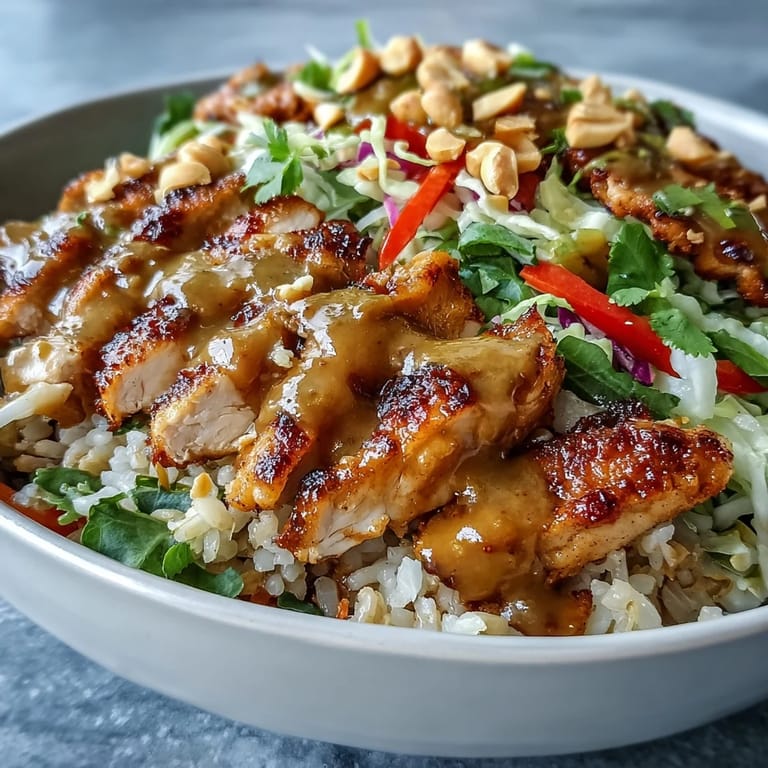
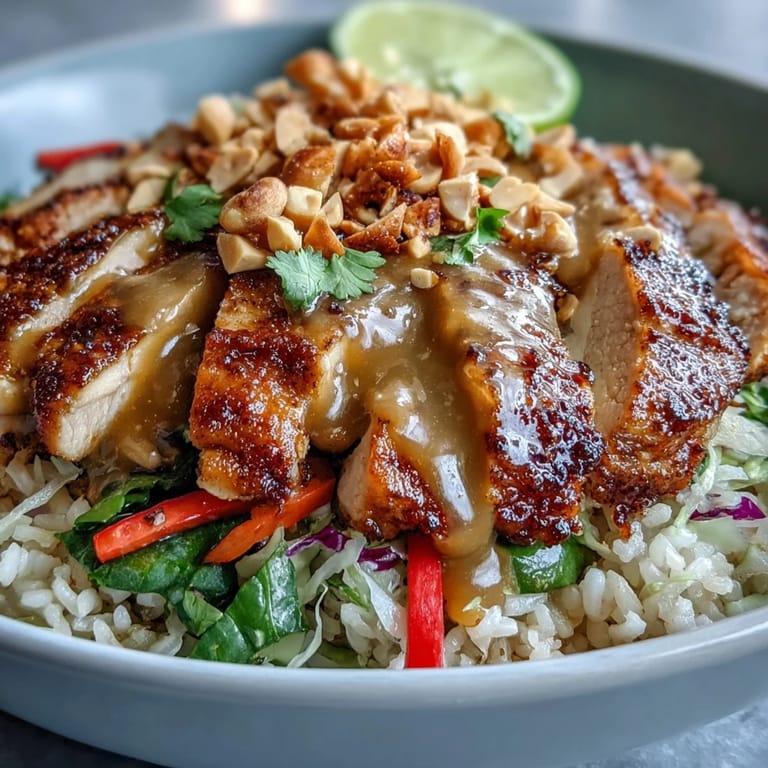
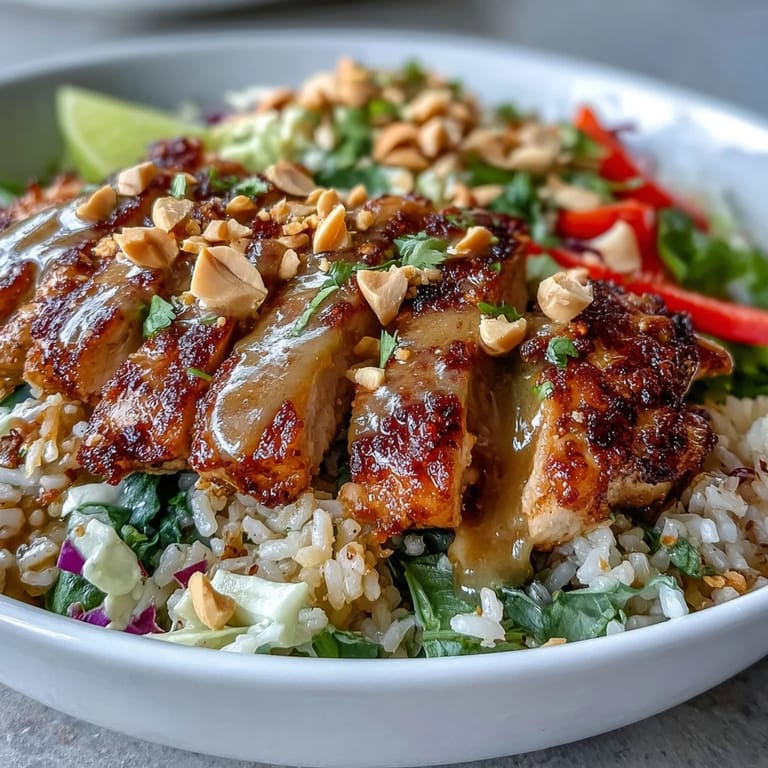
- Divide your cooked grains among four bowls, then top each with sliced chicken, a rainbow of fresh vegetables, and a handful of greens. Drizzle the peanut sauce generously over everything.
- Finish with a flourish:
- Scatter chopped roasted peanuts and fresh cilantro or parsley over each bowl, and place a lime wedge on the side for squeezing at the table. Serve immediately while everything is at its best.
 Save to Pinterest
 The first time someone told me they'd made this bowl three times in one week, I knew it had crossed from recipe to ritual. There's comfort in how quickly you can pull together something that tastes intentional and nourishing, something that genuinely makes you feel better after eating it.
Customization is Your Superpower
This bowl thrives on flexibility. Swap the chicken for baked tofu, tempeh, or even roasted chickpeas if you're cooking vegetarian. Add avocado for creaminess, roasted sweet potato for earthiness, edamame for extra protein, or fresh mango for unexpected sweetness. The beauty is that you're building around a foundation that never disappoints, so you can riff endlessly based on what you have and what you're craving.
Make Ahead and Storage
I often make components separately and assemble bowls fresh, which keeps everything at its peak. Cooked grains last five days in the fridge; chicken keeps for four; vegetables stay crisp in sealed containers for up to three days. The peanut sauce is best served fresh, but you can store it separately for two days and warm it gently before serving. Don't dress the greens until you're ready to eat—they'll stay vibrant and tender that way.
Pairing and Serving
This bowl stands alone as a complete meal, but it pairs beautifully with crisp white wine if you're eating dinner with others. A cold glass of Sauvignon Blanc cuts through the peanut sauce's richness, or you could go the other direction with jasmine iced tea, which echoes the aromatic qualities of the dish. Serve these bowls as soon as they're assembled so the warmth of the chicken and grains mingles with the cool freshness of the vegetables.
- If you're meal prepping, assemble the bowl only when you're ready to eat to prevent sogginess.
- Double the peanut sauce recipe if you like it generously drizzled—some people swear by it as the star of the show.
- Lime wedges aren't optional; that brightness at the end makes everything taste more alive.
 Save to Pinterest
 This bowl has become my go-to when I want to eat well without making it feel like work. It's the kind of meal that reminds you that nourishing food can also be genuinely delicious.
Recipe FAQs
- → Can I make this ahead for meal prep?
Absolutely. Cook the grains and chicken in advance, slice vegetables, and store the sauce separately. Assemble bowls when ready to eat—everything stays fresh for 4-5 days refrigerated.
- → What's the best grain to use?
Brown rice adds nutty depth and hearty texture, while quinoa offers lighter fluffiness and faster cooking. Both work beautifully—choose based on preference or what's in your pantry.
- → How can I adjust the peanut sauce consistency?
Add warm water one tablespoon at a time while whisking until you reach desired thickness. For richer flavor, use coconut milk instead of water. The sauce thickens when chilled, so thin slightly if storing.
- → Is this suitable for gluten-free diets?
Yes, with simple swaps. Use tamari instead of soy sauce and ensure your grains are certified gluten-free. Quinoa is naturally gluten-free and makes an excellent base.
- → Can I make this vegetarian?
Certainly. Replace chicken with baked tofu, tempeh, or roasted chickpeas. Press and marinate tofu in the same spice blend used for chicken, then bake until golden and crisp.
- → What other vegetables work well?
Shredded Brussels sprouts, sliced radishes, roasted sweet potato cubes, steamed edamame, or avocado slices all complement the peanut flavors beautifully. Use whatever's fresh and in season.