 Save to Pinterest
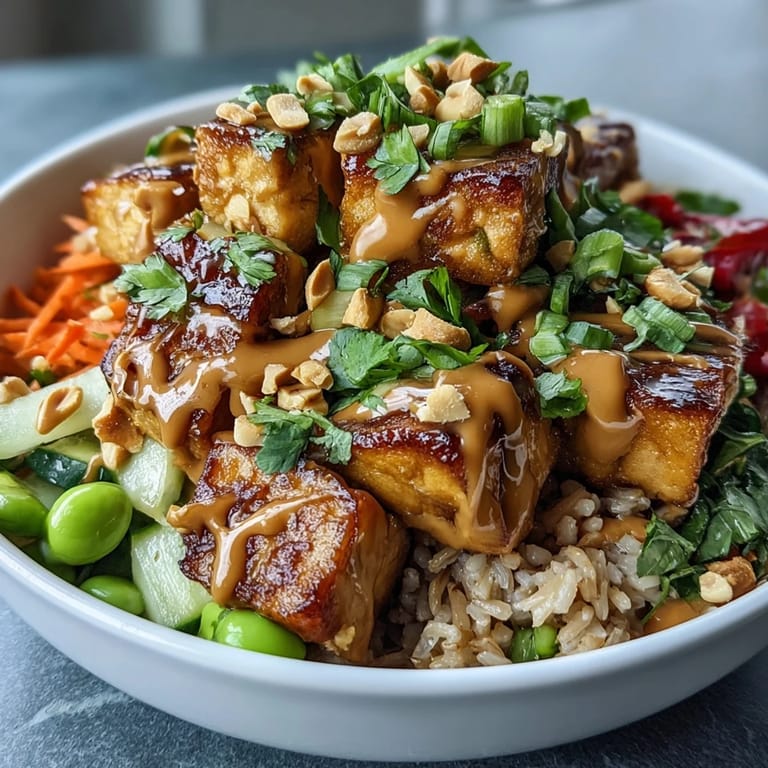
 My friend Marcus showed up at my apartment one Tuesday with a bag of groceries and a challenge: make something that didn't taste like "health food." He'd gone vegan the month before and was tired of sad salads. We ended up throwing together whatever colorful vegetables we had, some crispy tofu we'd debate the seasoning on for twenty minutes, and a peanut sauce that came together so smoothly we both stopped mid-conversation to taste it. That bowl became his go-to whenever he needed proof that plant-based eating could actually be delicious.
I made this for my coworkers one Friday when we were all stuck in back-to-back meetings, and watching them actually set work aside to eat made me realize how rare that moment was. Nobody reached for their phone. The colors in the bowl seemed to matter somehow—the purple cabbage glowing next to the orange carrot made people slow down. That's when I knew the recipe worked beyond just tasting good.
Ingredients
- Extra-firm tofu: Press it well (seriously, squeeze out that moisture with paper towels or a clean kitchen towel), then the cornstarch coating will actually crisp up instead of turning gummy.
- Brown rice or quinoa: Either works, but quinoa cooks faster and has a nuttier flavor that plays beautifully with the peanut sauce.
- Carrot, bell pepper, and purple cabbage: The colors aren't just pretty—they're different nutrients doing different jobs, and the variety of textures keeps each bite interesting.
- Edamame: If you're buying frozen and shelled, you're already ahead; if not, steam and pop them out of their shells while listening to a podcast.
- Creamy peanut butter: Use the kind with no added sugar or oil separation if you can find it; it'll make the sauce taste richer without being heavy.
- Soy sauce or tamari: This is your umami anchor, the thing that makes everything taste savory and complete instead of just piled together.
- Rice vinegar or lime juice: A splash of acid brightens the whole bowl and keeps the peanut sauce from feeling flat or one-note.
- Toasted sesame oil: Use just a teaspoon—it's potent and has a flavor that carries, so more isn't better here.
Tired of Takeout? 🥡
Get 10 meals you can make faster than delivery arrives. Seriously.
One email. No spam. Unsubscribe anytime.
Instructions
- Start your grains early:
- Get your rice or quinoa going first since it needs the most time and everything else will be ready before it finishes anyway. You want it fluffy and just cooked through, not mushy.
- Press and cube the tofu:
- Wrap your block of tofu in a clean kitchen towel and set it on a plate, then put another plate on top with something heavy (a cast iron skillet works great) for at least ten minutes. The drier your tofu, the crispier it'll get.
- Coat and crisp the tofu:
- Toss your pressed cubes with cornstarch and salt in a bowl until they're evenly dusty—this is what creates that satisfying golden crust. Bake at 200°C for 20 to 25 minutes, flipping halfway through, or pan-fry in a hot skillet with olive oil until golden on all sides, which takes about 15 minutes total.
- Whisk together the peanut sauce:
- Combine peanut butter, soy sauce, maple syrup, rice vinegar, sesame oil, minced garlic, and grated ginger in a bowl and whisk until smooth. Add warm water a tablespoon at a time until you reach a sauce consistency that coats a spoon but still drips—not too thick, not too thin.
- Prep your vegetables:
- Julienne the carrot, slice the bell pepper and cucumber thin, shred the cabbage, and slice the spring onions on a bias so they look intentional. If your edamame are frozen, steam them in a basket for about five minutes.
- Assemble with intention:
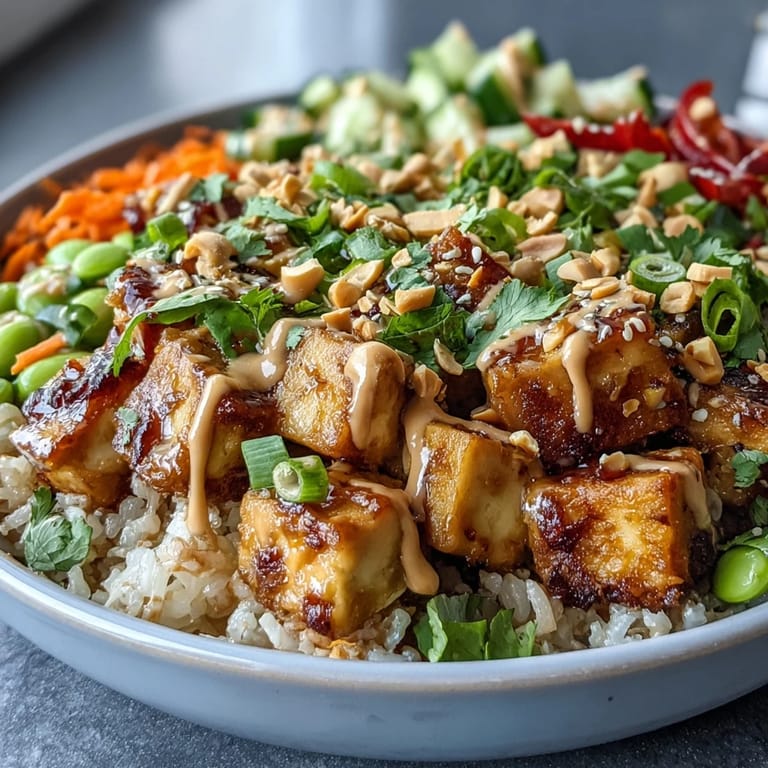
- Divide your cooked grains among four bowls, then arrange each vegetable and the crispy tofu on top in sections so everything stays distinct and pretty. The visual appeal actually makes it taste better—I'm not being poetic about this.
- Sauce and garnish:
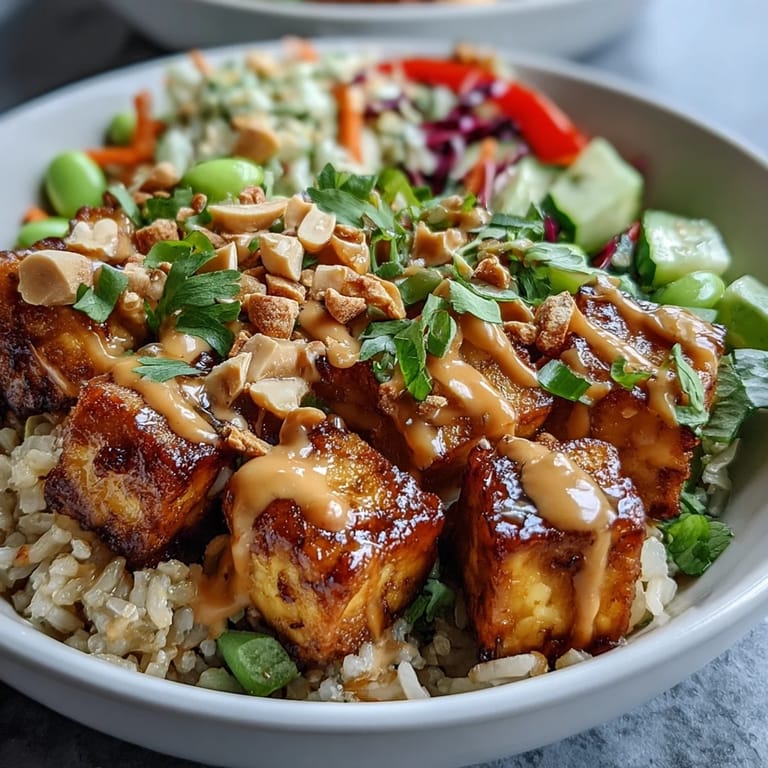
- Drizzle the peanut sauce over everything, then scatter roasted peanuts, sesame seeds, and fresh cilantro or mint across the top. Serve right away so the tofu stays crispy and the vegetables stay bright.
 Save to Pinterest
 A client came by my kitchen one evening while I was testing this, and she watched me arrange everything in the bowl like it mattered. She asked why I wasn't just dumping it all together, and I realized in that moment it's because eating with your eyes first makes everything taste better. She took a bowl home, and three days later she texted me a photo of her making it again.
Building Texture Into Every Bite
The secret to this bowl isn't exotic ingredients—it's the conversation between textures. Crispy tofu against soft rice, crunchy raw vegetables next to chewy edamame, the smooth peanut sauce moving through everything. When you're prepping, think about this. The julienne cut on the carrot isn't just for show; it gives you thin strands that carry sauce differently than a thick chunk would. Slice the bell pepper thin so it softens slightly from the warmth of the rice but doesn't fall apart. Each choice you make at the cutting board is setting up the actual eating experience.
The Peanut Sauce as the Heart
I spent an embarrassing amount of time getting this sauce right, trying ratios, tasting it at different stages, adjusting with water or more lime juice depending on my mood. What I learned is that the peanut butter needs balance—sweetness from the maple syrup, salt from the soy sauce, brightness from the vinegar or lime, and the sesame oil adding a voice that says this isn't just peanut butter over rice. Ginger and garlic wake everything up. The sauce should taste interesting on its own, like something you'd want to eat with a spoon, because ultimately that's what ties the bowl together. If the sauce tastes thin or flat, the whole thing feels unfinished.
Making It Your Own
This bowl is flexible in ways that matter. If you have roasted sweet potato lying around, slice it in. Steamed broccoli adds substance and a different kind of green. Avocado makes it richer, though add it right before eating so it doesn't brown. Cauliflower rice swaps in if you're watching carbohydrates. The structure stays strong no matter what you change because the crispy tofu and peanut sauce hold it all together. I've made this bowl in autumn with roasted butternut squash, in spring with fresh snap peas, in summer with cold quinoa when the heat wouldn't stop. The bones of it—protein, grain, vegetables, sauce—let you play.
- Try sriracha mixed into the sauce if you want heat, or chili flakes sprinkled on top for ones you can control.
- Make the sauce ahead and keep it in the fridge; it thickens slightly when cold but loosens right back up with a splash of warm water.
- If you're meal prepping, pack the sauce separately so the tofu stays crispy until you're actually eating it.
 Save to Pinterest
 This bowl taught me that plant-based eating doesn't need apologies or justifications—it just needs to be delicious and satisfying, which it absolutely is. Make it for someone you want to feed well, and watch what happens.
Recipe FAQs
- → Can I make the peanut sauce ahead of time?
Yes, the peanut sauce keeps well in the refrigerator for up to 5 days. Store it in an airtight container and stir well before using, as the oil may separate slightly. Add a splash of warm water to restore the desired consistency.
- → How do I get the tofu really crispy?
Press your tofu for at least 15-20 minutes to remove excess moisture before cubing. Toss thoroughly with cornstarch until completely coated—the starch creates a crispy layer when baked or pan-fried. Bake at 200°C (400°F) for 20-25 minutes, flipping halfway, or fry in a hot skillet with oil until browned on all sides.
- → What can I substitute for peanut butter?
Almond butter, cashew butter, or sunflower seed butter work well as alternatives. Tahini creates a lighter, more earthy flavor profile. For a nut-free version, use tahini with a touch of miso paste added for depth. Keep in mind that flavor and consistency may vary slightly.
- → Is this bowl good for meal prep?
Absolutely. Prepare all components in advance—the grains, crispy tofu, roasted vegetables, and peanut sauce all store well for 4-5 days. Keep items in separate containers and assemble fresh when ready to eat. The tofu may lose some crispiness in the refrigerator, so reheat it in the oven or air fryer to restore texture.
- → Can I use frozen vegetables instead of fresh?
Yes, frozen edamame works perfectly after steaming. Frozen bell pepper strips, carrot blends, or broccoli florets can be quickly steamed or sautéed. Thaw frozen vegetables first and pat dry to prevent excess moisture in the bowl. Fresh vegetables for garnish like cucumber and spring onions add the best texture.
- → How can I add more protein to this bowl?
Double the tofu portion, or add extra edamame for additional plant-based protein. Shelled hemp seeds, pumpkin seeds, or chopped roasted cashews sprinkled on top provide both protein and healthy fats. For variety, you can also add tempeh or chickpeas alongside or instead of tofu.