 Save to Pinterest
 There's something magical about the moment crispy roasted chickpeas hit a warm bowl of grains and vegetables—it's when you realize protein doesn't need to be complicated or boring. I discovered this bowl on a Tuesday afternoon while standing in my kitchen, staring at three cans of chickpeas and wondering if there was something better than hummus. The peanut sauce came together almost by accident, a mix of ingredients I had lingering in my pantry, and suddenly I wasn't just making lunch—I was creating something I'd crave all week.
I made this for my sister during her visit last spring when she was eating vegetarian for a month and skeptical about it actually tasting good. She went back for seconds and asked for the recipe before she left—that's when I knew I'd stumbled onto something worth keeping. Now it's become our thing, the meal we text each other about when life feels overwhelming and we need something nourishing that doesn't require much thinking.
Ingredients
- Chickpeas (2 cans, drained and rinsed): These are your protein backbone, and rinsing them removes that starchy liquid that prevents proper crisping—don't skip this step, it truly matters.
- Olive oil (1 tbsp): Just enough to coat without making them greasy; I learned the hard way that more oil doesn't equal crispier chickpeas.
- Smoked paprika, cumin, garlic powder, salt, and black pepper: This spice blend creates depth—the smoked paprika gives complexity that plain seasoning never could.
- Brown rice or quinoa (2 cups cooked): Your canvas for everything else; cook ahead if you like, or use rotisserie-store shortcuts on busy days.
- Fresh vegetables (cabbage, carrots, cucumber, tomatoes, edamame): The crunch and freshness here balance the richness of the sauce, so choose vegetables at their peak texture.
- Fresh cilantro (1/4 cup chopped): This isn't decoration—it's flavor, and it tastes different when you've picked it fresh rather than from a plastic container.
- Creamy peanut butter (1/3 cup): The kind that's just peanuts and salt, not the sweetened versions; it makes the sauce taste like an actual sauce instead of dessert.
- Soy sauce or tamari (2 tbsp): Tamari is your gluten-free friend, and both add that umami depth that makes everything taste more intentional.
- Maple syrup or honey (1 tbsp): A touch of sweetness to balance the heat and savory notes—maple adds earthiness that honey doesn't quite capture.
- Rice vinegar (1 tbsp): Bright and gentle, cutting through the richness without the sharp edge of regular vinegar.
- Sriracha or chili sauce (1 tsp, optional): Start small; heat sneaks up, and you can always add more but can't take it back.
- Garlic (1 clove, finely minced): Minced small so it dissolves into the sauce rather than hiding in chunks.
- Warm water (2-4 tbsp): Added gradually so you can control the sauce consistency—it thickens as it cools slightly.
- Roasted peanuts and sesame seeds (for topping): These add the final textural contrast that makes each spoonful interesting.
- Lime wedges (for serving): A squeeze of lime at the end brightens everything and ties the whole bowl together.
Tired of Takeout? 🥡
Get 10 meals you can make faster than delivery arrives. Seriously.
One email. No spam. Unsubscribe anytime.
Instructions
- Heat your oven and prepare:
- Set your oven to 425°F and line a baking sheet with parchment—this prevents sticking and makes cleanup almost nonexistent. You want it hot and ready because chickpeas roast best when they hit heat immediately.
- Season and spread the chickpeas:
- Toss your drained chickpeas with olive oil and all those spices, making sure every single one gets coated. Spread them in a single layer on the baking sheet and slide them into the oven.
- Roast with patience:
- Let them roast for 20 to 25 minutes, shaking the pan halfway through—this is important because it ensures even cooking and prevents the bottom ones from burning while the top ones stay soft. You're looking for that moment when they're golden and they make a satisfying crunchy sound when you bite one.
- Make the peanut sauce:
- While chickpeas roast, whisk your peanut butter with soy sauce, maple syrup, rice vinegar, minced garlic, and a pinch of sriracha if you're feeling it. Add warm water slowly, whisking until it's smooth and pourable—it should be thin enough to drizzle but thick enough to coat a spoon.
- Prepare your vegetables and grains:
- If your rice or quinoa isn't already cooked, now's the time to get it started. Slice and arrange all your vegetables on a cutting board—this takes the rush out of assembly and makes everything feel organized.
- Build your bowls:
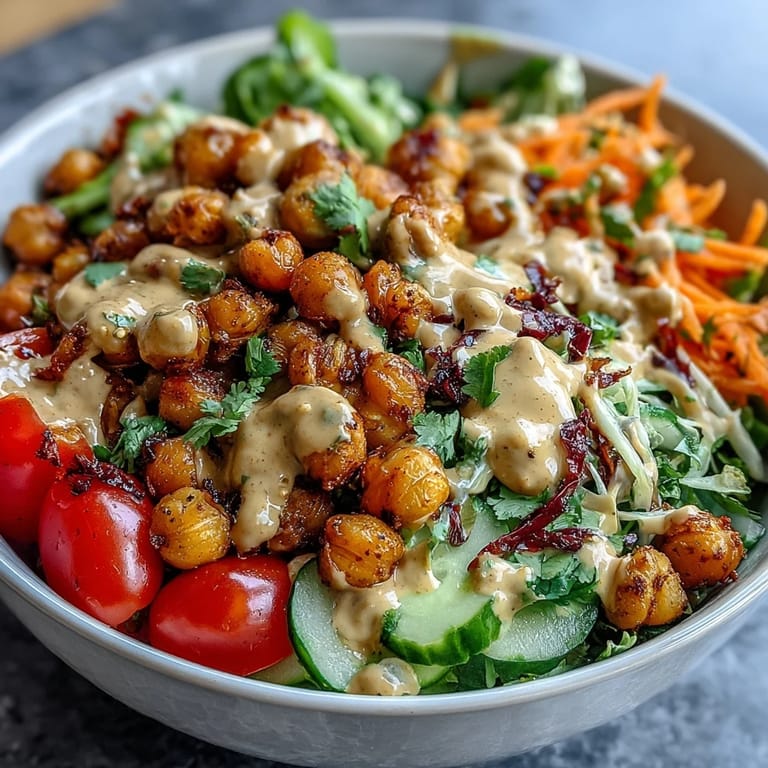
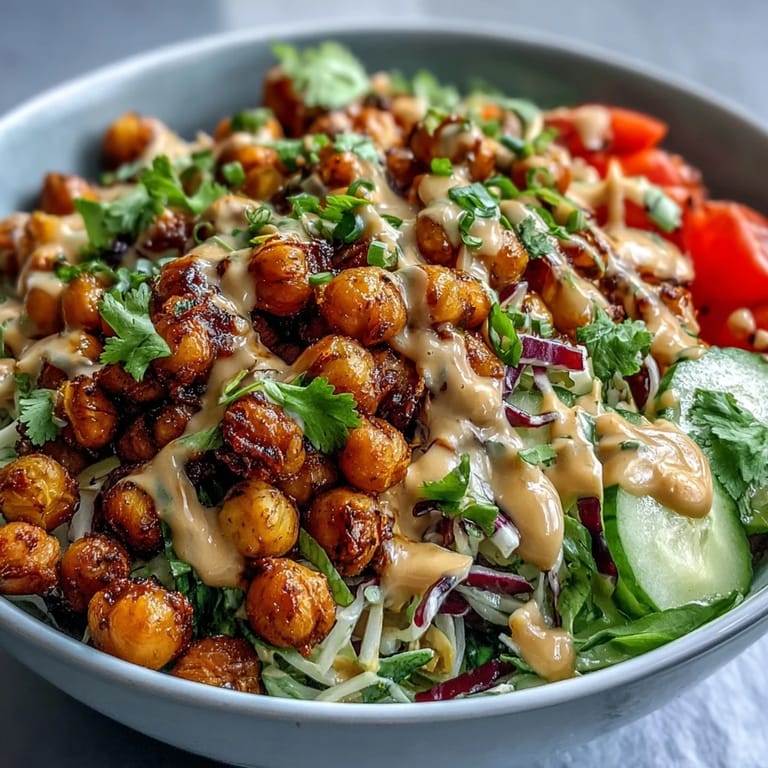
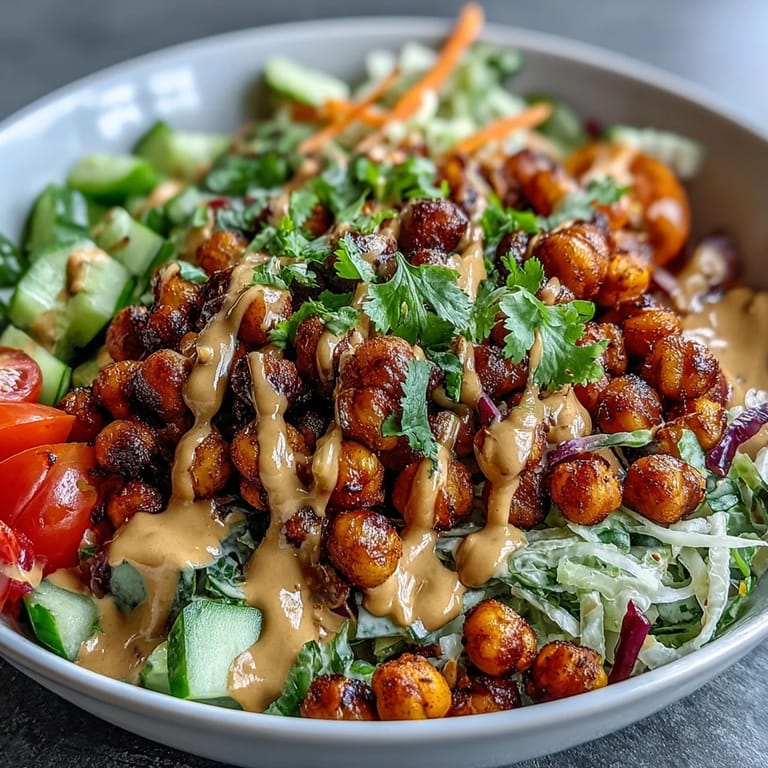
- Divide your grains among four bowls, creating a base that's generous but not overwhelming. Layer on the roasted chickpeas, cabbage, carrots, cucumber, tomatoes, edamame, and fresh cilantro, arranging them in a way that makes you happy to eat it.
- Finish and serve:
- Drizzle each bowl generously with peanut sauce—don't be shy here—and top with chopped peanuts and sesame seeds. Serve with lime wedges on the side so everyone can adjust the brightness to their taste.
 Save to Pinterest
 My favorite thing about this bowl is watching someone taste it for the first time and their whole face changes—like they weren't expecting something so flavorful from vegetables and beans. There's something humble about it, but also something celebration-worthy in how satisfying it feels.
The Sauce Is Everything
I used to think peanut sauce was just peanut butter thinned out with water, which is why my early attempts tasted flat. The magic happens when you layer in soy sauce for umami, maple syrup for depth, rice vinegar for brightness, and garlic for complexity—suddenly it's not a condiment, it's a reason to eat the bowl. The warmth of the sauce against cool vegetables and chewy grains creates this textural experience that keeps you coming back.
Make It Your Own
This bowl is genuinely flexible—it's more of a framework than a rigid recipe, which is why I keep making it even though I change it constantly. Some weeks I add crispy tofu or soft-boiled eggs for extra protein, other times I swap the rice for farro or millet. The vegetables can shift with what's in season or what's on sale, and the sauce tastes just as good with tahini if you want to skip peanuts.
Storage and Timing
This bowl stays fresh for about three days in the fridge if you keep the sauce separate and add it fresh when you're ready to eat—the vegetables stay crisp that way instead of getting soggy from sitting in liquid. I often assemble the grain and veggie components the night before and just roast the chickpeas and make the sauce in the morning, which takes the pressure off weeknight cooking. Everything tastes better when you're not stressed, and a little bit of planning means you actually stick with eating well instead of defaulting to takeout.
- Roasted chickpeas taste best the same day they're made, so don't roast them more than a few hours ahead unless you're okay with slightly softer ones.
- The sauce keeps in a jar for up to five days and works on grain bowls, salads, or even as a dip for vegetables.
- If you're meal prepping for the week, prep vegetables, cook your grains, and roast your chickpeas all on the same day, then mix and match throughout the week.
 Save to Pinterest
 This is the kind of meal that nourishes without overthinking, and honestly, that's why I keep coming back to it. It's proof that vegetarian eating doesn't mean sacrifice—it means abundance.
Recipe FAQs
- → Can I make this bowl ahead of time?
Yes, you can prepare components in advance. Roast chickpeas and store up to 5 days. Keep chopped vegetables and sauce separate in airtight containers for 3-4 days. Assemble when ready to eat.
- → What's the best way to reheat roasted chickpeas?
Reheat chickpeas in a 350°F oven for 5-10 minutes until crispy again. Avoid microwaving as they'll become soggy. Alternatively, enjoy them at room temperature.
- → Can I use other nut butters instead of peanut?
Almond butter, cashew butter, or sunflower seed butter work well as substitutes. Keep in mind the flavor profile will change slightly, but the creamy texture remains.
- → How can I add more protein to this bowl?
Include baked tofu, grilled chicken strips, hard-boiled eggs, or hemp seeds. The chickpeas already provide 17g protein, but these additions boost it further.
- → Is this bowl gluten-free?
Yes, simply use tamari instead of soy sauce in the peanut sauce and ensure your grains are certified gluten-free. All other ingredients are naturally gluten-free.
- → Can I use canned vegetables instead of fresh?
Fresh vegetables provide the best crunch, but you can substitute drained canned vegetables in a pinch. Pat them dry thoroughly to prevent the bowl from becoming watery.