 Save to Pinterest
 There's something about the smell of sesame oil hitting a hot pan that instantly transports me back to a tiny noodle shop in Bangkok where I watched a cook toss noodles with the kind of ease that only comes from doing something ten thousand times. Years later, I stopped trying to recreate that exact magic and instead found my own version at home—a cold peanut noodle bowl that tastes less like nostalgia and more like a Tuesday afternoon when I had vegetables to use up and twenty minutes to make something feel exciting. The beauty of this dish is that it doesn't demand perfection; it just asks that you have peanut butter, a few fresh things, and the willingness to taste as you go.
I made this for my sister once when she showed up unexpectedly during a heatwave, and watching her eat it straight from the bowl with chopsticks while standing at my kitchen counter told me everything—no formal plating needed, just honest food that tastes like care. She asked for the recipe before she finished, which is how I knew it had crossed from my kitchen experiment into something that actually belonged in rotation.
Ingredients
- Rice or wheat noodles (300g): The foundation matters here—rice noodles give you a delicate, almost silky texture that plays well with vegetables, while wheat noodles offer more chew and substance if you want the bowl to feel heartier.
- Carrot (1 medium, julienned): The sweetness of raw carrot is essential; it balances the salt and richness of the dressing and adds a satisfying crunch that makes the bowl feel alive.
- Red bell pepper (1 small): Choose one that's glossy and firm, because its natural sweetness and crisp texture prevent the bowl from tasting flat.
- Red cabbage (1 cup shredded): This is the unsung hero—it doesn't wilt, it stays vibrant in color, and it has a slight peppery bite that keeps everything interesting.
- Scallions (2, thinly sliced): They soften slightly when tossed with warm dressing but keep their aromatic edge, which is exactly what you want for brightness.
- Fresh cilantro (1/2 cup): Some people skip this, but I never do—it's the final flourish that makes you feel like you cooked something intentional.
- Bean sprouts (1/2 cup): They're delicate and add a tender crunch; don't skip them just because they seem optional.
- Creamy peanut butter (1/3 cup): Use the good stuff—the kind with just peanuts and salt—because it makes a visible difference in how silky the dressing becomes.
- Soy sauce (2 tbsp): This is your salt, your umami anchor; I use tamari when I'm keeping things gluten-free, and it works just as well.
- Sesame oil (1 tbsp): A little goes a long way, and it's what makes your kitchen smell like you know what you're doing.
- Rice vinegar (1 tbsp): This brightens everything without being harsh; it's the ingredient that prevents the bowl from tasting too heavy.
- Honey or maple syrup (1 tbsp): The sweetness smooths out the sharp edges of vinegar and soy sauce and rounds out the whole flavor profile.
- Fresh ginger (1 tsp, grated): Use a microplane if you have one; it distributes more evenly and tastes fresher than minced.
- Garlic (1 small clove, minced): Don't skip this even though the amount is tiny—it adds a subtle backbone that makes people wonder what you did differently.
- Warm water (2–4 tbsp): You'll add this gradually while whisking to get the dressing to exactly the consistency you like.
- Roasted peanuts (2 tbsp, chopped): These add final texture and a hint of roasted richness that makes the bowl feel complete.
- Toasted sesame seeds (1 tsp): Toast them yourself if you can; they're fragrant and toasted just right, not raw and bitter.
- Lime wedges: Essential for serving—a squeeze of fresh lime at the table is when the whole dish suddenly makes sense.
Tired of Takeout? 🥡
Get 10 meals you can make faster than delivery arrives. Seriously.
One email. No spam. Unsubscribe anytime.
Instructions
- Cook the noodles with care:
- Boil water, add noodles, and cook exactly to package instructions—don't guess, because overcooked noodles turn mushy and undercooked ones taste raw. Drain them, rinse under cold water until they stop steaming, then set them aside in a large bowl where they have room to breathe.
- Whisk the dressing into being:
- In a medium bowl, combine peanut butter, soy sauce, sesame oil, rice vinegar, honey, ginger, and garlic, whisking until it's thick and paste-like. Add warm water one tablespoon at a time, whisking constantly, until the dressing flows off a spoon without looking like glue—you're looking for a consistency that coats noodles evenly.
- Prepare your vegetables with intention:
- Julienne the carrot so the pieces are thin and delicate, slice the bell pepper into matchsticks, shred the cabbage finely, slice the scallions on an angle, and roughly chop the cilantro. Having everything ready before you start combining things matters more than you'd think.
- Combine everything in the right order:
- Toss the cooked noodles with all the prepared vegetables—carrot, bell pepper, cabbage, scallions, cilantro, and bean sprouts—in your large bowl. This way, when you pour the dressing over, everything gets a chance to be coated evenly rather than settling to the bottom.
- Toss with purpose:
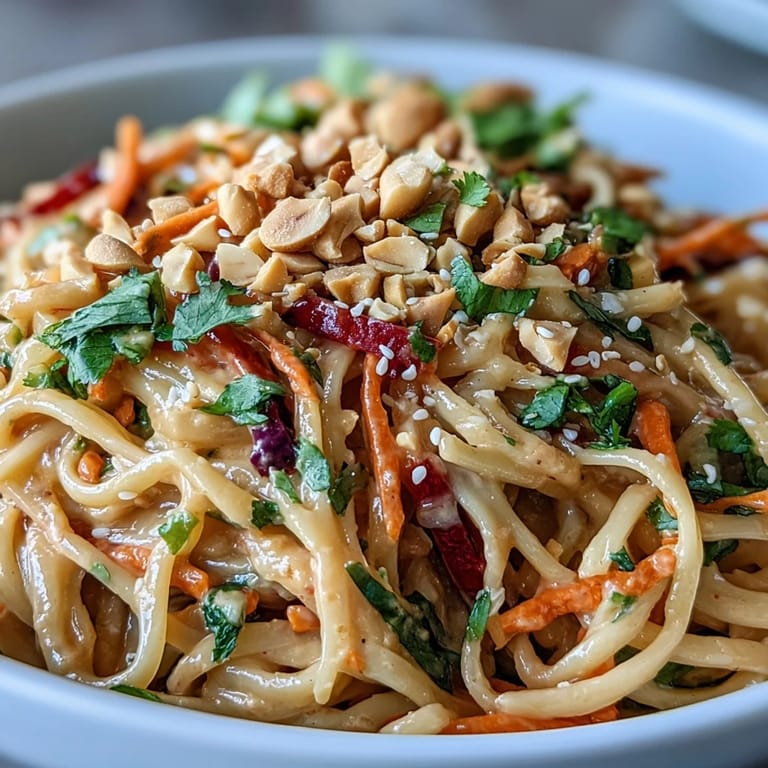
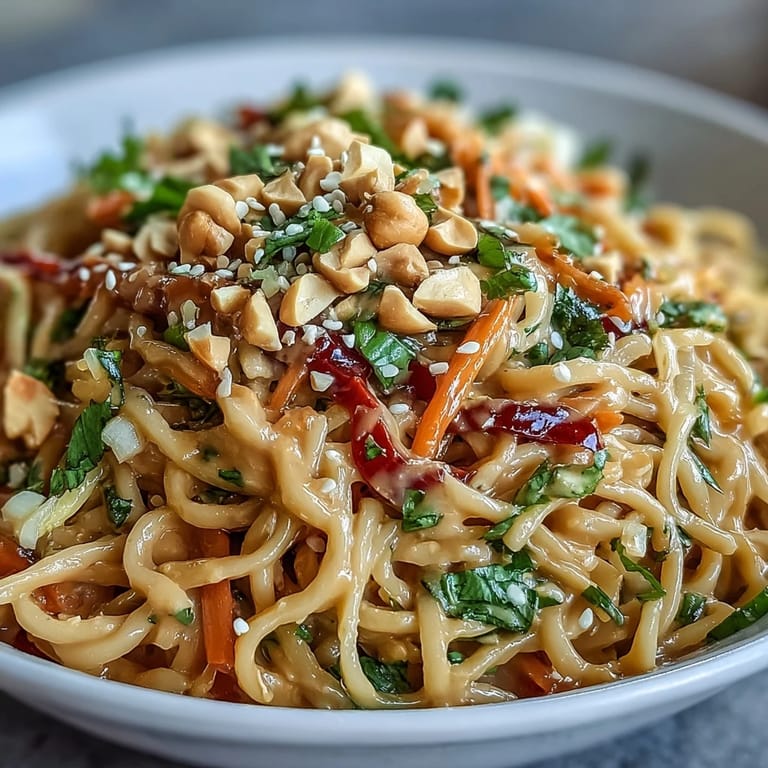
- Pour the peanut dressing over the noodle and vegetable mixture and toss thoroughly using two utensils or your hands (hands are honestly better for this). Keep tossing until every noodle and every vegetable strand is coated with dressing that has turned a rich, creamy tan color.
- Plate and finish:
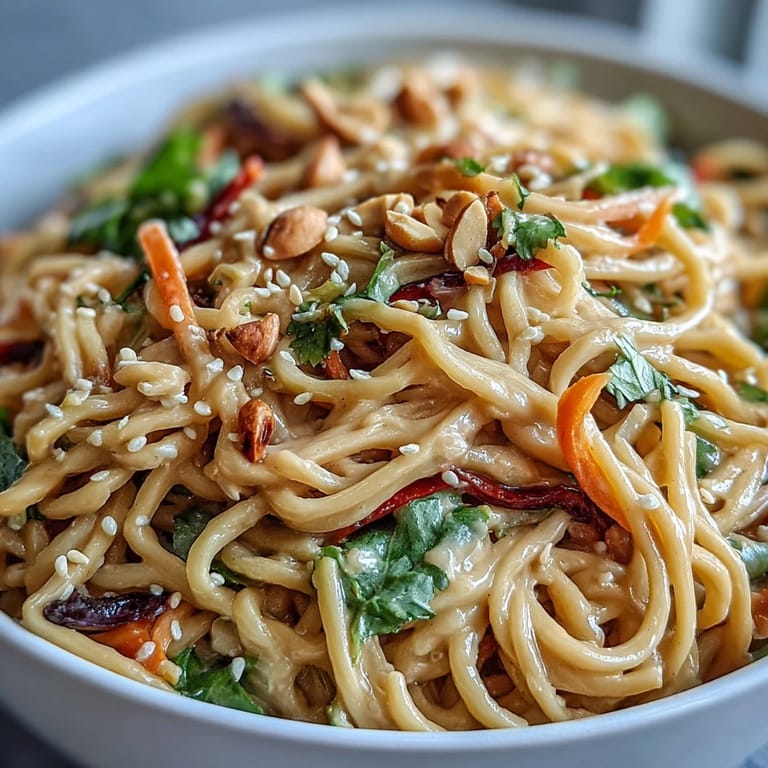
- Divide the dressed noodles among four bowls or plates, creating a gentle nest rather than piling it high. Top each with a generous handful of chopped roasted peanuts, a light scatter of toasted sesame seeds, extra cilantro if you have it, and place a lime wedge on the side.
 Save to Pinterest
 The moment that made this recipe feel real to me was watching someone take a bite and immediately reach for the lime wedge without being told—that's when you know you've built something with actual depth to it. It stopped being a recipe I made and became a dish I make, which is the difference between following instructions and understanding why they matter.
When to Serve This Warm Versus Cold
Cold noodle bowls are what I reach for on days when the kitchen feels too hot and I want something that feels refreshing without being insubstantial, but there's real magic in gently warming everything together in a pan with a splash of extra sesame oil and serving it while the dressing is still warm and cling to the noodles. If you go the warm route, do it gently—toss the whole bowl in a large skillet over medium heat for just a few minutes, stirring constantly, until everything is hot but the vegetables still have their snap. The cold version is better for meal prep because it holds overnight in the refrigerator without getting soggy, while the warm version is better for right-now eating when you want comfort that still feels light.
The Vegetable Question
The vegetables I've listed are really just a starting point—I've made this with cucumber sliced thin, with snap peas halved lengthwise, with shredded daikon radish, with thinly sliced mushrooms sautéed for thirty seconds, and even with shredded zucchini. The only rule is that everything should stay crisp and raw unless you specifically want to cook it, because the contrast between soft noodles and crisp vegetables is what makes each bite interesting. Think about what's in season, what's calling to you from the farmers' market, and what you genuinely want to eat—this bowl is forgiving enough to let you be yourself.
Making It Heartier Without Losing the Balance
This is vegetarian as written, but I've added grilled tofu cut into cubes, strips of pan-seared chicken, quickly seared shrimp, and even soft-boiled eggs halved on top, and every version felt true to the spirit of the dish. If you want protein, the key is letting it take on some of that peanut flavor by tossing it lightly with the dressing or cooking it in a separate pan with a spoonful of the same dressing so it tastes like it belongs. The other option is to add edamame straight from the freezer—they'll warm up from the heat of the noodles and add a creamy, slightly buttery note that feels luxurious without being heavy.
- Grilled tofu and this peanut dressing are genuinely one of the best combinations I've discovered—press it well, cube it, and let it soak in a little dressing before tossing.
- A soft-boiled egg halved over the top adds richness and protein; the yolk breaks into the warm noodles and feels almost decadent.
- If you add protein, taste the bowl again before serving and consider if it needs more lime juice or a pinch more salt to stay bright.
 Save to Pinterest
 This bowl has become my answer to the question of what to make when I want something that feels intentional without demanding hours of my time. It's the kind of dish that reminds me why cooking at home matters—not because homemade is always better, but because when you make something yourself, you taste exactly what you wanted to taste.
Recipe FAQs
- → Can I make this dish gluten-free?
Yes! Use rice noodles instead of wheat noodles and substitute tamari for the soy sauce. Double-check all ingredients, especially the roasted peanuts, to ensure they're certified gluten-free.
- → How long does the peanut dressing last?
The peanut dressing keeps well in an airtight container in the refrigerator for up to one week. The dressing may thicken when cold—simply whisk in a little warm water to reach the desired consistency again.
- → Can I add protein to this noodle bowl?
Absolutely! Grilled tofu, pan-seared chicken strips, or sautéed shrimp work beautifully with these flavors. Marinate the protein in a bit of the peanut dressing before cooking for extra flavor.
- → Is this better served cold or warm?
Both ways are delicious! Serve cold for a refreshing lunch, especially in warmer months. For a comforting dinner, gently warm the coated noodles in a skillet over low heat for 2-3 minutes before adding the fresh toppings.
- → What other vegetables can I use?
This bowl is highly adaptable. Try adding thinly sliced cucumber, snap peas, shredded broccoli stems, or baby spinach. The key is using vegetables that add crunch and color to complement the creamy peanut sauce.
- → Can I make the dressing ahead of time?
Yes, prepare the dressing up to a week in advance and store it in the refrigerator. This makes assembly incredibly quick on busy days. The flavors actually develop and improve after sitting for a day or two.