 Save to Pinterest
 When spring arrives and the herb garden explodes with color, the kitchen fills with the hum of activity, sunlight, and aromatic leaves scattered across the countertop. Baking focaccia on an easy Saturday morning made for a lively break from routine: sticky dough clinging to my hands, windows open, and birdsong mixing with the sizzle of olive oil. It felt less like following a recipe and more like inviting the garden right onto the bread board—a simple, thick slice of spring. There’s always a gentle anticipation watching dough rise by the window, waiting for its pillowy lift. One bite is enough to remember why I love baking simple breads, especially when they're painted with bright, fresh herbs.
Last spring, my cousin dropped by with an unexpected basket of tomatoes just as the dough was finishing its second rise. We ended up laughing about her ‘herb confetti’ as she tossed extra thyme and basil onto the focaccia while I tried not to oil everything in sight. The kitchen smelled like we’d hidden a tiny pizzeria inside our home, and the bread disappeared so fast I vowed to make double next time friends came over.
Ingredients
- Bread flour: The extra protein gives a chewy crumb and those signature airy bubbles—use fresh flour for best lift.
- Fine sea salt: Balances the flavors and seasons both the dough and topping without harshness; taste a tiny pinch on its own to see the difference from table salt.
- Active dry yeast: I always check the date and let it proof with warm water to ensure a good rise—skip this step, and you’ll risk a sad, flat bread.
- Lukewarm water: Not hot or cold—think the temperature of a pleasant spring morning—so the yeast wakes up happy, not shocked.
- Extra-virgin olive oil: Adds rich depth and a golden crust; don’t be shy with it on your hands or the pan.
- Cherry tomatoes: Their sweetness concentrates in the oven, bursting into little pockets of juicy flavor—choose the ripest you can.
- Fresh rosemary: Just a sprinkle infuses the bread with earthy, piney aroma—a little goes a long way.
- Fresh thyme: Lemony and floral, thyme dots every bite with gentle herbaceousness—strip from stems for easier scattering.
- Fresh chives: Finely chopped, they melt into the bread, offering mild oniony notes; scissors work great here.
- Fresh basil: Tear, don’t chop—the torn edges deepen the aroma and keep the leaves tender as they bake.
- Flaky sea salt: A final shower that crunches atop the focaccia—sprinkle just before baking so it doesn’t dissolve away.
- Black pepper: Cracked fresh for a spicy lift; use generously if you like a little warmth against the sweet tomatoes.
Tired of Takeout? 🥡
Get 10 meals you can make faster than delivery arrives. Seriously.
One email. No spam. Unsubscribe anytime.
Instructions
- Prepare the dough:
- Whisk flour and salt together in a large bowl so they're evenly blended and ready for the liquids. Pause and breathe in the flour before adding yeast—it always reminds me of early bakery mornings.
- Activate the yeast:
- In a small bowl, dissolve yeast in lukewarm water and watch for that telltale foaming—almost like a mini science experiment in patience for 5 minutes.
- Combine wet and dry ingredients:
- Pour the foamy yeast mixture with olive oil into your bowl of dry ingredients and mix purposely with a wooden spoon. Embrace the sticky mess, scraping the bottom until you have a shaggy, unified dough.
- First rise:
- Oil a fresh bowl and gently transfer the dough in, flipping it once to coat. Cover with a damp towel and set near a warm spot—on sunny days, windowsills work wonders—let it rise until doubled (about 1–1.5 hours).
- Shape and dimple:
- Generously oil a 9x13-inch baking tray, then tip the dough in and stretch it gently, pressing with oiled fingertips to create deep dimples across the surface. Those little pockets are what catch all that herby olive nectar.
- Second rise:
- Cover again and let the dough puff up for 30–40 minutes; it relaxes into its new shape and develops fantastic flavor during this short rest.
- Top with herbs and tomatoes:
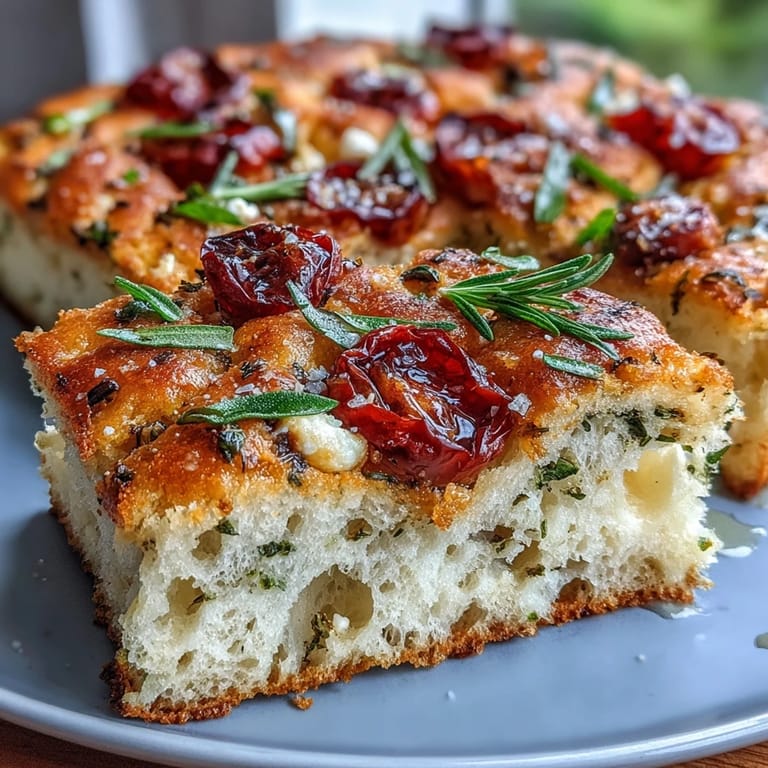
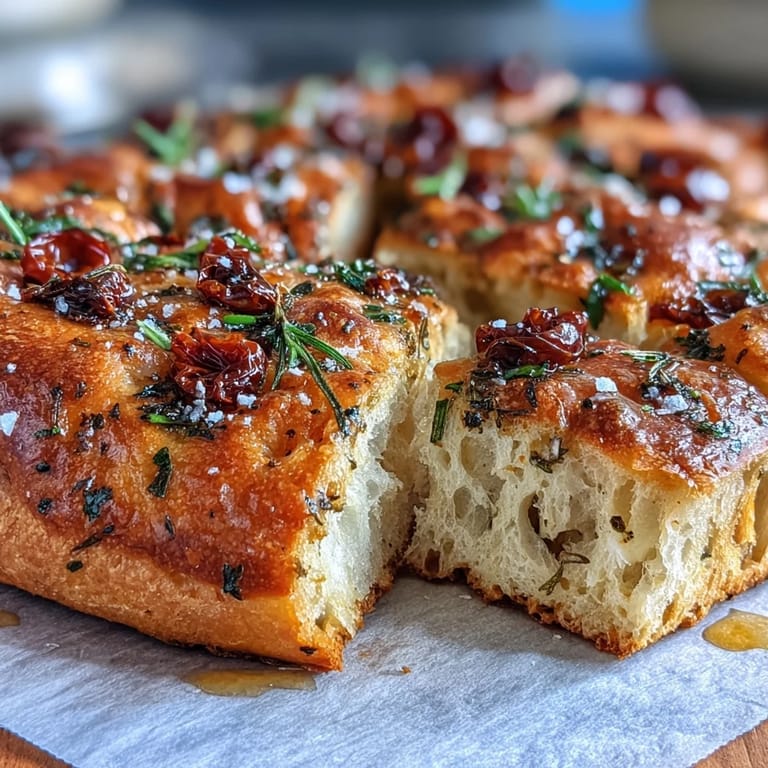
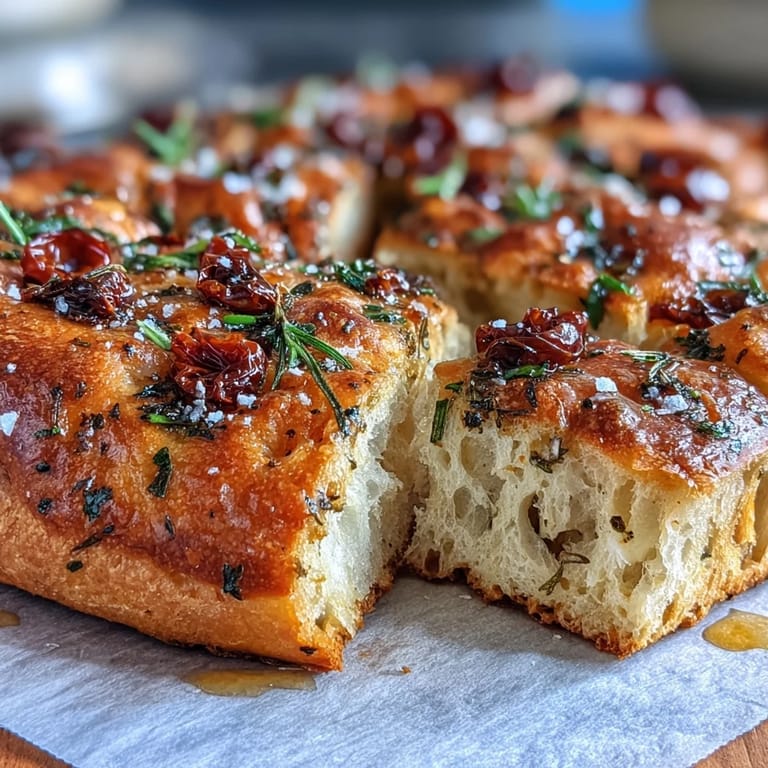
- Drizzle with more olive oil, then scatter cherry tomatoes, rosemary, thyme, chives, basil, and flaky salt generously. Add a grind of pepper and soak in the garden aromas right before the bread hits the oven.
- Bake:
- Slide the tray into a 220°C oven and bake for about 22–25 minutes until golden with crispy edges and a slightly springy middle. Rotate halfway if your oven heats unevenly.
- Cool and serve:
- Let the focaccia rest a few minutes before slicing so it finishes steaming through—then serve warm or at room temperature, maybe with olive oil and vinegar for dipping.
 Save to Pinterest
  Save to Pinterest
 One sunset picnic, we tore into this focaccia on a checkered blanket by the lake, bread still faintly warm from the oven. A loaf that had started as a humble experiment became the reason for contented sighs and olive oil-slicked smiles under the spring sky.
Getting That Perfectly Soft Crumb
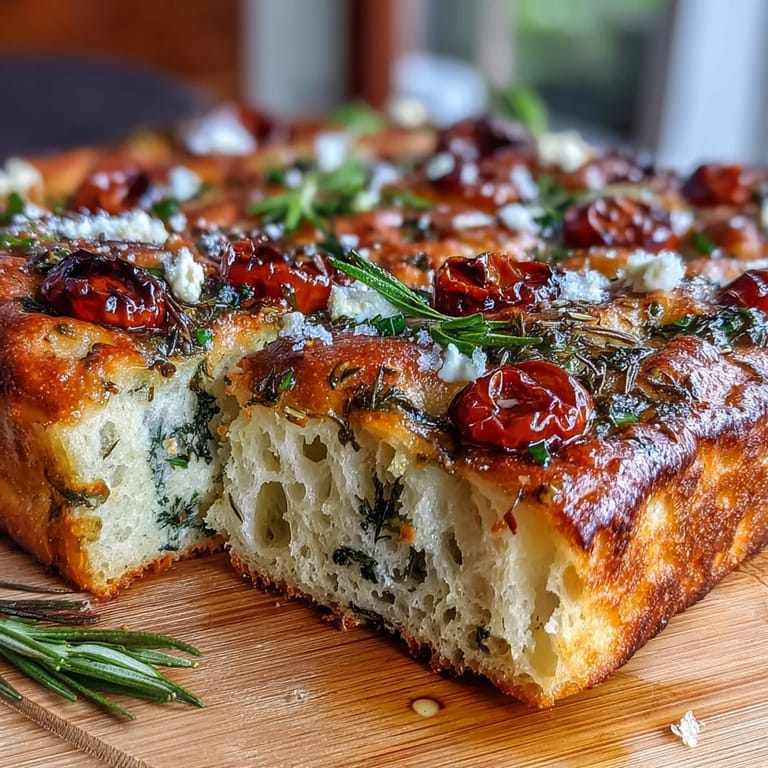
The key is not to rush the rises—especially the first. I sometimes leave the bowl near a barely-cracked oven to capture any gentle warmth, which nudges the dough along without drying it out or over-proofing.
How to Make the Top Extra Golden
Brushing the dough right before baking with a little extra olive oil creates a vibrant golden sheen and intensifies the crunchy edges. If you have leftover oil from marinating the herbs, that's the best to use for brushing on top.
Fresh Herbs: What Works and What Surprises
Don’t hesitate to play with whatever is in your crisper or garden—tarragon, dill, parsley, or even a little mint all lend their own bright notes. Too many hard-stemmed herbs, though, can poke out or burn, so keep those minimal and tuck them into the dough if using.
- Always check herbs for hidden little snails or soil if picking fresh from outdoors.
- Chop chives but tear basil for the best aroma.
- Don't forget to dimple all the way to the bottom so toppings cling on every bite.
 Save to Pinterest
  Save to Pinterest
 Focaccia’s best magic is the way it gathers people—around tables or picnic rugs or even just beside an open oven, all sharing a warm, herby slice of spring. Hope you enjoy making it your own as much as we do.
Recipe FAQs
- → How long should the dough rise?
Allow the first rise for 1–1.5 hours until doubled, then after shaping let it rise again 30–40 minutes. A warm, draft-free spot speeds proofing.
- → Can I use all-purpose flour instead of bread flour?
Bread flour gives a chewier, more structured crumb; all-purpose will work but expect a slightly softer, less airy texture.
- → How do I prevent the tomato topping from making the dough soggy?
Use halved cherry tomatoes and pat them dry before topping. Press them lightly into dimples so juices mingle but don’t pool; a good oven temperature helps evaporate excess moisture.
- → What oven temperature and baking time produce the best crust?
Preheat to 220°C (425°F) and bake 22–25 minutes until the surface is golden and edges are crisp. Adjust a few minutes based on your oven’s hot spots.
- → Which herbs work best and can I substitute others?
Rosemary, thyme, chives and basil give a fresh spring character. Swap or add soft herbs like parsley, tarragon or dill, and consider grated Parmesan for extra savory depth.
- → How should I store and reheat leftovers?
Store wrapped at room temperature for up to 2 days or freeze slices for longer. Reheat in a 180°C (350°F) oven for 8–10 minutes to restore crispness.