 Save to Pinterest
 There's something about the sound of pita crisping in the oven that instantly transports me to a late afternoon in my friend's kitchen, the one with the window overlooking her garden. She was making fattoush for the first time, nervous about getting the balance right between the greens and the dressing, and I watched as she tossed that humble salad with such care that it became something almost ceremonial. Now, every time I make it, I chase that same feeling—that perfect moment when everything comes together and suddenly you're not just eating lunch, you're tasting sunshine and earth and the memory of good company.
I made this for my sister when she was going through a phase of eating nothing but sad desk salads, and something about the bright colors and the crunch woke her up. She came back the next week asking for the recipe, and now it's her go-to when she wants to feel like she's traveled somewhere without leaving her apartment. That's when I knew this salad does more than nourish—it changes the mood of an entire meal.
Ingredients
- Mixed greens (romaine, arugula, or purslane): Choose what feels fresh and alive to you; romaine gives you structure, arugula adds a peppery edge, and purslane brings an almost bitter earthiness that Lebanese cooks swear by.
- Tomatoes: Use ones that actually smell like tomatoes, not the pale imposters; the juiciness is half the story here.
- Cucumber: Dice it large enough to feel substantial but small enough that it plays well with the greens.
- Radishes: They're not just pretty—they add a crisp bite that keeps your palate awake.
- Red onion: Slice it thin so it softens slightly as it sits, but don't let it sit too long or it'll muscle out the other flavors.
- Fresh parsley and mint: These are not garnishes; they're the soul of the salad, so use your hands and be generous.
- Pita bread: If you can find ones that are still warm, even better; they crisp up faster and taste like they were meant for this.
- Olive oil (extra-virgin for the dressing): This is where you use the good stuff—the kind that tastes like olives, not like a factory.
- Sumac: This is the secret everyone asks about; it's tart, lemony, and vaguely mysterious, and it's what makes fattoush feel authentically Lebanese instead of just another salad.
- Lemon juice and red wine vinegar: Together they create a dressing that sings without overwhelming the vegetables.
- Garlic: One clove, minced fine, so it distributes evenly and reminds you that this isn't a delicate, precious thing—it's bold and meant to be tasted.
Tired of Takeout? 🥡
Get 10 meals you can make faster than delivery arrives. Seriously.
One email. No spam. Unsubscribe anytime.
Instructions
- Prepare your pita for its transformation:
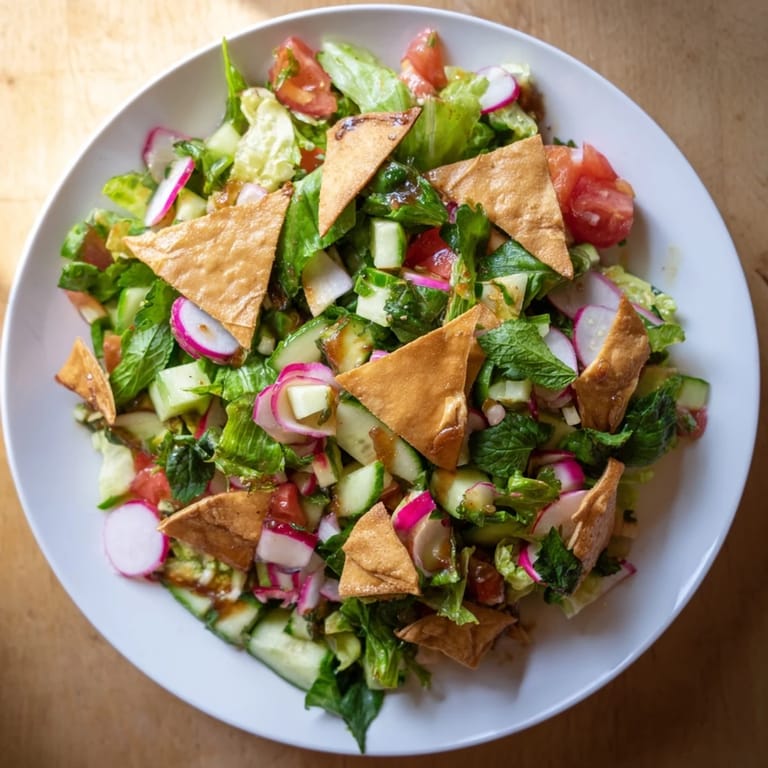
- Heat your oven to 375°F and cut the pita into pieces that feel right in your hand—squares if you want order, triangles if you're feeling a little wild. Toss them with olive oil and salt until they're glossy, spread them out on a baking sheet so they're not crowded, and bake for 8 to 10 minutes until they're golden and sound crispy when you break one in half.
- Build your salad base:
- In a large bowl, combine all your chopped vegetables and herbs, taking your time with the chopping so every piece looks intentional. Don't add the dressing yet; let everything sit there bright and unbothered, waiting.
- Make the dressing that holds it all together:
- In a small bowl, whisk the olive oil, lemon juice, vinegar, sumac, garlic, salt, and pepper together until the mixture thickens slightly and looks creamy. Taste it—this is the moment you adjust, adding more sumac if you want more tang or more salt if it feels flat.
- Assemble just before you eat:
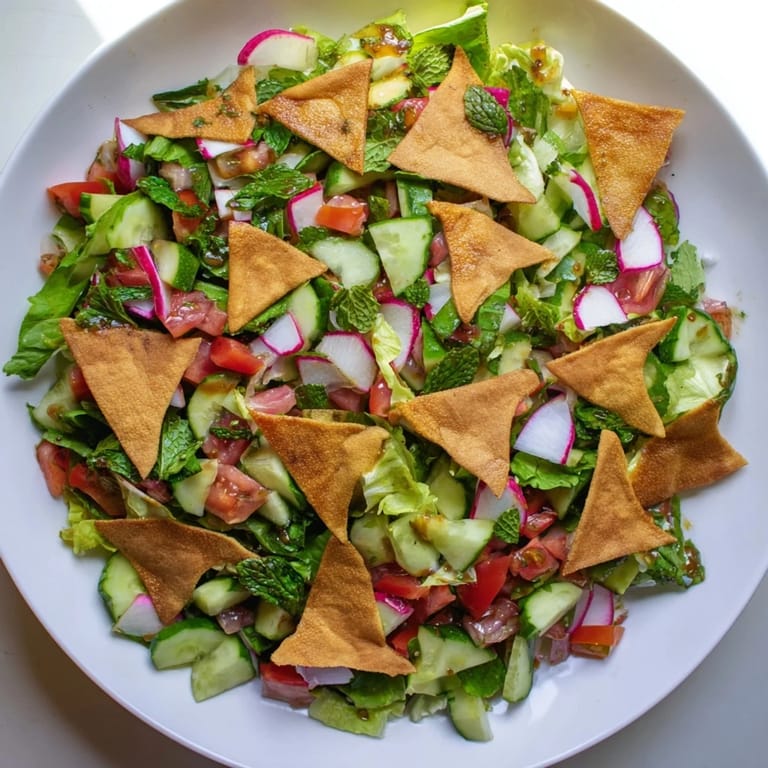
- Add the crispy pita chips to your salad and pour the dressing over everything, then toss gently so the greens stay on your salad and not on the counter. Serve immediately, because once the chips hit the dressing, the clock is ticking.
 Save to Pinterest
 There was an evening when I served this to people I'd just met, nervous that something so simple might feel too plain for company. But watching them light up at that first bite—the way their eyes widened at the sumac, the way they looked around confused about where the crunch was coming from—that's when I realized simplicity done right is never plain.
The Art of Pita Chips
Homemade pita chips change the entire game compared to anything store-bought, and the difference is honestly just patience and one thing: don't let them burn. That thin line between golden and overdone happens in about 30 seconds, so stay near the oven and pull them out the moment they smell toasted, not singed. If you want to get fancy, rub a raw garlic clove on the pita before you oil and salt it—the garlic toasts into the chip and becomes almost caramel-sweet.
Understanding Sumac
Sumac is a dried spice made from the berries of a Middle Eastern shrub, and it tastes like lemon zest mixed with a whisper of something floral. It's not sour in the way lemon is; it's more sophisticated, with a complexity that makes people pause and ask what you did differently. You'll find it at Middle Eastern markets, specialty grocers, or online, and once you start using it, you'll wonder how you ever made salad dressing without it.
Variations and Additions
This salad is forgiving and loves experimentation, which means you can add grilled chicken, crumbled feta, or roasted chickpeas without apologizing. You can slip in bell pepper, fresh green onions, or even a handful of pomegranate seeds if the season is right and you're feeling generous. The base stays the same, but the story changes with what you add.
- Serve it alongside grilled meats for a complete meal that feels both casual and celebratory.
- Make it part of a mezze spread with hummus, baba ganoush, and fresh bread, turning one salad into an entire feast.
- Keep the dressing separate if you're packing it for lunch, adding it only when you're ready to eat so the chips stay crispy and true.
 Save to Pinterest
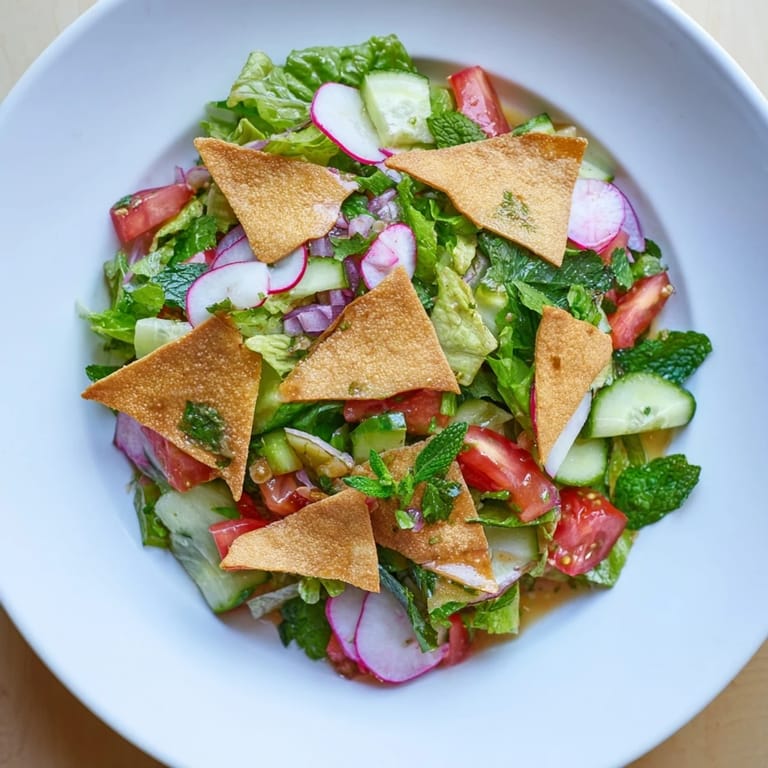
 This salad is proof that you don't need complicated techniques or a list of obscure ingredients to create something that tastes like you've been cooking for years. Serve it with confidence and watch people rediscover what they thought they knew about salad.
Recipe FAQs
- → What is the best way to prepare the pita chips?
Cut pita bread into bite-sized pieces, toss with olive oil and sea salt, then bake at 375°F for 8–10 minutes until golden and crisp.
- → Can I use other greens besides romaine and arugula?
Yes, purslane or other fresh mixed greens work well and add variety to the texture and flavor.
- → How does sumac affect the dressing?
Ground sumac adds a tart, lemony flavor that brightens the dressing and complements the fresh ingredients.
- → Is there a way to make this dish gluten-free?
Use gluten-free pita or omit the pita chips altogether to keep it gluten-free without sacrificing taste.
- → Can the salad be stored after tossing with the dressing?
For best texture, keep the pita chips separate and add them just before serving to maintain their crunch.