 Save to Pinterest
 The briny ocean air of Cape Cod will forever remind me of my first authentic New England clam chowder. Standing in my aunt's weathered coastal kitchen, I watched her hands expertly shuck fresh littleneck clams while fog rolled in outside her windows. The rhythmic sound of her knife against the shells became a gentle percussion to our conversation as she passed down this treasured recipe that had sustained fishermen through harsh winters for generations.
Last winter during that terrible snowstorm, I made this chowder while the power flickered ominously. My neighbor had trudged through knee-deep snow to check on me, and I insisted she stay for a hot meal. We sat by candlelight, steam rising from our bowls, grateful for warmth and good company as the wind howled outside. Something about that night made this chowder taste exceptionally comforting.
Ingredients
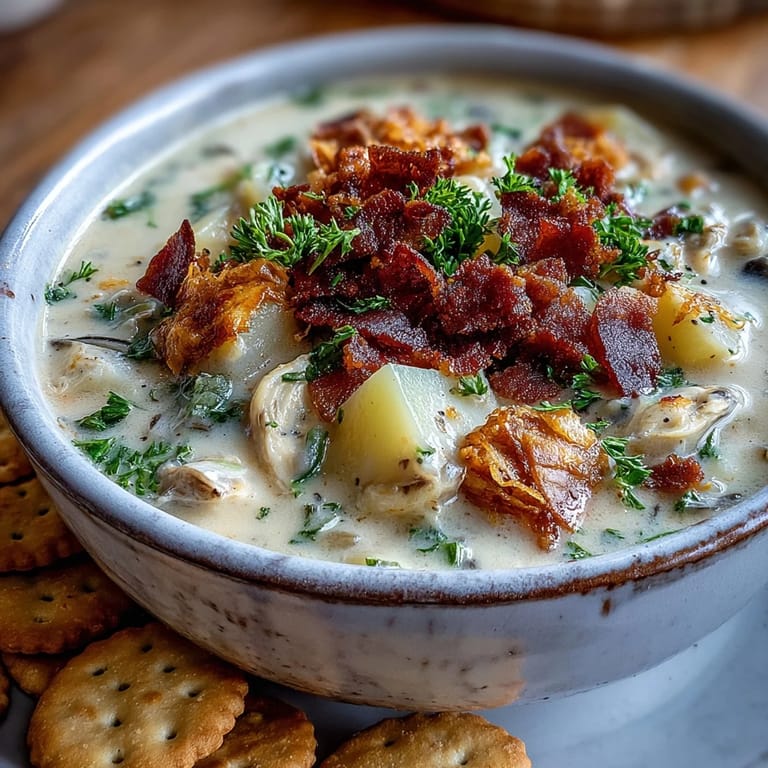
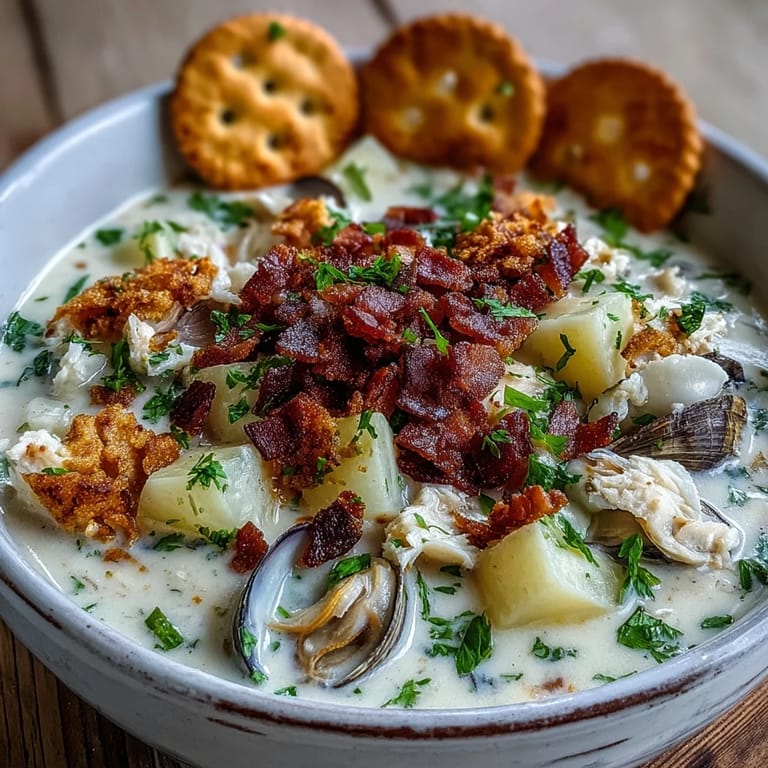
- Fresh Clams: Their natural sweetness is the foundation of this chowder, but I've learned that canned clams work beautifully in a pinch when fresh aren't available.
- Yukon Gold Potatoes: These maintain their structure while releasing just enough starch to help thicken the chowder naturally.
- Salt Pork: The traditional fat used by New England fishermen, adding a unique depth that regular bacon can't quite match.
- Heavy Cream: Don't compromise here - it creates that signature velvety mouthfeel that defines a proper New England chowder.
- Bay Leaf: Just one transforms the broth with a subtle aromatic quality that ties all the flavors together.
Tired of Takeout? 🥡
Get 10 meals you can make faster than delivery arrives. Seriously.
One email. No spam. Unsubscribe anytime.
Instructions
- Prepare the Clams:
- If using fresh clams, scrub them well and steam until their shells open wide, revealing their tender treasures inside. The aroma that rises with the steam is your first reward.
- Build the Flavor Base:
- Render the salt pork until it releases its fat and turns crisp, creating little nuggets of savory goodness. This ancient preservation method brings authentic depth to your chowder.
- Create the Roux:
- Sprinkle flour over the sautéed vegetables and stir continuously as it cooks. You'll notice the mixture becoming pasty and fragrant, signaling it's ready to thicken your chowder.
- Simmer the Potatoes:
- As the potatoes bubble gently in the broth, occasionally press one against the side of the pot to test for tenderness. They should yield easily but still hold their shape.
- Add the Clams:
- Fold in your clams with gentle care, keeping the heat low. Listen for the barely perceptible simmer that tells you the temperature is perfect for preserving their delicate texture.
 Save to Pinterest
  Save to Pinterest
 My kitchen filled with the aroma of this chowder the night my son returned from college for winter break. I saw his face light up when he walked through the door, instantly recognizing the scent from countless family gatherings. Without even setting down his bags, he grabbed a spoon and reached for a taste from the pot, closing his eyes with that smile that said he was truly home.
The Clam Controversy
I've learned that clam chowder can spark surprisingly passionate debates among New Englanders. Some insist quahogs are the only proper clam, while others defend littlenecks with surprising fervor. After years of experimentation, I've found that mixing clam varieties creates a more complex flavor profile that satisfies even the most traditional palates. When using canned clams, I always add extra clam juice to boost that oceanic essence that might otherwise be lacking.
Achieving Perfect Consistency
New England clam chowder should be hearty enough to satisfy but never so thick a spoon stands upright. I discovered this balance quite by accident when I ran out of flour one snowy evening and used less than half my usual amount. The resulting texture was revelatory - silky and substantial without feeling starchy or heavy. Now I use the potatoes themselves to provide natural thickening by slightly mashing about a quarter of them against the side of the pot during cooking.
Serving Suggestions
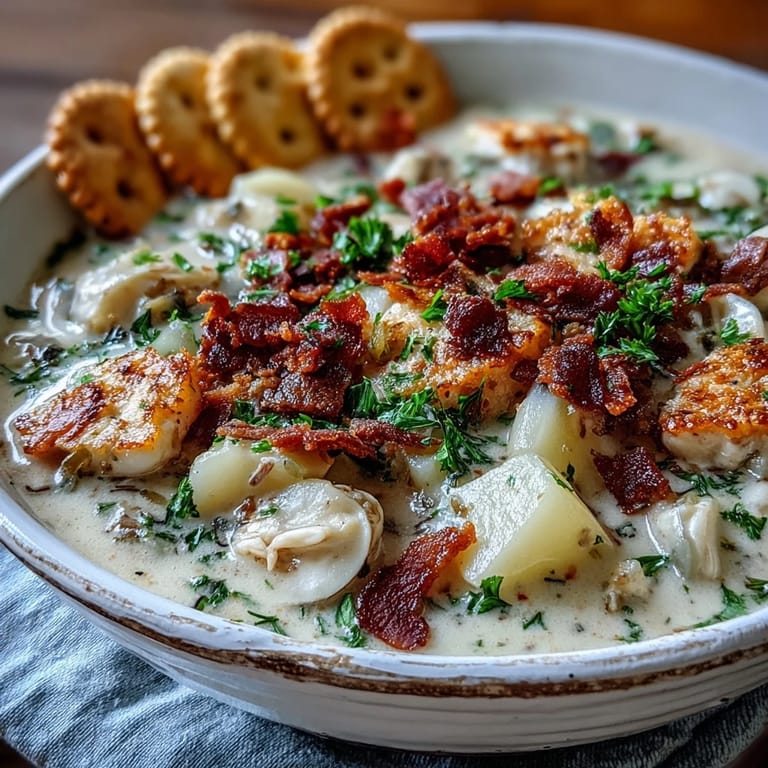
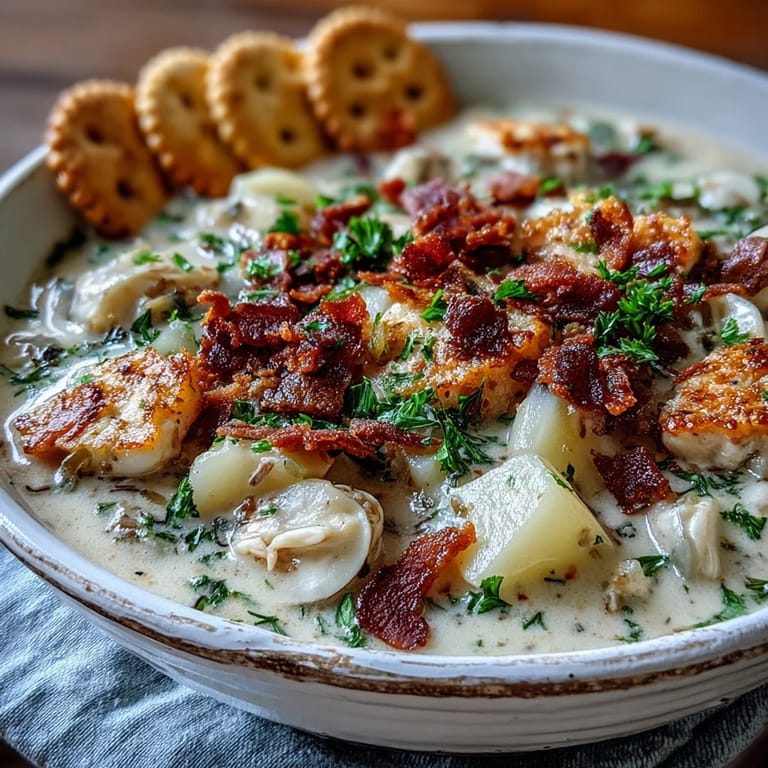
While some restaurants serve chowder in bread bowls, I prefer the simplicity of a wide, shallow bowl that allows the steam to rise and the surface to cool just enough for that first perfect spoonful. The temperature contrast between the hot chowder and cold air enhances the experience, which is why this dish truly shines in winter months when the warmth radiates through your body from the inside out.
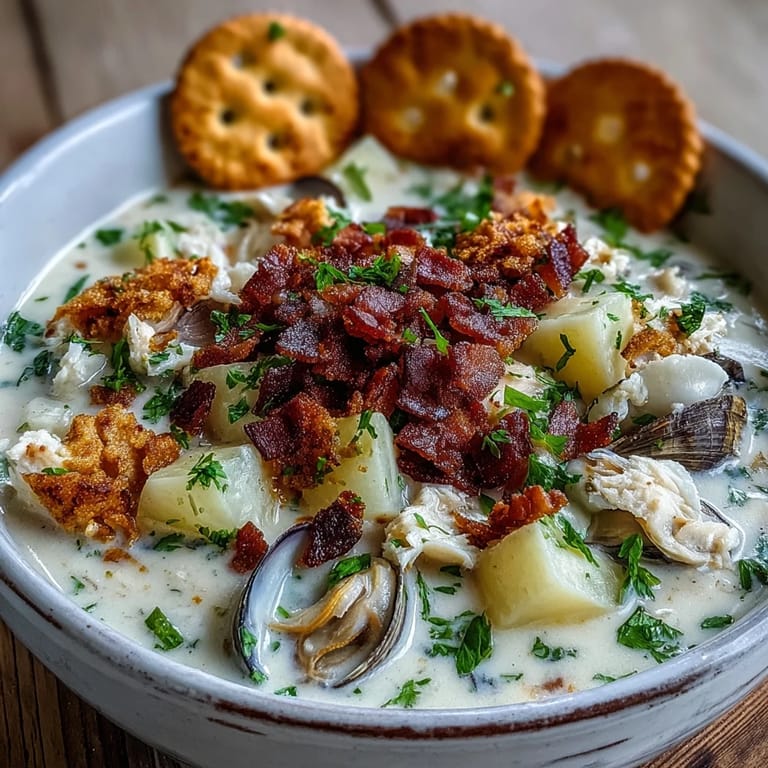
- For authenticity, serve with traditional Westminster oyster crackers on the side rather than crumbled on top.
- A small splash of sherry added tableside elevates this chowder to special-occasion status.
- Consider offering a bottle of Tabasco for those who enjoy a hint of heat cutting through the richness.
 Save to Pinterest
  Save to Pinterest
 This chowder connects us to generations of New Englanders who found comfort in its creamy depths through harsh winters and uncertain times. Each spoonful carries not just nourishment but a tangible link to coastal tradition.
Recipe FAQs
- → What makes this authentic New England style?
True New England white chowder features a creamy milk-based broth rather than the tomato-based Manhattan version. The combination of heavy cream, whole milk, and a flour roux creates the signature velvety texture. Salt pork or bacon provides essential smoky depth, while tender potatoes and fresh clams remain the stars.
- → Can I use canned clams instead of fresh?
Absolutely. Canned chopped clams work beautifully and save considerable prep time. Use the juice from the cans as part of your clam liquid—that brine carries essential flavor. Two cups of canned clams with their juice equals roughly two pounds of fresh clams in the final dish.
- → Why shouldn't I boil after adding clams?
High heat toughens clam meat quickly, turning it rubbery and unpleasant. Boiling also risks causing the cream and milk to separate or curdle. Maintain a gentle simmer once clams join the pot—just enough movement to heat everything through without aggressive bubbling.
- → How do I prevent the chowder from being too thick or thin?
The flour roux in step four provides consistent thickening power. If your chowder seems too thick, thin with additional clam juice or water. Too thin? Simmer longer to reduce, or whisk another tablespoon of flour dissolved in cold broth into the pot. The potatoes also release starch as they cook, naturally thickening the broth.
- → What's the difference between salt pork and bacon here?
Salt pork is cured pork fatback with minimal meat, offering pure, clean smoky flavor without overwhelming the delicate clams. Bacon adds more meaty texture and a stronger smoke profile. Both work well—choose based on preference and availability. Salt pork stays more traditional to the coastal Northeast.
- → Can I make this chowder in advance?
Yes, actually it improves overnight. Prepare completely through step eight, cool rapidly, and refrigerate. The flavors meld beautifully, and the potatoes continue releasing starch for an even creamier texture. Reheat gently over low-medium heat, stirring frequently and adding a splash of cream if needed.