 Save to Pinterest
 The first time I truly understood caramel wasn't in a dessert kitchen—it was watching my neighbor's mother cook this dish on a humid afternoon in Ho Chi Minh City. She'd invite me over for lunch, and I'd stand mesmerized as she melted sugar in a blackened wok, listening for that exact moment when it shifted from golden to deep amber. The chicken would sizzle in, and suddenly the kitchen smelled like fish sauce, lime, and something almost burnt in the best way possible. I spent three years getting that moment right before I stopped overthinking it and just cooked by feel.
I made this for a dinner party during a chaotic week, and honestly I almost canceled because my kitchen felt cramped and my confidence was low. But something about the simplicity of the ingredient list calmed me down—just chicken, caramel, and fish sauce doing the heavy lifting. My guests kept asking what restaurant I'd ordered from, and I remember feeling this small proud moment standing at my stove, wooden spoon in hand, watching the transformation happen in real time.
Ingredients
- Boneless, skinless chicken thighs (800 g): Thighs are your secret weapon here—they have enough fat to stay juicy through the cooking process, and they absorb the caramel glaze like nothing else can. If you use breast meat, you'll need to watch the clock closely to avoid dryness, but the choice is yours.
- Fish sauce (3 tbsp): This is non-negotiable for authenticity, and yes, it smells aggressive in the bottle. Once it cooks into the caramel, it becomes this savory backbone that makes people ask what the secret ingredient is.
- Light soy sauce (2 tbsp): Adds salinity and depth without overpowering the fish sauce—use the lighter version so you can taste the complexity.
- Brown sugar (2 tbsp): This rounds out the marinade with gentle sweetness and pairs beautifully with the caramel layer coming next.
- Lime juice (1 tbsp): A squeeze of brightness that cuts through the richness and keeps the dish from feeling heavy on your palate.
- Minced garlic (2 tsp): Use fresh garlic, not powder—you'll taste the difference the moment it hits the hot pan.
- Freshly ground black pepper (1 tsp): Ground fresh right before cooking makes an actual difference in the flavor profile here.
- Vegetable oil (1 tbsp): This helps the chicken cook evenly and keeps the caramel from seizing up when you add the marinade.
- Granulated sugar (4 tbsp): The foundation of your caramel—don't skip the caramelization step, as it creates depth no other technique can match.
- Water (3 tbsp): Just enough to help the sugar dissolve and turn into liquid gold before it darkens.
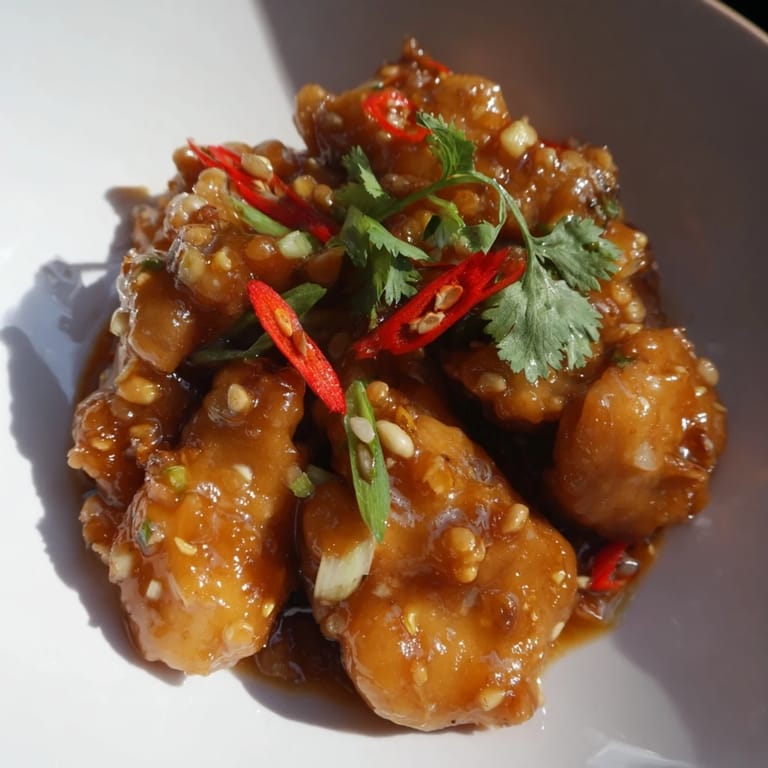
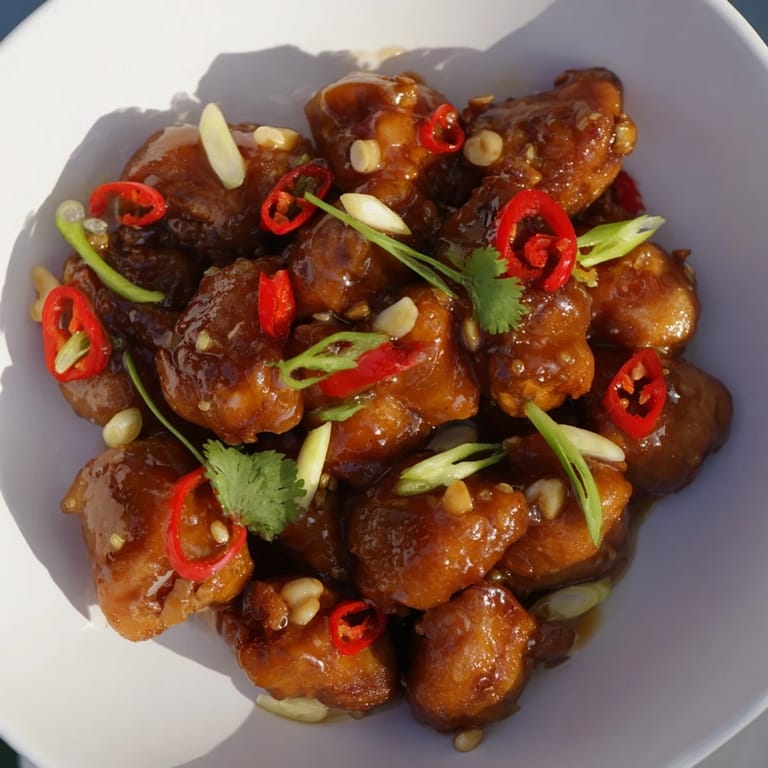
- Spring onions, red chili, and fresh coriander: These garnishes are more than decoration—they add texture, heat, and herbaceous freshness that makes the dish sing.
Tired of Takeout? 🥡
Get 10 meals you can make faster than delivery arrives. Seriously.
One email. No spam. Unsubscribe anytime.
Instructions
- Marinate the chicken:
- Toss your chicken pieces into a bowl with fish sauce, soy sauce, lime juice, minced garlic, and black pepper. Let it sit for at least 15 minutes—I usually do this while I'm prepping other things, and the chicken absorbs all those flavors while you're occupied elsewhere.
- Create your caramel:
- Pour 4 tbsp sugar and 3 tbsp water into your skillet over medium heat and resist every urge to stir or fuss with it. Watch as it transforms from clear to pale gold to that deep mahogany color—this takes about 4 to 5 minutes, and honestly, this is the scariest part until you've done it a few times.
- Marry the chicken and caramel:
- The moment your caramel hits that deep amber, pour in the marinated chicken and all its juices without hesitation. You'll hear a satisfying sizzle, and the caramel will coat every piece as you toss it around with tongs or a spatula.
- Cook until glossy:
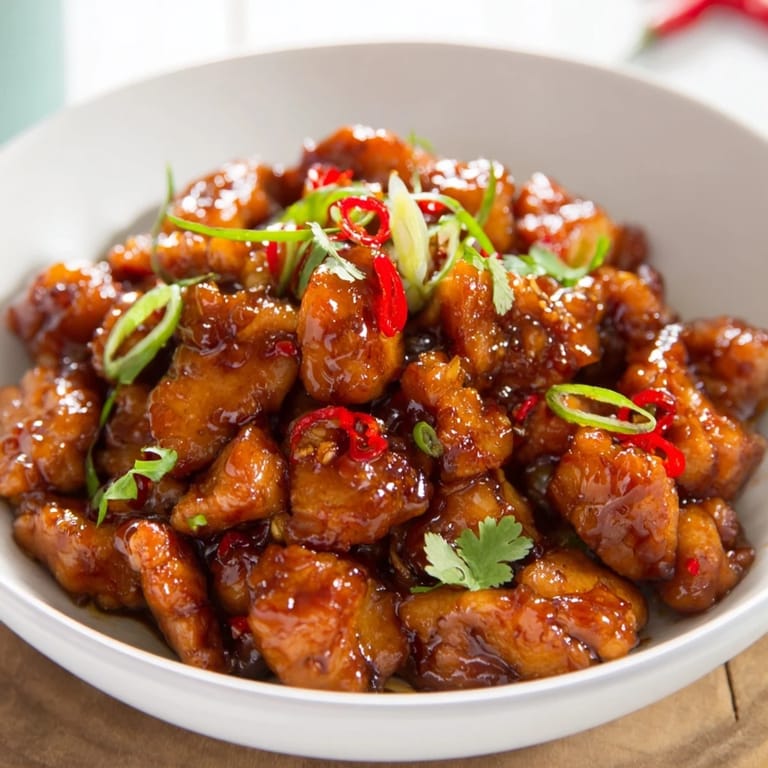
- Add the vegetable oil and crank the heat to medium-high, stirring occasionally for 8 to 10 minutes. The sauce will thicken as the liquid reduces, and you'll notice it shifting from wet and soupy to thick and clingy—that's when you know you're close.
- Taste and balance:
- Before plating, taste a piece and adjust if needed—add a touch more fish sauce for umami, or squeeze of lime if it feels too rich. This is your kitchen, your palate, and your call.
- Finish and serve:
- Transfer everything to a serving plate while it's hot, scatter the sliced spring onions, chili, and coriander over the top, and serve alongside steamed jasmine rice to soak up every last drop of that glossy sauce.
 Save to Pinterest
 There's this moment in cooking this dish where your kitchen smells like caramel and fish sauce and lime all at once, and it hits you that this isn't just dinner—it's a small act of bringing someone else's food memory into your own home. My partner ate this once and said it reminded him of traveling in Hanoi with his family years ago, and I realized that food does that, it carries stories across time and continents.
Why Chicken Thighs Matter Most
I learned the hard way that chicken breast turns into rubber when you cook it in caramel because the high heat and the sweetness can dry it out faster than you'd expect. Chicken thighs have a higher fat content, which means they stay tender and absorb the glaze like they're meant for each other. Once I switched, the dish transformed from something I'd make in a pinch to something I actually looked forward to cooking.
The Caramel Moment
Making caramel without stirring feels counterintuitive at first—you're standing there watching sugar and water, resisting the urge to help it along, fighting every cooking instinct you've been taught. But the magic happens in that stillness: the sugar dissolves evenly, the heat concentrates, and suddenly you have liquid amber that smells like toasted sweetness. Stir too early and you'll get grainy crystals instead of smooth caramel, which is why patience here is more important than technique.
Balancing Sweet, Salty, and Sour
Vietnamese cooking lives in that tension between sweetness, saltiness, and sourness, and this dish is the perfect example of how those three flavors need each other. The caramel brings the sweet, the fish sauce brings the salt and umami, and the lime juice brings brightness and cut. If your first taste feels one-dimensional, it's usually because one of these three is missing its voice, so taste before you serve and adjust with confidence.
- Add more fish sauce if it tastes too sweet and needs savory depth.
- Squeeze more lime if it feels heavy and needs to feel lighter on your tongue.
- Trust your palate more than the recipe—every stove and every batch of chicken is slightly different.
 Save to Pinterest
 This dish has become something I make when I want to feel like I'm cooking with intention, when flavors matter more than speed. It's the kind of meal that fills a kitchen with warmth and brings people to the table asking questions.
Recipe FAQs
- → What cut of chicken works best?
Boneless, skinless chicken thighs are preferred for their tenderness and ability to absorb flavors well.
- → How is the caramel sauce prepared?
The caramel is made by gently heating granulated sugar with water until deep amber, creating a rich base for the glaze.
- → Can I adjust the spice level?
Yes, adding more sliced chili or chili flakes can increase the heat according to your taste.
- → What side dishes pair well?
Steamed jasmine rice complements the savory-sweet glaze, balancing the dish perfectly.
- → Is this suitable for a dairy-free diet?
Yes, this dish contains no dairy ingredients, making it suitable for dairy-free diets.
- → Can chicken breast be used instead?
Chicken breast works but requires careful cooking to prevent dryness; consider reducing cooking time.