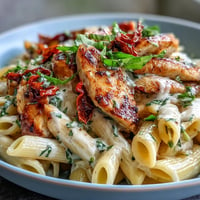
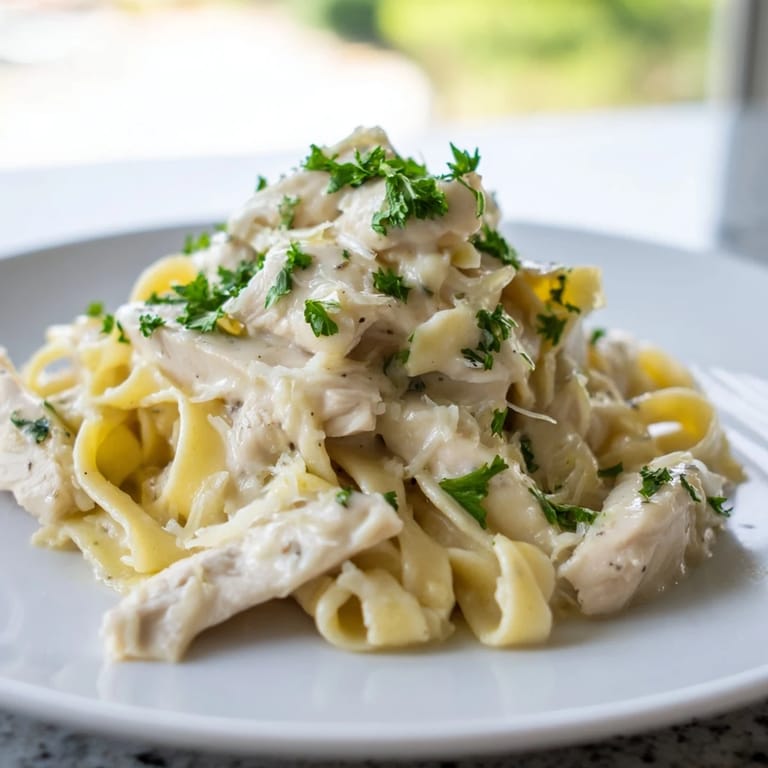
 Save to Pinterest
 There's something about the sizzle of chicken hitting hot oil that makes a weeknight feel less like an obligation and more like an occasion. My neighbor stopped by one evening while I was testing this skillet Alfredo, and the aroma alone had her lingering in the kitchen, asking questions before I'd even finished cooking. One pot, thirty-five minutes, and suddenly dinner transforms into something that tastes like it came from a restaurant tucked away on some quiet Roman street. It's become my go-to when I want comfort food that doesn't demand hours of my attention.
I made this for my daughter's best friend who'd been having a rough week, and watching her face light up when she took that first bite reminded me why cooking for people matters. She asked for the recipe before dessert, which felt like the highest compliment I could receive. That evening taught me that food has a way of saying things words sometimes can't.
Ingredients
- Chicken breasts: Slicing them into strips instead of leaving them whole means they cook faster and absorb the sauce better, plus they look more elegant on the plate.
- Fettuccine or penne pasta: Either shape works beautifully, but the thinner ribbons of fettuccine catch the sauce in a way that feels almost luxurious.
- Unsalted butter and olive oil: Using both gives you the flavor depth of butter without burning, since olive oil has a higher smoke point.
- Garlic cloves: Mince them finely and sauté just until fragrant; overcooked garlic turns bitter and ruins the whole sauce.
- Heavy cream: This is the soul of Alfredo, so use real cream, not anything labeled as substitute or light.
- Freshly grated Parmesan cheese: Buy the block and grate it yourself; pre-shredded cheese contains cellulose that prevents it from melting smoothly into a silky sauce.
- Low-sodium chicken broth: This adds moisture and flavor without oversalting the dish, which gives you control over seasoning at the end.
- Nutmeg: Just a whisper of it, freshly grated, lifts the sauce into something unexpectedly sophisticated.
- Salt, pepper, and fresh parsley: Taste as you go, and the parsley at the end adds color and a fresh note that balances all that richness.
Tired of Takeout? 🥡
Get 10 meals you can make faster than delivery arrives. Seriously.
One email. No spam. Unsubscribe anytime.
Instructions
- Get your pasta started:
- Bring salted water to a rolling boil and cook your pasta until it's al dente, which means it still has a slight firmness when you bite it. Reserving that starchy pasta water is the trick that lets you adjust your sauce consistency later without thinning it out with more cream.
- Sear the chicken until golden:
- Pat the chicken strips dry with paper towels so they brown instead of steam, then season generously and let them sit undisturbed for a few minutes in that hot oil-and-butter mixture. You'll know they're ready to flip when they release easily from the pan, which usually takes about five minutes per side.
- Build flavor with garlic:
- After removing the chicken, add the remaining butter and oil to the same skillet and let the minced garlic dance in the heat for just about a minute. The garlic should smell sweet and toasted, not sharp or burnt.
- Create the sauce base:
- Pour in the chicken broth and scrape up every golden bit stuck to the bottom of the skillet; that's pure flavor you don't want to waste. Add the cream and nutmeg, then let it simmer gently so it reduces slightly and the flavors meld.
- Melt in the Parmesan:
- Reduce the heat to low before adding the cheese, stirring slowly and steadily until it dissolves into a smooth, creamy sauce. High heat will cause the cheese to clump up instead of melting into silk.
- Bring it all together:
- Add the cooked pasta and chicken back into the skillet and toss everything gently until every strand is coated. Add that reserved pasta water a splash at a time until the sauce coats the back of a spoon but still flows slightly when you shake the skillet.
- Taste and adjust:
- This moment matters; salt your sauce to taste and crack fresh pepper over the top, then take a bite and adjust if needed.
- Finish with fresh flavor:
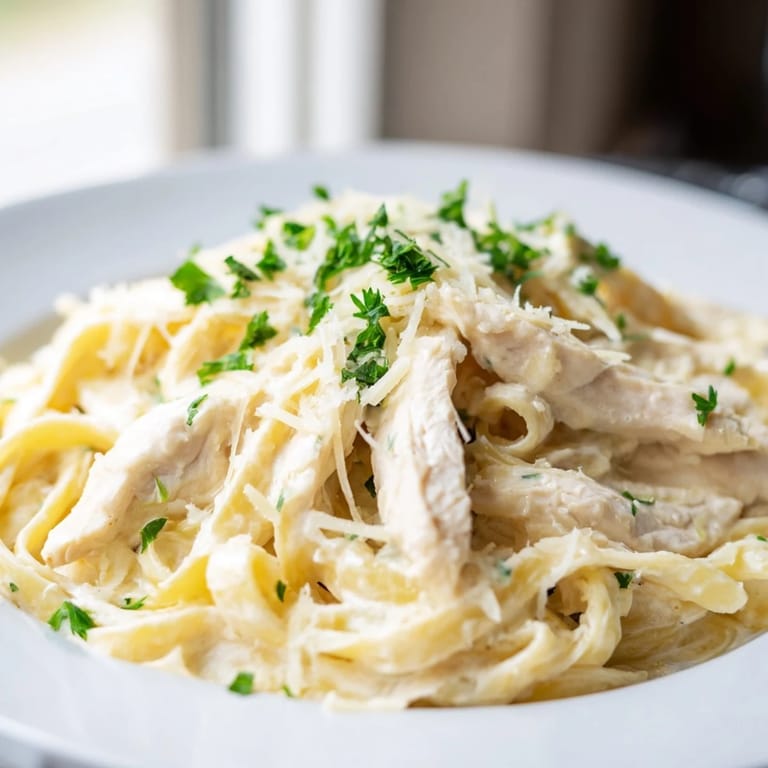
- Top with chopped parsley and a shower of extra Parmesan cheese just before serving to keep everything looking fresh and bright.
 Save to Pinterest
 The first time my son asked me to teach him this recipe, I realized it had become more than just dinner; it was something we could make together and feel proud of. Now whenever he's stressed about school or just needs comfort, he texts me for this recipe, and I know exactly what he needs.
The Magic of One-Skillet Cooking
There's a rhythm to cooking everything in one pan that feels almost meditative once you understand the sequence. You're building flavor layer by layer, using the browned bits from the chicken as your foundation, then the garlic releases its oils, then the cream creates this silky canvas that holds everything together. It's efficient, yes, but it's also deeply satisfying in a way that feels intentional and connected to what you're making.
Customizing Your Alfredo
This recipe is forgiving enough to adapt to what you have in your kitchen or what sounds good on any given evening. I've added sautéed mushrooms when they were on sale, wilted spinach when I wanted something green, even sun-dried tomatoes when I was feeling adventurous. The base sauce is so solid that it welcomes additions without losing its character.
Timing and Table Setting
The beauty of this dish is that it's ready in about thirty-five minutes from the moment you start cooking, which means you can have dinner on the table while everything's still hot. I always pour a crisp white wine like Pinot Grigio into glasses while the sauce simmers, and by the time I'm plating, everyone's settled at the table and ready to eat. There's something about the timing that feels intentional and relaxed all at once.
- Pair this with a simple green salad dressed in lemon vinaigrette to cut through the richness and refresh your palate between bites.
- Have extra Parmesan and a microplane grater at the table so everyone can add as much as they'd like.
- Serve immediately while the sauce is creamy and the pasta is warm, because this dish loses something if it sits around too long.
 Save to Pinterest
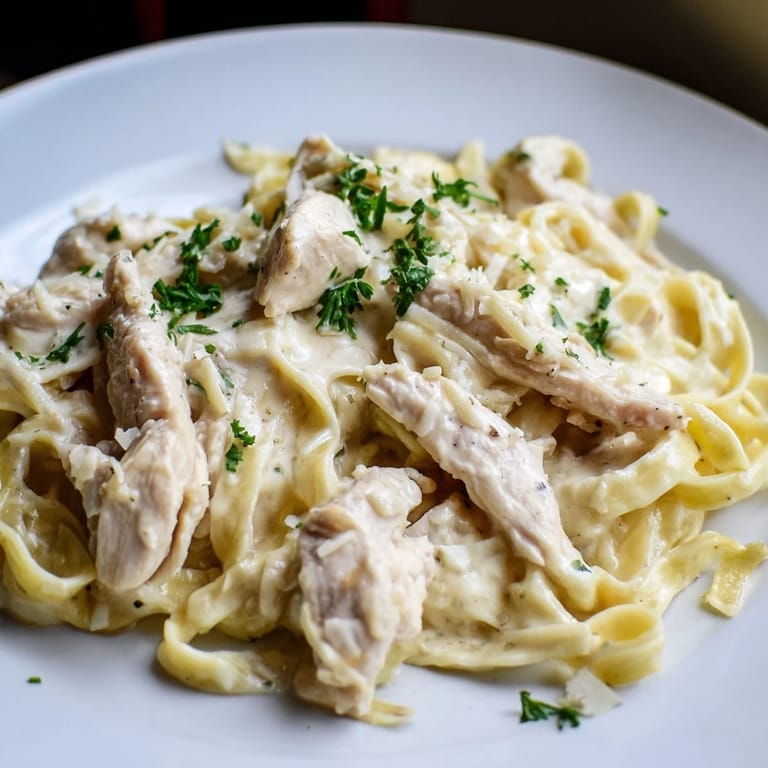
 This recipe has become my answer to almost any dinner dilemma, and I hope it becomes yours too. It's proof that simple ingredients and straightforward technique can create something restaurant-quality right in your own kitchen.
Recipe FAQs
- → Can I use a different pasta shape?
Yes, any pasta works well. Fettuccine and penne are traditional choices, but linguine, tagliatelle, or even rigatoni will coat beautifully in the cream sauce.
- → How do I prevent the sauce from breaking?
Keep the heat low when adding Parmesan and always stir gently. Add cheese gradually off heat if needed, and use reserved pasta water to adjust consistency rather than adding more cream.
- → Can I make this lighter?
Substitute half-and-half or even whole milk for heavy cream, use less butter, or add sautéed vegetables like mushrooms or spinach to reduce the richness while adding nutrition.
- → How do I keep the chicken moist?
Slice chicken breasts horizontally before cooking for even thickness, avoid overcooking beyond 165°F internal temperature, and don't skip the pasta water—it keeps the dish creamy without drying out.
- → Can I prepare this ahead?
Cook components separately and store in the refrigerator, then combine just before serving. Reheating over gentle heat with a splash of broth or cream maintains the sauce quality better than microwaving.
- → What wine pairs with this dish?
Crisp white wines like Pinot Grigio, Sauvignon Blanc, or Vermentino complement the rich cream sauce without overwhelming the delicate chicken flavors.