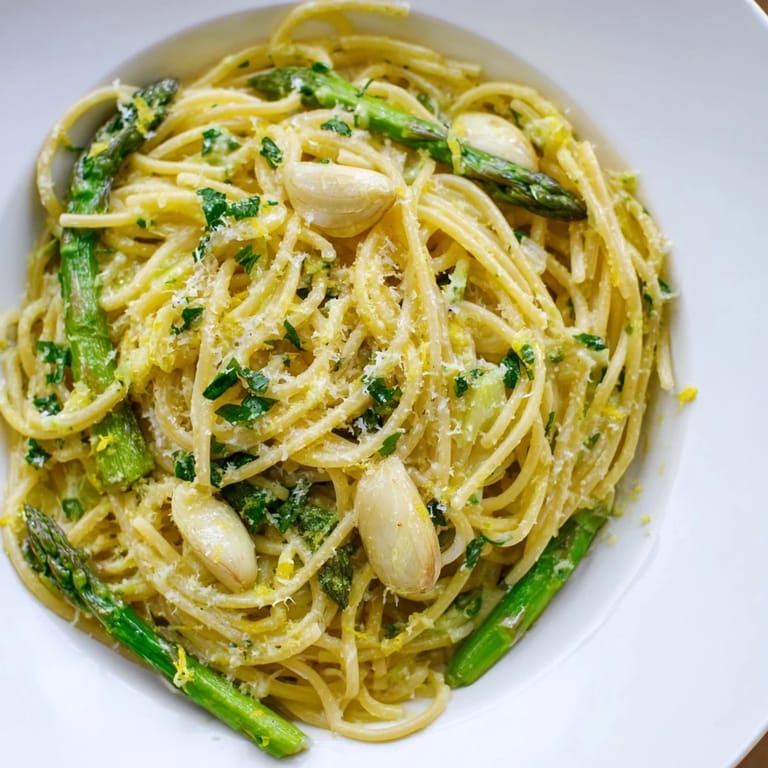
 Save to Pinterest
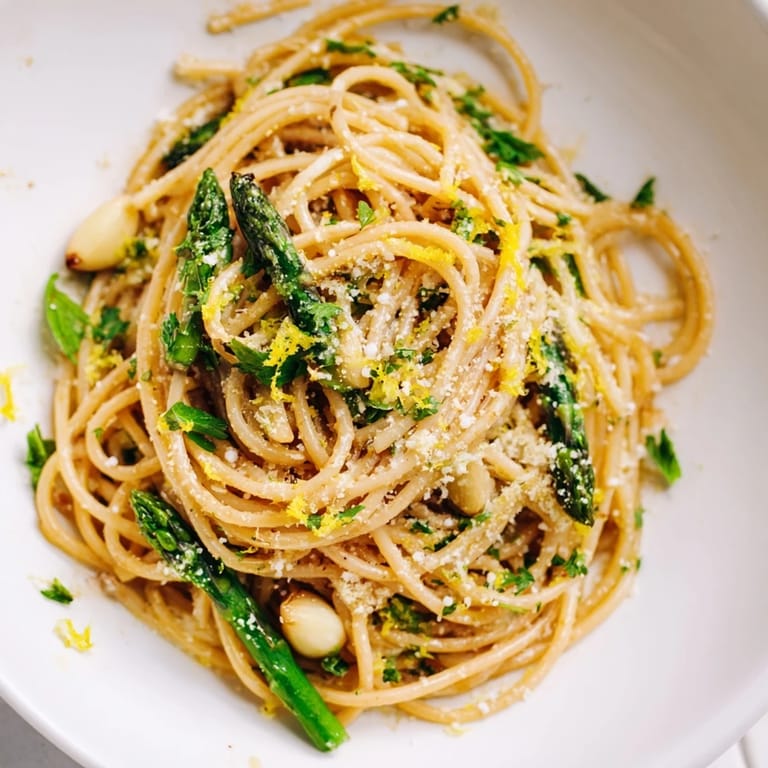
 The first time I made this pasta, I was standing in my tiny kitchen apartment while rain drummed against the windows. I had a head of garlic that needed using and asparagus from the farmers market that wouldn't last forever. What came out of the oven was something unexpected. The roasted garlic turned into this spreadable, sweet condiment that I wanted to put on everything.
Last spring, I made this for my sister who swears she doesn't like garlic. She watched me squeeze those soft cloves from their skins and asked if I was sure about the amount. One bite in and she was asking for the recipe. Now she makes it every Tuesday night and texts me photos of her foil wrapped garlic bundles every single time.
Ingredients
- 1 large head garlic: Roasting transforms sharp raw garlic into something sweet and spreadable that melts into the pasta
- 1 bunch fresh asparagus: Look for tight tips and firm stalks, cutting them into uniform pieces so they roast evenly
- 12 oz spaghetti: The long strands catch all those roasted garlic bits and asparagus pieces beautifully
- 1/4 cup extra-virgin olive oil: Use the good stuff here since it's one of the main flavor builders
- 1/2 teaspoon sea salt: Enhances all the natural sweetness that develops during roasting
- 1/4 teaspoon black pepper: Adds just enough warmth to balance the mellow garlic
- 1/4 teaspoon red pepper flakes: Optional, but I love the subtle heat it brings
- 1/2 cup grated Parmesan cheese: Creates this velvety finish when tossed with the starchy pasta water
- Zest of 1 lemon: Brightens everything up and cuts through the richness
- 2 tablespoons fresh parsley: Adds fresh color and a grassy note that wakes up the dish
Tired of Takeout? 🥡
Get 10 meals you can make faster than delivery arrives. Seriously.
One email. No spam. Unsubscribe anytime.
Instructions
- Roast the garlic until golden:
- Preheat your oven to 400°F and slice the top off the garlic head to expose all the cloves. Drizzle with olive oil, wrap it tightly in foil, and let it roast for 30 minutes until the cloves are soft and caramelized.
- Add the asparagus halfway through:
- After the garlic has been roasting for 15 minutes, spread the asparagus on a separate baking sheet, drizzle with olive oil, season with salt and pepper, and roast for 12 to 15 minutes until just tender with a slight char.
- Cook the pasta:
- Bring a large pot of salted water to boil and cook the spaghetti until al dente. Before draining, scoop out 1/2 cup of that starchy pasta water and set it aside.
- Prep the roasted garlic:
- Squeeze those soft cloves from their skins and mash them gently with a fork until they form a fragrant paste.
- Build the base:
- Heat 1/4 cup olive oil in a large skillet over medium heat. Add the mashed garlic and sauté for 1 to 2 minutes until your whole kitchen smells incredible.
- Bring it all together:
- Add the roasted asparagus and cooked spaghetti to the skillet. Toss everything together, adding that reserved pasta water a splash at a time until you have a silky, glossy sauce that coats each strand.
- Finish with brightness:
- Stir in the Parmesan, lemon zest, parsley, and red pepper flakes. Taste and add more salt or pepper if it needs it.
- Serve it up:
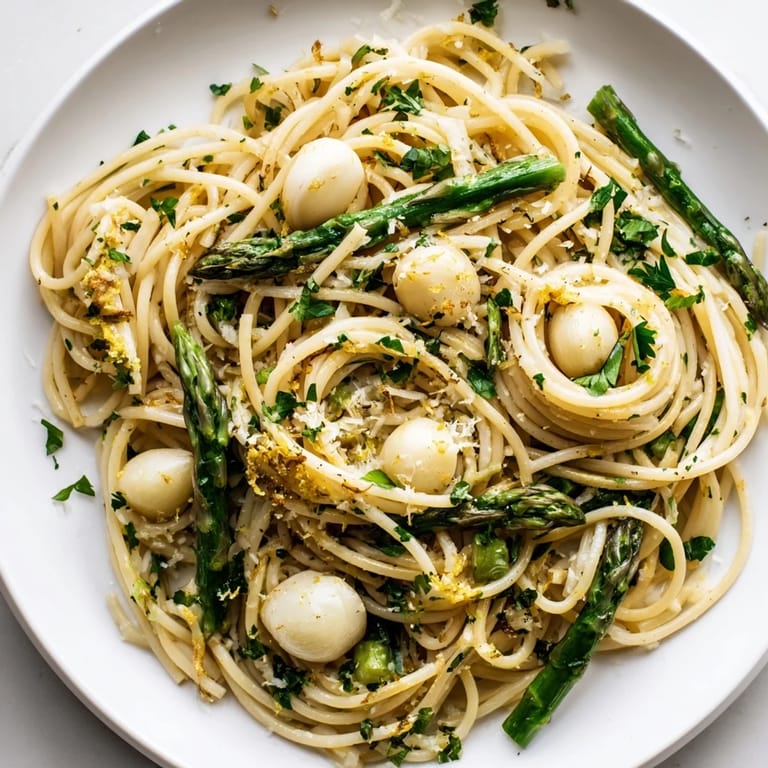
- Plate the pasta immediately while it's steamy and hot, topping each serving with extra Parmesan and a sprinkle of fresh parsley.
 Save to Pinterest
 This recipe has become my go-to for spring dinner parties because people always ask for seconds. I love setting it on the table and watching the steam rise while everyone reaches for their forks. Something about roasted garlic and asparagus just makes people feel taken care of.
Making It Your Own
I've tried so many variations of this pasta depending on what's in my kitchen. Sometimes I add a handful of cherry tomatoes that burst in the oven. Other times I toss in some toasted pine nuts right at the end for crunch. The base recipe stays the same, but it welcomes whatever you have on hand.
Timing Is Everything
The trickiest part is coordinating the garlic, asparagus, and pasta so everything finishes cooking at the same time. I start the garlic first, then get the water boiling. By the time the asparagus goes in, I'm dropping the pasta into the water. It becomes this rhythm that feels like dancing once you've done it a few times.
Leftovers That Work
This pasta reheats beautifully with a splash of water and a quick toss in a warm skillet. The flavors actually meld overnight and taste even better the next day. I sometimes make a double batch just to have lunch sorted for the next couple days.
- Store in an airtight container for up to three days
- Add a squeeze of fresh lemon when reheating to wake up the flavors
- If the pasta seems dry, a drizzle of olive oil brings it back to life
 Save to Pinterest
 There's something deeply comforting about a pasta that comes together so simply but tastes so thoughtful. I hope this finds its way into your regular rotation.
Recipe FAQs
- → How do you know when the garlic is properly roasted?
The garlic head should be golden brown and the individual cloves should be soft enough to squeeze out of their skins easily. They'll feel creamy when mashed with a fork. If they're still firm after 30 minutes, roast for an additional 5-10 minutes.
- → Can you make this dish ahead of time?
You can roast the garlic and asparagus several hours ahead and store them separately. Assemble and toss with pasta just before serving for the best texture. Leftover pasta can be refrigerated for up to 2 days and reheated gently with a splash of olive oil.
- → What's the best way to prevent mushy asparagus?
Roast asparagus for only 12-15 minutes at 400°F until just tender-crisp. Cut pieces into 2-inch lengths so they cook evenly. Remove from the oven when they still have a slight firmness and bright color.
- → How do you make a silky sauce without cream?
The reserved pasta water is key—its starch emulsifies with the olive oil and mashed garlic to create a naturally creamy coating. Add pasta water gradually while tossing, starting with a quarter cup and adjusting until you reach desired consistency.
- → What pasta alternatives work with this dish?
Any long pasta works well—try linguine, bucatini, or fettuccine. For gluten-free diets, quality gluten-free spaghetti mimics the texture nicely. Shorter shapes like penne also work but don't coat as elegantly with the roasted garlic sauce.
- → Can you add protein to make it more filling?
Absolutely. Grilled chicken breast, shrimp, or crispy chickpeas are excellent additions. You can also sprinkle toasted pine nuts or walnuts for nutty crunch and protein. Brown the protein separately before combining with the pasta.