 Save to Pinterest
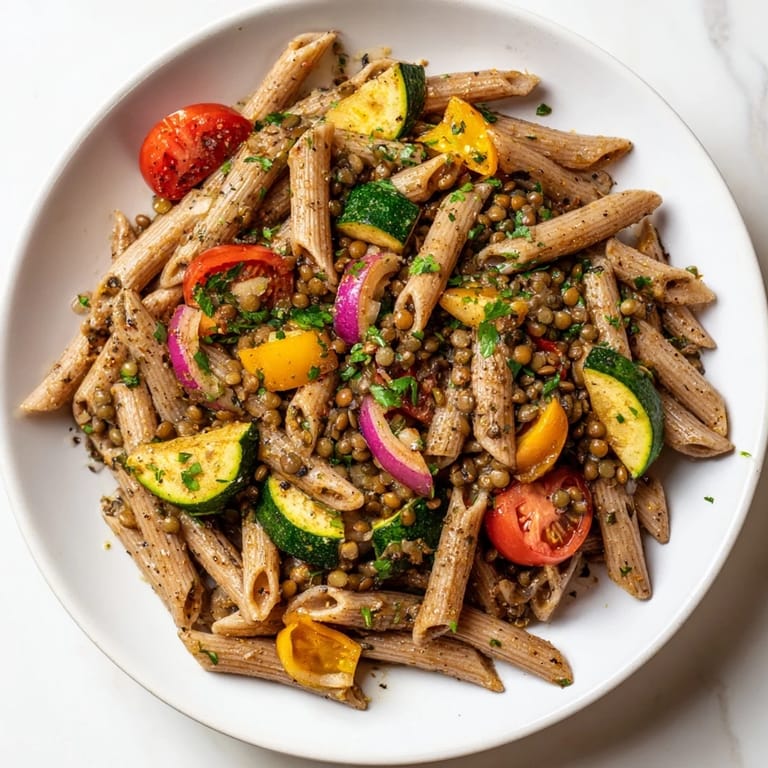
 I discovered this pasta on a Tuesday when my fridge held nothing but lentils, half a zucchini, and an embarrassing number of bell peppers from the farmers market. Rather than order takeout again, I decided to roast everything in the oven and toss it with pasta, expecting the bare minimum. What came out was somehow better than anticipated—the vegetables caramelized into something sweet and jammy, the lentils stayed earthy and whole, and the whole thing felt like actual food, not a scattered pile of ingredients.
I made this for my sister when she was going through a phase of trying to eat more protein without meat, and she actually asked for the recipe—which, if you know her, is basically a standing ovation. We sat at the kitchen table eating straight from the skillet, talking about how much better roasted vegetables taste when they have actual color on them.
Ingredients
- Whole wheat or regular pasta (penne or fusilli), 300 g: The shapes that catch the vegetable bits are best; fusilli is my choice because it holds onto everything.
- Cooked brown or green lentils, 200 g: Canned works fine if you drain them well, but cooked from dried tastes less tinny.
- Zucchini, 1 medium, diced: Cut them into roughly even pieces so they finish roasting at the same time.
- Red bell pepper, 1, chopped: The color matters here, both on the plate and for the slight sweetness.
- Yellow bell pepper, 1, chopped: Use whatever peppers you have; the mix just looks friendlier.
- Red onion, 1 small, sliced: Thinly sliced means it caramelizes instead of staying raw and too sharp.
- Cherry tomatoes, 150 g, halved: They burst a little while roasting, releasing their juice into everything else.
- Olive oil, 2 tbsp total: Good enough olive oil makes a difference; this isn't a place to use the questionable bottle from the back of your cabinet.
- Garlic, 2 cloves, minced: Fresh is worth the extra thirty seconds; jarred smells like nothing when it hits hot oil.
- Dried oregano, 1 tsp: This becomes the backbone of the flavor, so don't skip it or substitute carelessly.
- Dried thyme, 1/2 tsp: Just a whisper of it keeps everything from tasting one-dimensional.
- Chili flakes, 1/2 tsp, optional: Use them if you like heat; leave them out if you're cooking for people who think salt is too spicy.
- Salt and freshly ground black pepper: Taste as you go; what works for your palate might not work for mine.
- Fresh parsley or basil, 2 tbsp chopped: The green at the end wakes everything up; dried herbs won't do it.
- Grated Parmesan cheese, 2 tbsp, optional: Omit for vegan, but if you use it, grate it fresh rather than opening a green can.
Tired of Takeout? 🥡
Get 10 meals you can make faster than delivery arrives. Seriously.
One email. No spam. Unsubscribe anytime.
Instructions
- Heat your oven and prep your pan:
- Turn your oven to 210°C (410°F) and line a baking sheet with parchment paper—this keeps cleanup minimal and prevents sticking.
- Toss your vegetables with oil and seasoning:
- Pile your diced zucchini, both peppers, sliced onion, and halved tomatoes onto the baking sheet. Drizzle with 1.5 tablespoons of olive oil, scatter the oregano and thyme over everything, and season generously with salt and pepper. Use your hands to toss it all together so every piece gets coated.
- Roast until golden and tender:
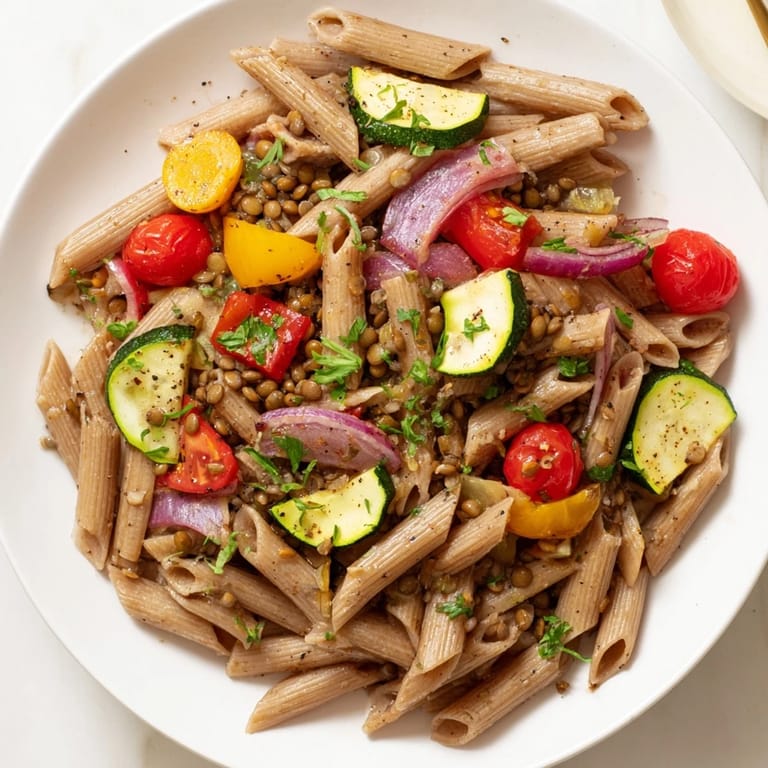
- Slide the pan into the oven for 20 to 25 minutes, stirring once halfway through when you're curious about how it's going. You'll know it's ready when the edges are slightly charred and the vegetables have collapsed a bit into themselves.
- Cook your pasta while vegetables roast:
- Fill a large pot with salted water, bring it to a rolling boil, and add your pasta. Cook it until it's al dente—tender but still with a slight firmness when you bite it. Before you drain it, grab a mug and scoop out about 1/2 cup of the starchy pasta water, then drain everything else.
- Make your flavor base in a skillet:
- Heat the remaining 0.5 tablespoon of olive oil in a large skillet over medium heat. Add your minced garlic and chili flakes if you're using them, letting them toast for just one minute until the kitchen smells unmistakably garlicky.
- Bring everything together:
- Tip your roasted vegetables and cooked lentils into the skillet with the garlic, stirring gently so you don't break things apart. Everything should be warm and mingling in the pan.
- Combine with pasta and adjust texture:
- Add your cooked pasta to the skillet and pour in a splash of that reserved pasta water—this creates a light coating rather than leaving everything dry. Stir everything until it looks intentional, then taste it and adjust salt and pepper to your preference.
- Finish and serve:
- Take the pan off the heat and scatter your fresh herbs on top along with Parmesan cheese if you're using it. Serve it right away while it's warm, or let it cool to room temperature if that's more your style.
 Save to Pinterest
 What strikes me most about this dish is how it transforms leftovers into something that doesn't feel like leftovers at all. Cold from the fridge the next day, it somehow tastes even better, like all the flavors finally figured out how to get along.
Why Roasting Makes All The Difference
Roasting is where the magic happens. When vegetables sit in a hot oven, they lose their water content and their natural sugars concentrate into something caramelized and deep. You can't get that same flavor by sautéing everything in a pan, though I've tried. The oven works slow and steady, and you barely have to check on things.
Seasonal Swaps and Variations
Winter calls for roasted Brussels sprouts and carrots instead of zucchini and bell peppers. Summer begs for eggplant and fresh basil. The beauty of this recipe is that it adapts to whatever is sitting in your vegetable drawer looking at you with mild accusation. The technique stays the same, which means you're not learning a new dish each time—you're just changing the ingredients you already know how to cook.
Making It Work For Your Needs
This recipe is already vegetarian and dairy-free if you skip the Parmesan, which makes it easy to serve to people with different preferences. Gluten-free pasta swaps in without changing anything about the method. If you want to make it vegan, just leave off the cheese entirely or use a plant-based version that you actually like.
- The lentils are where the protein lives, so don't shortcut them or use canned with the liquid still clinging to them.
- Taste the pasta while it's still in the water; a few extra minutes makes a difference between al dente and overdone.
- Serve this with a crisp white wine like Sauvignon Blanc, or just eat it plain and call that dinner.
 Save to Pinterest
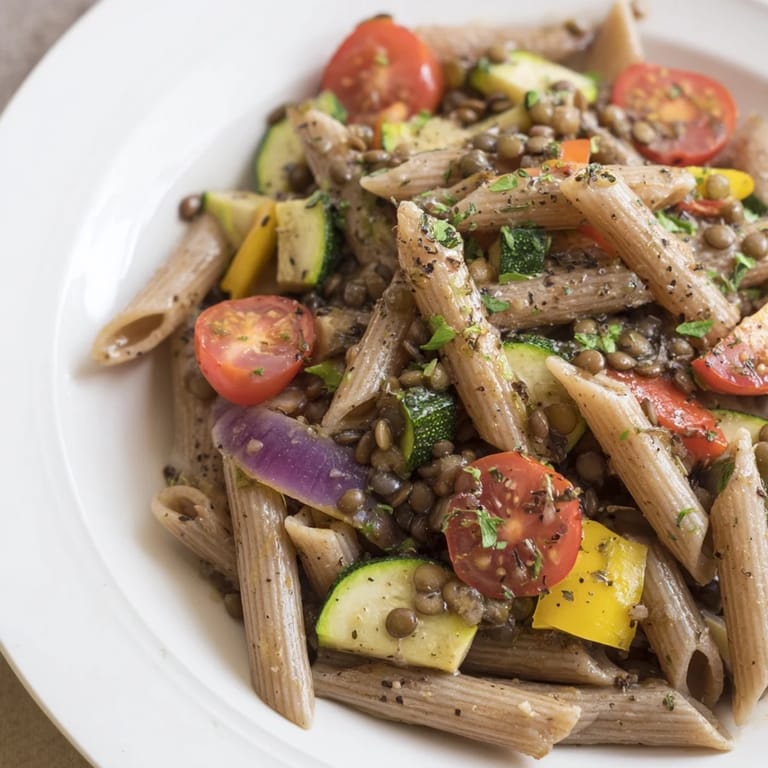
 This is the kind of meal you make when you want something honest and filling without any fuss. It's become the dinner I reach for when I need to feel capable in the kitchen.
Recipe FAQs
- → What type of lentils work best?
Brown or green cooked lentils hold their shape well and complement the roasted vegetables for balanced texture.
- → Can I substitute pasta types?
Whole wheat or regular penne or fusilli are ideal, but gluten-free pasta works fine for dietary needs.
- → How should the vegetables be prepared?
Dice zucchini and chop bell peppers and onions evenly for uniform roasting and caramelization.
- → What’s the purpose of reserved pasta water?
Adding reserved pasta water helps loosen the sauce, bringing the ingredients together smoothly without drying out.
- → Can this be made vegan?
Yes, simply omit Parmesan or substitute with a plant-based cheese alternative for a vegan-friendly option.