 Save to Pinterest
 The sharp, savory aroma of miso always reminds me of rainy evenings spent warming up in my own kitchen. One particularly chilly Wednesday, I found myself craving something deeply comforting but with just enough hands-on activity to shake off the day. That’s when miso ramen stepped in, promising cozy slurps and a meditative calm as I stirred and tasted the broth. There’s a quiet satisfaction in layering flavors, then sitting down to eat something that steams up your glasses in the best way. Ramen nights have quietly become my own little ritual for unwinding.
Once, I made this ramen for a group of friends who’d never tasted miso outside of a sushi appetizer—by the time we’d finished, the counter was scattered with empty bowls and someone was eyeing the pot for seconds. Mushrooms disappeared fast, and the gentle heat from the chili paste led to increasingly bold topping experiments. There was laughter as someone tried chopsticks for the first time and lost half their noodles back into the broth. That evening left the faint scent of ginger and sesame in my house for days. Even now, ramen nights are still a reliable way to lure everyone back together.
Ingredients
- Low-sodium vegetable or chicken broth: This sets the base, so use the best you can—it’s worth tasting on its own before you start.
- White miso paste: Brings that deep, umami-rich flavor and dissolves best if mixed with hot broth first.
- Soy sauce: Balances saltiness and depth, but I always taste before adding more.
- Sesame oil: Just a little wakes up the entire pot; toastiness is key.
- Freshly grated ginger: Adds a gentle heat that lingers without overpowering.
- Garlic cloves: Sauté until just fragrant—burning it can make the whole broth taste sharp.
- Mirin: Optional, but a splash creates a sweet lift that balances earthiness.
- Chili paste: Adds gentle fire; adjust depending on your heat tolerance.
- Fresh or dried ramen noodles: Springy noodles make each bite, and undercooking by a minute keeps them from getting soggy.
- Large eggs: Soft-boiled eggs are the prize—set a timer so you don’t end up with firm centers.
- Shiitake or cremini mushrooms: They soak up all those rich flavors—slice them evenly for the best texture.
- Baby spinach: Stir in just before serving so it wilts but stays vibrant.
- Corn kernels: Adds pops of sweetness and color whether you use fresh or frozen.
- Green onions: Sprinkle these last for crunch and fresh bite.
- Nori sheet: A little seaweed brings a subtle ocean note that’s classic.
- Toasted sesame seeds: The toasty crunch is more important than you think—sprinkle generously.
Tired of Takeout? 🥡
Get 10 meals you can make faster than delivery arrives. Seriously.
One email. No spam. Unsubscribe anytime.
Instructions
- Soft-boil the eggs:
- Lower the eggs gently into simmering water and let them bathe for exactly 7 minutes. Once done, transfer them to cold water so you can peel without losing half the white.
- Bloom aromatics:
- In your largest pot, heat sesame oil, then let the ginger and garlic sizzle until the scent is so inviting you almost forget the next step.
- Sauté the mushrooms:
- Add in the mushrooms so they brown and soak up every bit of flavor—don’t rush, let them get glossy and fragrant.
- Simmer the broth:
- Pour in broth, soy sauce, and mirin, then let everything bubble gently, making your kitchen smell like you’ve mastered Japanese takeout.
- Blend in miso:
- Scoop out a bit of hot broth, whisk it into the miso paste until smooth, then stir it all back in for a cloudy, rich pot of gold.
- Season and taste:
- Add chili paste if you like heat, then adjust salt and miso to your liking—the broth should taste bold but smooth.
- Cook the noodles:
- Boil according to package directions and drain before they get too soft; you want bounce, not mush.
- Assemble your bowls:
- Divide noodles among bowls, then ladle broth until the ramen peeks above the surface.
- Add the toppings:
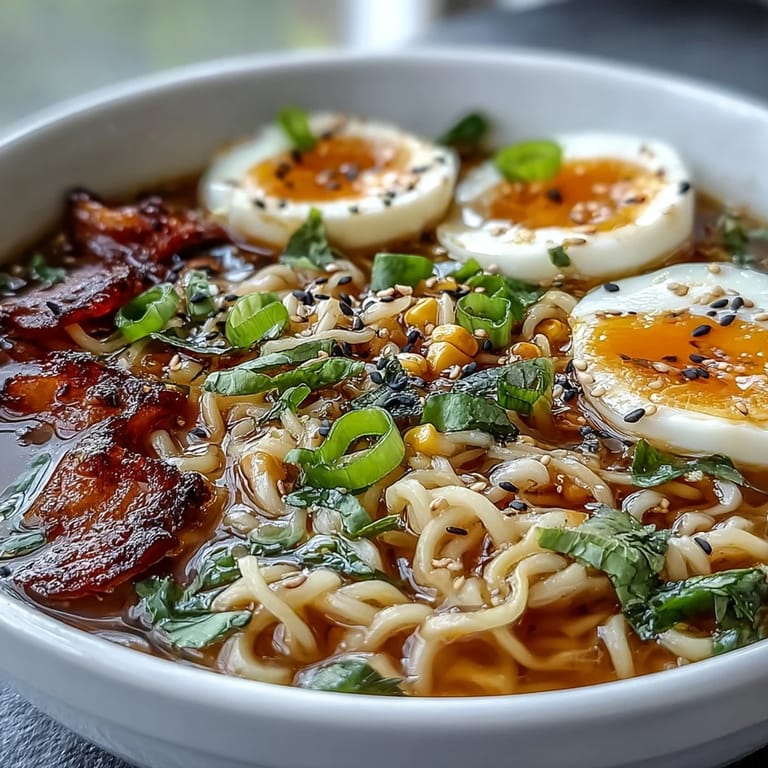
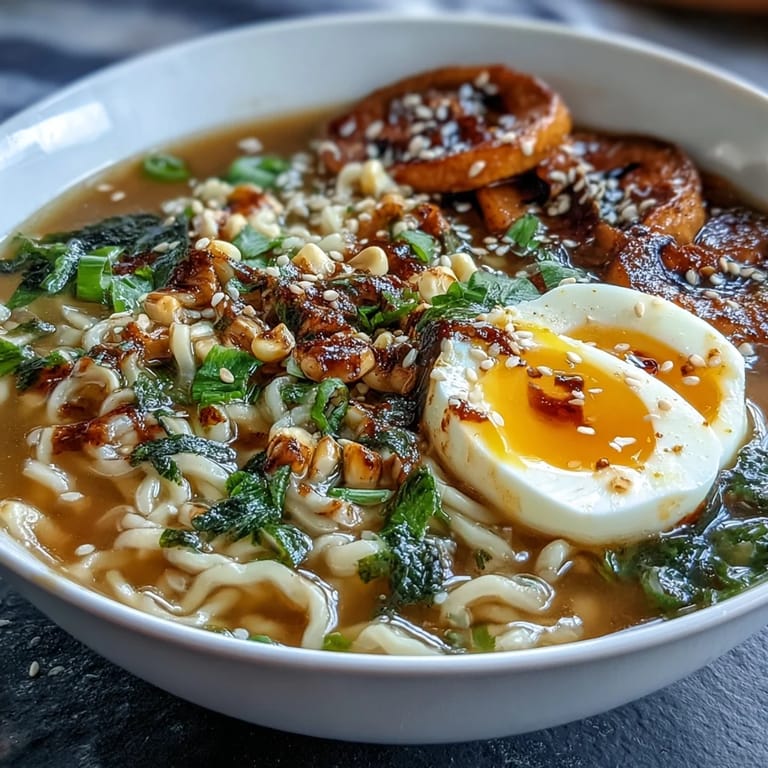
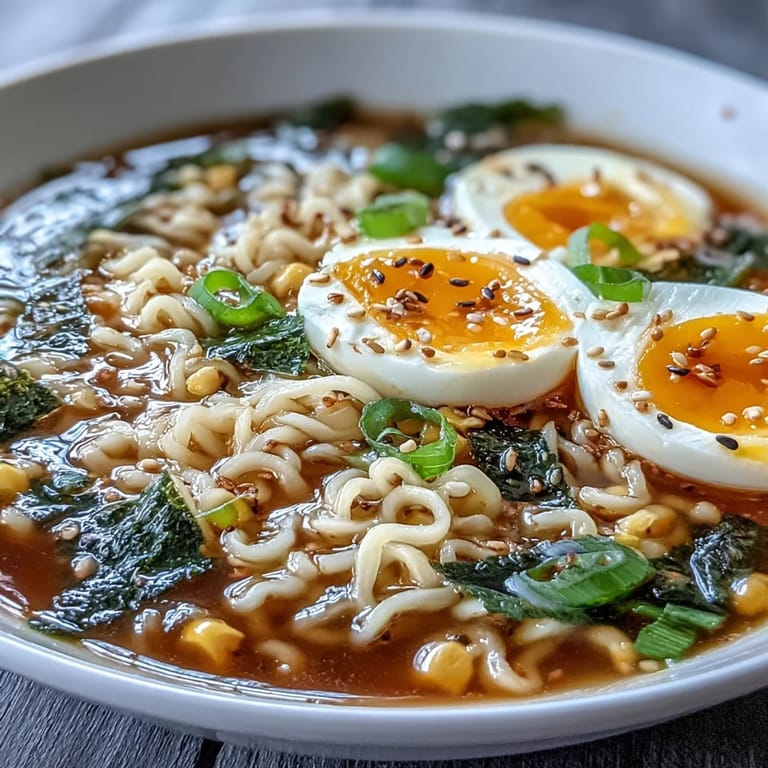
- Arrange mushrooms, spinach, corn, halved eggs, green onions, nori strips, and sesame seeds for a colorful, inviting finish.
- Serve:
- Hand out chopsticks or forks, press pause on the world, and dig in while everything is piping hot.
 Save to Pinterest
 One time, a rainstorm knocked out the power halfway through making this ramen, so we finished cooking by lantern-light and giggled about the most atmospheric dinner ever. Somehow, those dim bowls of noodle soup tasted even richer, the warmth cutting through the gloom outside. It’s still my go-to for days when I want dinner to feel like a gentle, edible hug. Ramen, in all its steamy glory, is proof that small comforts matter. Every time I make it, I’m reminded of how a bowl of soup can invite conversation and soothe in equal measure.
Making the Broth Your Own
I’ve discovered that taking a few extra minutes to brown the mushrooms deeply before adding the broth adds more umami and makes the ramen taste like it simmered all afternoon. Mirin or a touch of sugar can round out the saltiness if your miso is especially punchy. Different brands of miso vary in strength—so don’t be afraid to taste as you go. If you love heat, experiment with chili oil or extra chili paste. Personalizing the broth is half the fun of making ramen at home.
Noodle Wisdom
Cooking noodles separately from the broth is a tiny step that prevents them from going limp and soaking up too much salt. I’ve found that slightly undercooking them (by about a minute) helps maintain that irresistible chew. Don’t forget to rinse them in warm water if they’re especially starchy to keep the soup clear. It’s easy to lose track, so set a timer and keep a watchful eye. That springy bite is the essence of great ramen.
Topping Time: Get Creative
Some of my favorite topping swaps have been driven by whatever is in the fridge. A handful of wilted greens in place of spinach, or crispy tofu instead of eggs, keep things interesting every single bowl. The colorful toppings always draw oohs at the table and make dinner feel like a little celebration.
- Build a “topping bar” so everyone assembles their own bowl.
- Sear mushrooms in batches so they brown instead of steam.
- Remember to finish your bowl with a shower of toasted sesame seeds—they truly make the difference.
 Save to Pinterest
 There’s a comfort in a hot, miso-rich bowl that makes any day a little softer. Here’s hoping this ramen night brings as much warmth and joy to your kitchen as it has to mine.
Recipe FAQs
- → How do I prevent miso from becoming grainy?
Whisk miso into a small bowl with a ladleful of hot broth until smooth before adding it back to the pot; avoid boiling after adding miso to preserve texture and delicate flavors.
- → Can I make this vegetarian or vegan?
Yes. Use vegetable broth and omit eggs. Swap in firm tofu or extra mushrooms for protein and texture; use plant-based noodles if needed to keep it fully vegan.
- → What’s the best timing for soft-boiled eggs?
Simmer eggs for about 7 minutes for jammy yolks, then cool in ice water to stop cooking and make peeling easier. Adjust by 30 seconds for firmer or softer yolks.
- → Which noodles work best in miso broth?
Fresh or dried ramen noodles hold up well; if using thicker wheat noodles, shorten cook time slightly. Cook noodles separately to keep broth clear and properly seasoned.
- → How can I make the broth spicier?
Stir in a small amount of chili paste or chili oil to taste, or add a pinch of togarashi. Start conservatively and adjust after tasting the miso-balanced broth.
- → Can I store leftover broth and how long does it keep?
Store cooled broth in an airtight container in the fridge for up to 3 days. Reheat gently and whisk in a fresh portion of miso before serving to refresh the flavor.