 Save to Pinterest
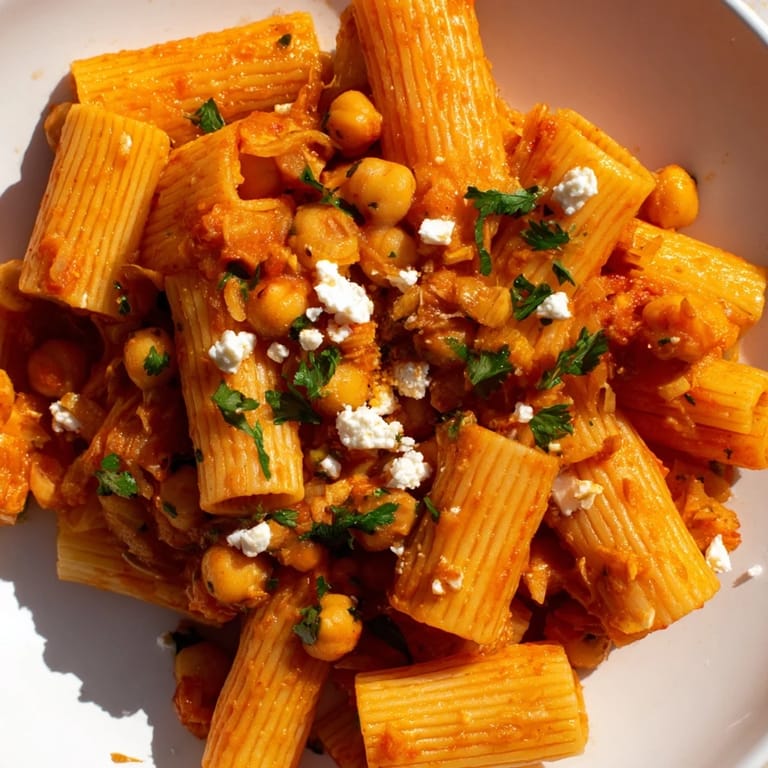
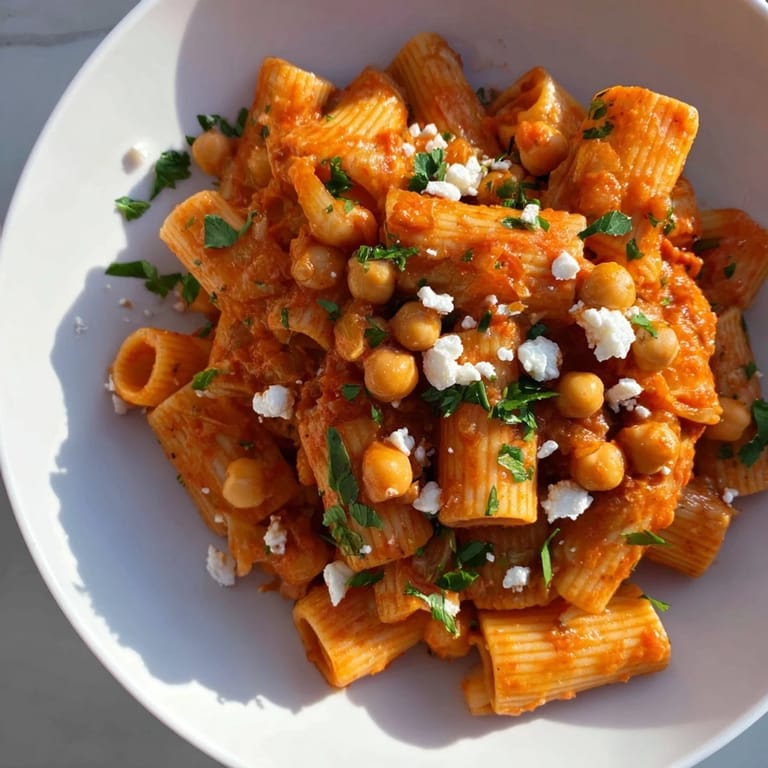
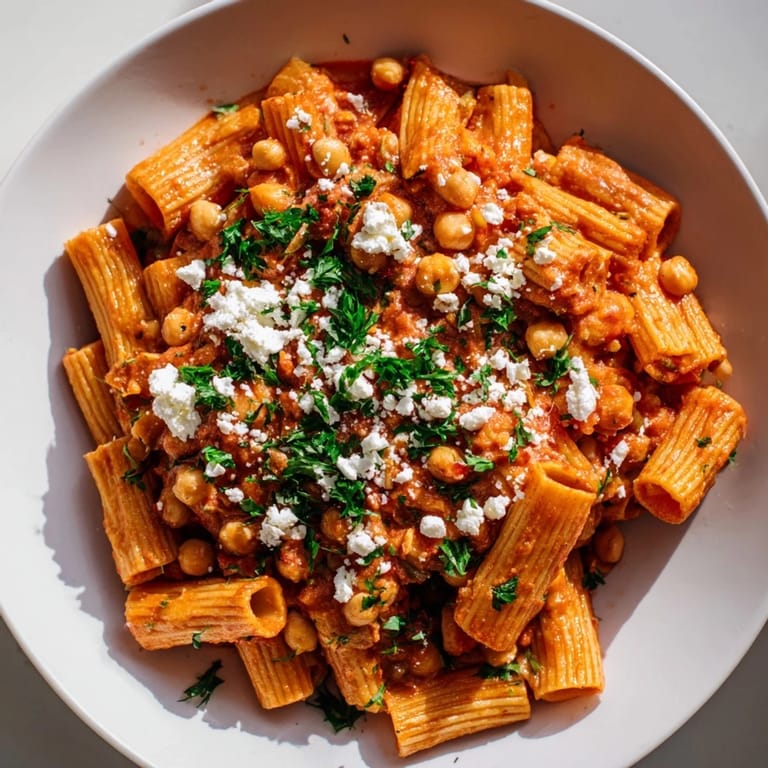
 There's something almost defiant about harissa in a weeknight pasta—the kind of dish that arrives on the table steaming and unapologetically bold. I discovered this combination by accident one evening when I had a jar of harissa open, a can of chickpeas that needed using, and no patience for anything fussy. What emerged was a golden-sauced pasta that tasted like it had been simmering for hours, even though my kitchen clock said otherwise. The spice caught me off guard at first, but not in a punishing way—more like a friendly wake-up call wrapped in tomato and warmth.
I made this for a friend who had just moved to the neighborhood, and watching her eyes light up at that first bite felt like introducing her to the street itself. She asked for the recipe before she'd even finished her plate, which is always the highest compliment. Now whenever I see her car in the driveway, I know she's probably made it at least three times that month.
Ingredients
- Dried short pasta (350 g): Penne, rigatoni, or fusilli work beautifully here—their shapes catch the sauce and hold onto all that spiced goodness.
- Olive oil (2 tbsp): This is your foundation, so don't reach for the cheapest bottle; good oil makes the entire dish taste more intentional.
- Onion and garlic (1 medium, 3 cloves): They mellow out the heat just enough so the harissa doesn't dominate but still commands respect.
- Harissa paste (2 tbsp): The soul of this dish—buy it jarred or make your own, and know that different brands vary wildly in heat, so taste as you go.
- Ground cumin and smoked paprika (1 tsp and 1/2 tsp): These warm spices underneath the harissa add depth and prevent it from tasting one-dimensional.
- Diced tomatoes (1 can, 400 g): They balance the spice with acidity and body, so don't use tomato paste as a shortcut—the sauce needs their moisture.
- Chickpeas (2 cans, drained and rinsed): Rinsing them matters more than you'd think; it removes the starchy liquid that would make the sauce gluey.
- Vegetable broth or water (1/2 cup): This keeps the sauce loose enough to coat the pasta without making it soupy—you can always add reserved pasta water if needed.
- Lemon zest and juice (1 lemon): This is the last-minute magic; it cuts through the richness and brings everything into focus.
- Fresh parsley or cilantro (2 tbsp): Cilantro feels more authentic to the harissa's North African roots, but parsley works if that's what's in your fridge.
- Optional feta cheese: A crumble on top adds richness and a cool contrast to the heat, though the dish is perfect without it.
Tired of Takeout? 🥡
Get 10 meals you can make faster than delivery arrives. Seriously.
One email. No spam. Unsubscribe anytime.
Instructions
- Set your pasta in motion:
- Salt the water generously—it should taste like the sea—then let it reach a rolling boil before the pasta goes in. Start checking for doneness a minute or two before the package says; you want it tender but with a slight firmness when you bite it, not mushy.
- Build the sauce base:
- Warm the olive oil over medium heat and let the onion soften slowly, taking its time to turn translucent and sweet. When you add the garlic, harissa, and spices, you'll notice the kitchen fill with this intoxicating aroma—that's when you know the flavors are waking up.
- Bring it all together:
- Stir the tomatoes, chickpeas, and broth into the spiced base, then let it simmer gently with the lid on, stirring now and then so nothing sticks. You'll see the sauce deepen in color and thicken slightly as the flavors settle into each other.
- Marry pasta and sauce:
- Add the drained pasta directly to the skillet and toss everything to coat, using a splash of that reserved pasta water if it needs help loosening. The residual heat will help the pasta absorb the flavors instead of just sitting on top of the sauce.
- Finish with brightness:
- Kill the heat, then stir in the lemon zest, juice, and herbs—this final step prevents the dish from tasting heavy and brings a kind of lightness that makes you want another forkful.
 Save to Pinterest
 There's a moment in cooking when separate ingredients stop being themselves and become something unified and alive—that's what happens here around the seven-minute mark when the sauce has reduced just enough and everything tastes like it belongs together. That moment is why I keep coming back to this dish.
The Art of Harissa
Harissa isn't just heat—it's a bridge between sweet, smoky, and spicy, and learning to respect it rather than fear it changes how you use it in other dishes. I used to think more harissa meant more flavor, but that's like assuming a louder voice is always clearer; the real trick is balance. Two tablespoons creates heat that's noticeable but not aggressive, and when you combine it with tomato, cumin, and smoked paprika, those spices actually make the heat feel more sophisticated.
Pasta Water Is Your Secret Weapon
Most people throw pasta water away without realizing it's the closest thing to a professional chef's trick that exists in a home kitchen. That starchy liquid doesn't just loosen the sauce—it actually helps it cling to each strand of pasta and creates this silky coating that makes the dish feel more polished. I learned this the hard way by making this dish a dozen times before someone mentioned it, and now I reserve it automatically for everything.
Ways to Make It Yours
This recipe is flexible enough that you can bend it without breaking it. Add roasted zucchini or bell peppers if you want more vegetables, or swap white beans for chickpeas if that's what you have. A handful of spinach wilted in at the end adds a different kind of nutrition, and if you're making it for someone who loves heat, keep harissa on the table so they can add more. The dish was made to be customized.
- Roasted vegetables like zucchini, eggplant, or bell peppers tossed in near the end make it heartier without weighing it down.
- Swap white beans for chickpeas or use a mix of both for a different texture and subtly different flavor.
- Fresh spinach or arugula can go in at the end—the residual heat wilts them just perfectly.
 Save to Pinterest
 This is the kind of dish that sits happily on the stove after dinner, and you find yourself going back for another bite an hour later. It's honest food that doesn't apologize, and once you've made it once, it becomes part of your regular rotation.
Recipe FAQs
- → Can I adjust the spiciness of this dish?
Yes, the heat can be tailored by increasing or reducing the harissa paste amount or by adding chili flakes according to taste.
- → What pasta types work best here?
Short pasta shapes like penne, rigatoni, or fusilli complement the hearty sauce and chickpeas well.
- → Is it possible to make this gluten-free?
Absolutely, simply substitute traditional pasta with gluten-free varieties without altering the cooking process.
- → Can I substitute chickpeas with other ingredients?
White beans or roasted vegetables can be used as alternatives to chickpeas for variety while maintaining texture.
- → How should leftover dish be stored?
Store in an airtight container in the refrigerator for up to 3 days, reheating gently to preserve flavors and texture.