 Save to Pinterest
 There's a particular Tuesday evening I can't quite shake from memory—one of those nights when the pantry felt bare and my appetite felt enormous. All I had were dried noodles, butter, and garlic, so I threw them together without much thought. What emerged from the skillet changed how I think about simple food. A handful of ingredients became something so deeply satisfying that I've made it countless times since, often when I need comfort without complication.
I made this for a friend who'd just moved into a new apartment with nothing in her kitchen except a pot and a skillet. We stood in her nearly empty kitchen while the noodles cooked, and by the time we'd tossed everything together, the whole place smelled like a proper home. She's made it at least once a week since then.
Ingredients
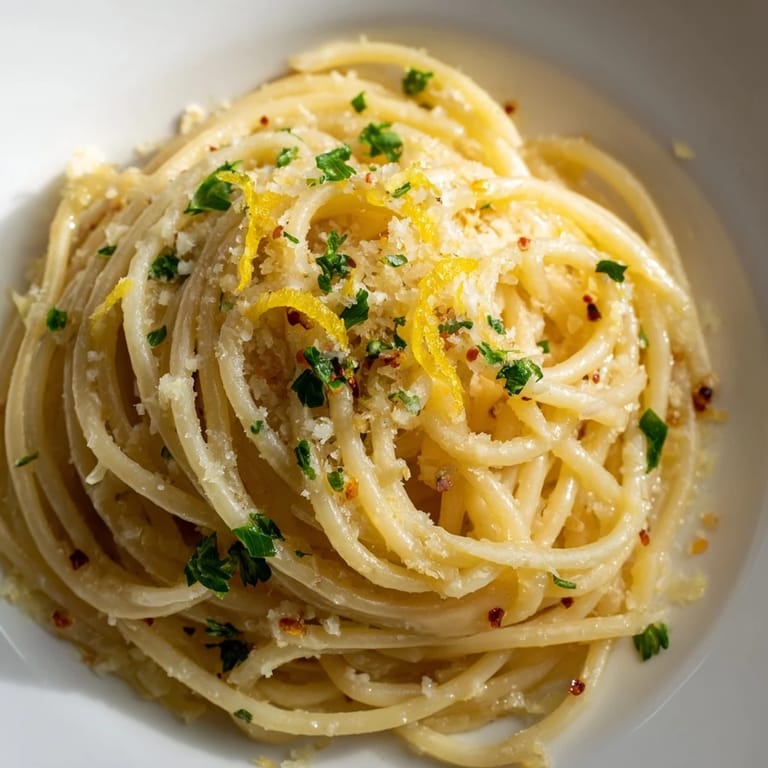
- Spaghetti or fettuccine (200 g): Choose one or the other based on what you have—thinner pastas drink in the butter, while fettuccine holds it in ribbony pockets.
- Unsalted butter (3 tbsp): This is non-negotiable; salted butter will throw off the balance, and the flavor depends entirely on butter's richness.
- Garlic (4 cloves, finely minced): Mince it yourself if you can—it releases more fragrance than pre-minced, and you'll taste the difference.
- Red pepper flakes (1/4 tsp, optional): A tiny whisper of heat that wakes everything up without announcing itself.
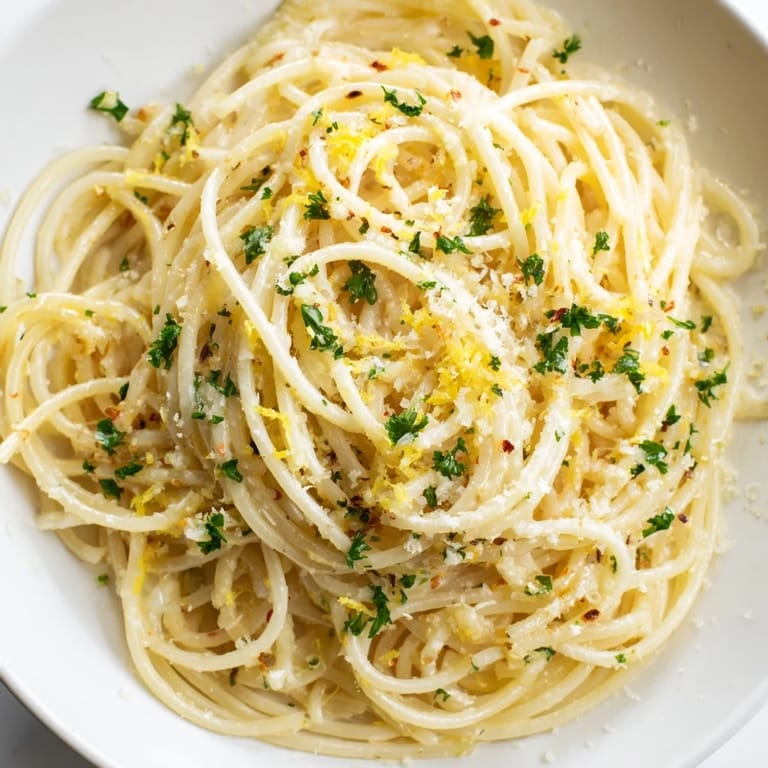
- Fresh parsley (2 tbsp, finely chopped): Don't skip this; it adds a fresh green note that keeps the dish from feeling heavy.
- Sea salt and black pepper: Season as you taste, not just by the measure.
- Parmesan cheese (2 tbsp, optional): Adds umami depth, but some days the dish is perfect without it.
- Lemon zest (1/2 lemon, optional): A brightness that cuts through richness in the most elegant way.
Tired of Takeout? 🥡
Get 10 meals you can make faster than delivery arrives. Seriously.
One email. No spam. Unsubscribe anytime.
Instructions
- Salt the water generously and bring it to a rolling boil:
- The pasta water should taste like the sea—this is where most of the seasoning happens. If it's bland, your whole dish will be too.
- Cook the pasta to al dente:
- Check it a minute before the package says it's done; it should have a slight resistance when you bite it, not softness all the way through.
- While waiting, melt butter slowly with the garlic:
- Medium-low heat is your friend here—let the garlic turn golden and fragrant, but if it browns even slightly, start over because burnt garlic tastes bitter and wrong. The smell tells you everything.
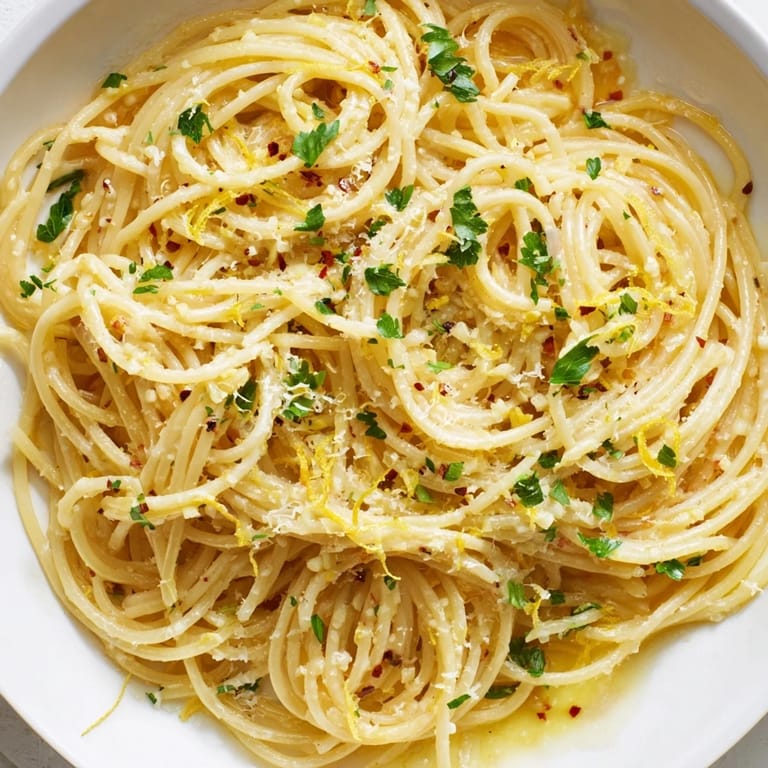
- Combine the hot pasta with the garlic butter:
- Do this while the pasta is still steaming; the heat helps the butter coat evenly. If it looks dry, splash in that reserved pasta water a little at a time.
- Finish with parsley, salt, and pepper:
- Taste as you go—this last moment is where you balance everything to your preference.
- Serve immediately:
- There's a narrow window where this is at its best, so don't let it sit.
 Save to Pinterest
 My sister made this last summer during a heat wave when no one wanted to cook, and somehow it became the thing we all reached for. It reminded us that the simplest meals often say the most.
The Power of Restraint
There's something honest about a dish with so few ingredients that you can name them without thinking. Every element has to pull its weight here—there's nowhere to hide a mistake or a mediocre ingredient. This forces you to reach for good butter, real garlic, fresh herbs, and to cook with intention rather than habit. Once you understand how these four things work together, you'll find yourself making variations without even meaning to.
Timing and Temperature Matter
The gap between perfect and ruined in this dish is genuinely small—maybe two minutes, tops. Brown garlic tastes acrid and mean, overcooked pasta turns mealy, and if the butter sits too long it separates. This isn't complicated, but it does require you to pay attention. The good news is that paying attention is half the pleasure of cooking something this simple.
How to Make It Your Own
This is a foundation, not a cage. I've added crispy breadcrumbs for texture, tossed in burst cherry tomatoes when I had them, stirred in a can of white beans to make it more substantial. One friend adds a splash of white wine to the butter, another swears by anchovies mixed into the oil before the garlic goes in. The core never changes—just noodles, fat, and time—but what you build around it is endlessly flexible.
- A handful of toasted nuts adds crunch that transforms the whole texture.
- Fresh herbs beyond parsley (basil, tarragon, even mint) each tell a different story.
- A tiny pinch of nutmeg or a whisper of sage can feel like discovering a secret version of the same song.
 Save to Pinterest
 This dish has taught me that sometimes the best meals aren't the ones with the longest ingredient lists or the most complicated techniques. They're the ones that let you taste each element clearly, that come together in your hands, that feel like coming home. Make this when you need proof that simple works.
Recipe FAQs
- → What type of pasta works best?
Spaghetti or fettuccine are ideal for this dish due to their ability to hold the garlic butter sauce well.
- → Can I add spice to the dish?
Yes, crushed red pepper flakes are optional and add a mild heat to the garlic butter.
- → How can I make the noodles more flavorful?
Adding a splash of reserved pasta water helps the sauce cling better, and finishing with Parmesan and lemon zest brightens the flavor.
- → Is it possible to make this dairy-free?
You can substitute butter with olive oil and omit Parmesan to make it dairy-free without losing richness.
- → How long does it take to prepare?
From start to finish, this dish takes about 15 minutes, making it a quick and easy option.