 Save to Pinterest
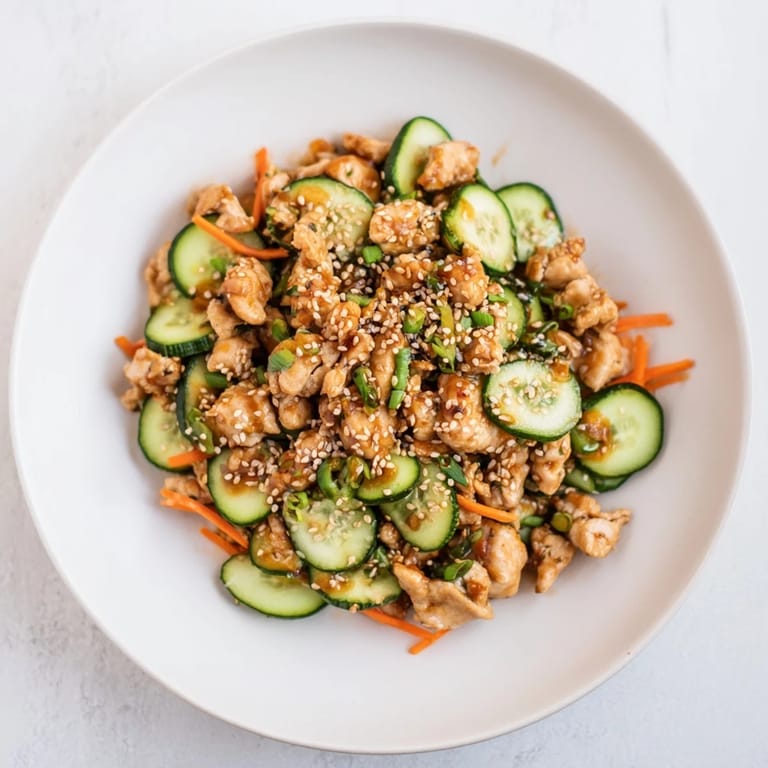
 I started making this salad on Sunday nights when I realized my lunchbox routine had turned into a string of sad sandwiches and leftover pasta. One evening, I tossed some chicken and cucumbers into an empty deli container, shook it with a quick soy-sesame dressing, and took it to work the next day. The crunch was still there, the flavor had deepened overnight, and I felt like I'd cracked some kind of meal prep code. Now I keep a stack of containers ready every week.
I brought this to a picnic once, and my friend Mara shook the container so hard the lid popped off and sesame seeds flew everywhere. We laughed, scooped it back together, and ate it anyway. She still asks me to make it whenever we hike. There's something about a meal that travels well and tastes good cold that makes it feel dependable, like a recipe you can count on when you're hungry and far from home.
Ingredients
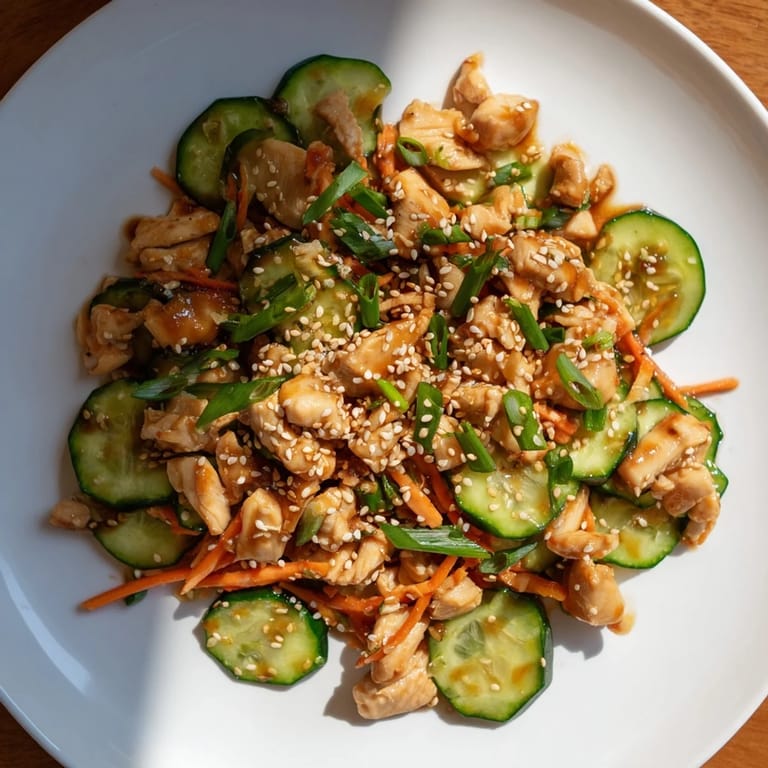
- Cooked chicken breast, diced or shredded: I use leftovers from a simple roast or grab a rotisserie chicken when I'm short on time, and both work beautifully.
- Cucumber, thinly sliced: The thinner you slice it, the more surface area soaks up the dressing, and it stays crunchy for hours.
- Scallions, thinly sliced: They add a sharp, fresh bite that balances the richness of the sesame oil without overpowering the salad.
- Carrot, julienned: I skip this sometimes, but when I include it, the sweetness and color make the whole thing feel more complete.
- Toasted sesame seeds: These add a nutty crunch that makes every bite feel intentional, not plain.
- Soy sauce: I go for low sodium because the dressing can turn too salty otherwise, and you want to taste the ginger and lime too.
- Rice vinegar: It brings brightness without the sharpness of white vinegar, and it plays nicely with the sesame oil.
- Toasted sesame oil: A little goes a long way, this is where the deep, warm flavor comes from.
- Honey or maple syrup: Just enough sweetness to round out the acidity and keep the dressing from tasting one-note.
- Fresh ginger, grated: I use a microplane, and the difference between fresh and powdered ginger here is night and day.
- Garlic clove, minced: One small clove is enough, too much and it takes over the whole jar.
- Chili flakes: I add them when I want a little heat, and I skip them when I'm packing lunch for someone who doesn't.
- Lime juice: Half a lime is perfect, it wakes up all the other flavors and keeps the dressing lively.
Tired of Takeout? 🥡
Get 10 meals you can make faster than delivery arrives. Seriously.
One email. No spam. Unsubscribe anytime.
Instructions
- Mix the dressing:
- Whisk everything together in a small bowl or shake it in a jar until the honey dissolves and the ginger is evenly distributed. You should smell the sesame oil and lime right away.
- Layer the salad:
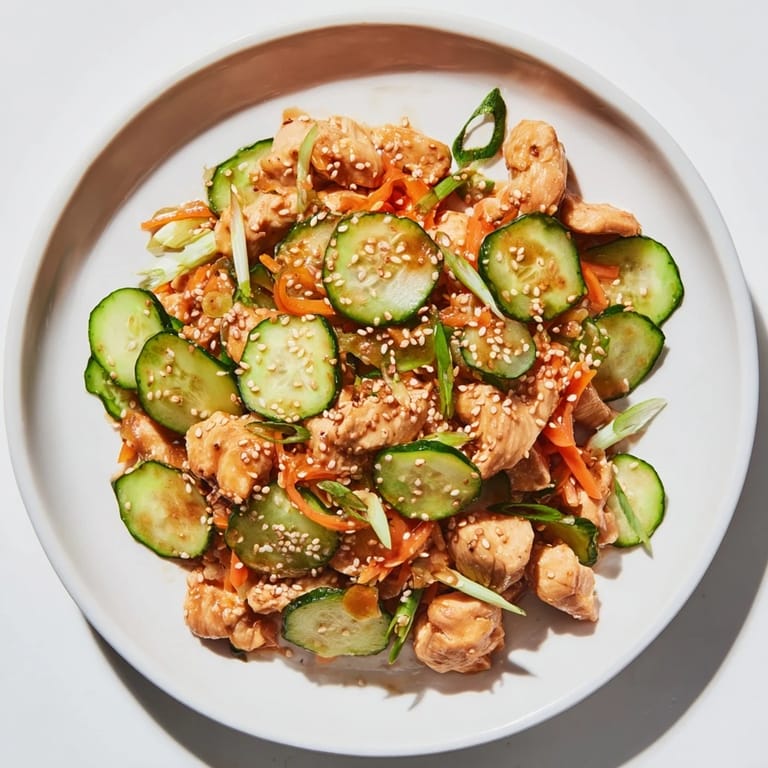
- Start with the chicken at the bottom, then pile on the cucumbers, scallions, carrot if you're using it, and finish with sesame seeds on top. The order matters less than making sure everything fits snugly.
- Pour and seal:
- Drizzle the dressing over the top, close the lid tightly, and give it a good shake for about thirty seconds. You'll hear everything tumbling around inside.
- Serve or store:
- Eat it right away if you're hungry, or tuck it in the fridge for up to a day. Shake it again before you dig in so the dressing coats everything evenly.
 Save to Pinterest
 One morning I forgot to shake the container before I opened it at my desk, and the dressing pooled at the bottom while the chicken sat there naked and bland. I learned my lesson and now I shake twice, once when I pack it and once before I eat. It's become a little ritual, and honestly, shaking a jar of lunch feels oddly satisfying, like I'm finishing what I started the night before.
How to Meal Prep This Salad
I make two or three at a time and line them up in the fridge on Sunday night. The dressing keeps everything fresh without wilting the vegetables, and by Tuesday the flavors have melded in a way that makes it taste even better than day one. Just make sure your containers seal tightly, or you'll end up with a puddle of soy sauce in your bag.
Swaps and Substitutions
I've used shredded cabbage, thinly sliced bell peppers, and even snap peas when I had them on hand, and they all worked. If you want to skip the chicken, firm tofu cubed small holds up well and soaks up the dressing beautifully. Once I ran out of rice vinegar and used apple cider vinegar instead, it was sharper but still good, just a different kind of bright.
Serving Suggestions
Most of the time I eat this straight from the container with a fork, but sometimes I dump it over a bowl of jasmine rice or a handful of mixed greens to make it more filling. If I'm eating it at home, I'll toast an extra sprinkle of sesame seeds and add them on top for texture.
- Serve over steamed jasmine or brown rice for a complete meal.
- Add a handful of crispy wonton strips or crushed peanuts right before eating.
- Pair with a cup of miso soup or a side of edamame for a light dinner.
 Save to Pinterest
 This salad has saved me more lunches than I can count, and it never gets boring because I can tweak it based on what's in the fridge. I hope it becomes one of those recipes you reach for without thinking, the kind that feels easy and tastes like you tried.
Recipe FAQs
- → What type of chicken works best for this salad?
Cooked chicken breast, diced or shredded, provides the best texture and protein content. Rotisserie chicken is a convenient alternative.
- → Can I make the dressing ahead of time?
Yes, the soy-sesame dressing can be prepared in advance and stored in the refrigerator for up to a week.
- → How do I keep the cucumbers crisp?
Use thinly sliced cucumbers and add them fresh before serving. Keeping the salad chilled also helps maintain crunch.
- → Are there vegetarian options?
Yes, cubed tofu can be used instead of chicken to create a plant-based alternative.
- → What additional vegetables can be added for more crunch?
Thinly sliced bell peppers, shredded cabbage, or julienned carrots add extra texture and freshness.